About the Platform
What Is MythRadar?
MythRadar is a dream interpretation and personal mythology platform. It helps people understand recurring dreams, symbols, patterns and the deeper stories shaping their lives — not by handing out fixed meanings, but by treating each dreamer's interior world as a story worth reading carefully.

Why MythRadar exists
Most of the dream tools on the internet were built for a different question. They assume you arrive holding a single image — a snake, a tooth, a wedding — and you want a one-line verdict. So they give you one. The page closes. The dream is filed away as “solved.”
But anyone who has lived with a recurring dream knows the verdict format is the wrong shape. The same image returns in different life seasons and clearly does not mean the same thing each time. The dream is not a puzzle with a single answer. It is part of a longer story — a story the dreamer is inside of, and slowly, sometimes reluctantly, beginning to read.
MythRadar exists to take that longer story seriously. It is a dream interpretation and personal mythology platform built around the idea that the meaningful unit is not the symbol in isolation, but the symbol inside a life — appearing at a particular moment, alongside particular questions, in a particular season of becoming.
The core difference
Traditional dream dictionaries ask:
“What does this symbol mean?”
MythRadar asks:
“Why might this image have appeared in your life right now?”
That is a small change in wording and a very large change in orientation. The focus is no longer the symbol. The focus is the dreamer. The symbol becomes a piece of evidence about the inner life that produced it, rather than a coin you cash in for a meaning.
How MythRadar differs from traditional dream dictionaries
A traditional dream dictionary is essentially a lookup table. Each entry hands you a generic interpretation severed from the life it appeared in. The same answer goes to everyone who searched it, regardless of context — a strange way to treat something as personal as a dream.
MythRadar's Dream Dictionary is built differently. Each entry is written as a piece of reflective writing rather than a verdict. It opens up the range of meanings a symbol has carried across mythology, literature and Jungian psychology, and then turns the question back to you: what was the emotional weather of the dream, who appeared in it, what season of life had you walked into the week before? The entry exists to help you read your own dream, not to read it for you.
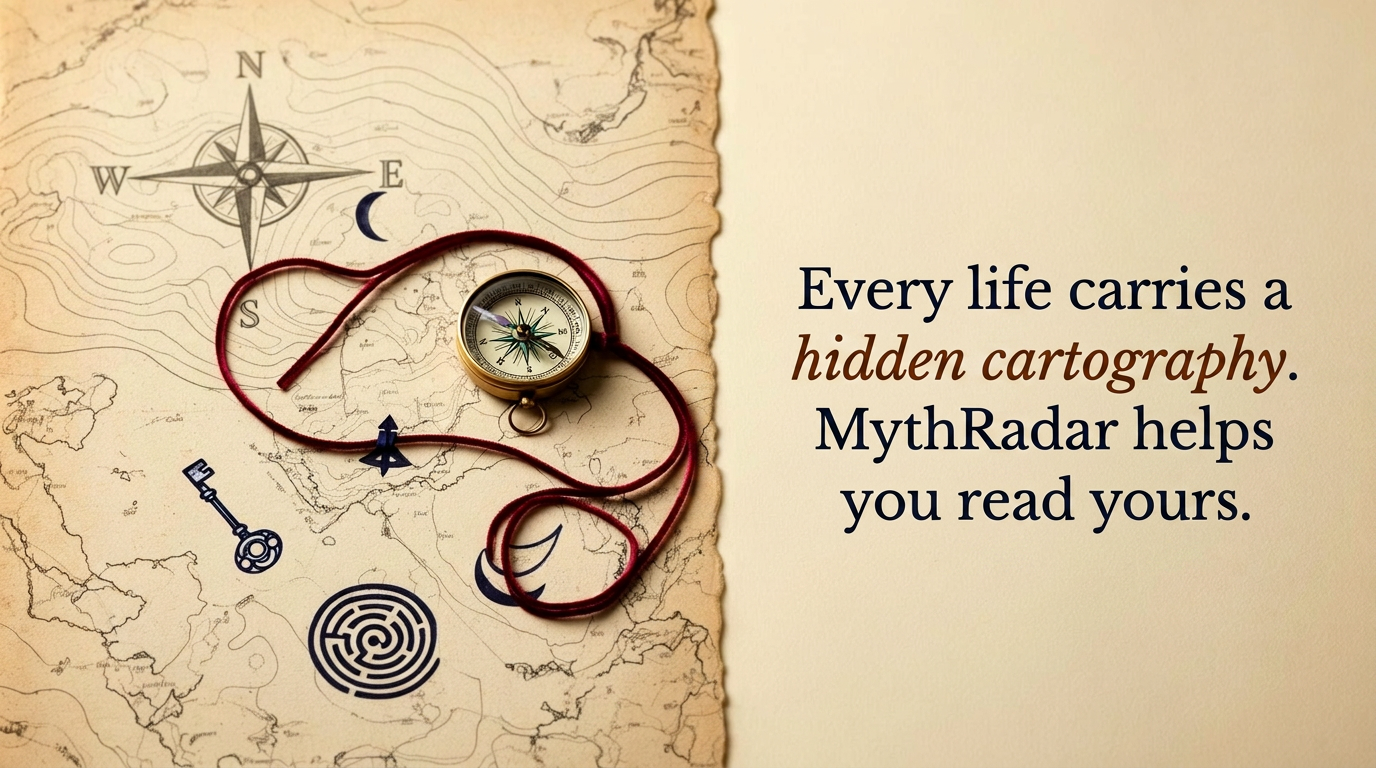
Over time, as more symbols are tracked and noticed, a kind of inner cartography appears — an honest map of which images keep returning, in which configurations, around which unresolved questions. That map is the real work. The individual dictionary entry is only the doorway.
How MythRadar differs from generic AI tools
A generic AI tool will gladly produce a confident, smooth, three-paragraph interpretation of any dream you give it. The trouble is that confidence and smoothness are exactly the wrong textures for the inner life. Dreams resist clean summaries. They are layered, contradictory, often deliberately strange. Flatten them into a tidy paragraph and you lose the very ambiguity that was carrying the meaning.
MythRadar uses careful language on purpose. It offers possibilities rather than verdicts, angles rather than answers. It is built around reflection prompts, slow questions and the quiet practice of noticing — the things that actually move an interior life — instead of confident pronouncements that close the conversation. Where a generic AI is built to answer, MythRadar is built to listen.
What Personal Mythology means
Personal mythology is the phrase for the story underneath your story. Not the events of your life — the shape they keep taking. The themes you cannot seem to leave. The kinds of people who keep arriving in your life as if cast for a role. The questions that follow you from one decade to the next in slightly different costumes.
Everyone has one. Most people never see it directly, because we are inside it the way a fish is inside water. MythRadar exists, in part, to make this private mythology visible — not as a label or a personality type, but as a living pattern you can finally read.
When you can see your own myth, two quiet things happen. First, a lot of behaviour that once felt confusing — the same fight in different relationships, the same fork in the road at every career turn — stops feeling random. Second, the myth itself becomes editable. What you can name, you can revise. That is the whole point.
For the deeper exploration, see the writing on personal mythology in the Insights library.
Why recurring patterns matter
The same lessons return until they are learned — that is the old phrase, and it has the ring of truth because recurrence is the unconscious's main teaching method. A theme is sent up once gently; if it is not heard it is sent up louder; if it is still not heard it is built into the architecture of your relationships, your work, your dreams.
MythRadar takes recurrence seriously as a signal rather than a coincidence. It helps you track which symbols, characters and situations keep arriving — in dreams and in waking life — so the pattern stops being invisible. The point is never to shame the repetition. The point is to read it. A recurring dream is not a malfunction. It is a sentence the unconscious is still trying to finish.
How dream symbols can be explored
A symbol is not a code with a fixed translation. A symbol is a living image that has gathered meaning across cultures, mythologies, your own past, and the specific moment you had this particular dream. To “interpret” a symbol is really to sit with it long enough that its layers begin to separate.
Inside the Dream Dictionary, each entry is written to invite that sitting. You are shown the symbol's older meanings, its psychological resonances, its common appearances in dreams, and then a set of questions designed to bring the symbol into contact with your own life. The work happens in the contact.
How Jungian ideas influence the platform
MythRadar is shaped — though not constrained — by ideas from the Jungian tradition:
- Archetypes — the recurring figures (the hero, the shadow, the wise one, the trickster, the child) who appear in dreams and myths because they appear in the psyche.
- The Shadow — the disowned material that keeps returning, often as the most charged figures in our dreams, because the work of integration is unfinished.
- Synchronicity — those meaningful coincidences that feel arranged, and the suspicion that meaning is not only inside us but moves through the world.
- Symbolic thinking — the practice of reading life the way you would read a poem, with attention to image and resonance, not only to fact.
These ideas are tools, not doctrines. MythRadar uses them where they illuminate and sets them down where they would crowd out the dreamer's own seeing. For long-form writing in this register, see the Insights essays on Jungian psychology.
Featured sections
Dream Dictionary
A reflective library of dream symbols and recurring dreams. Each entry opens the symbol's range of meanings and then turns the question back to the dreamer. Built for symbol exploration and interpretation, not verdicts. Visit the Dream Dictionary →
Personal Mythology
Life themes, recurring questions, recurring relationships and the slow practice of meaning-making. Long-form essays on the story underneath your story. Read the Personal Mythology writing →
Jungian Psychology
Archetypes, shadow, synchronicity, symbolic thinking — drawn on as living tools, not academic furniture. Featured throughout the Insights library. Open Insights →
Pattern Tracking
Why the same lessons return. Why certain dreams repeat. Why specific themes recur through the seasons of a life — and how to read them rather than fight them.
What you can do on MythRadar
MythRadar is a private space — closer to a beautifully made notebook than to a social app. Inside it you can:
- Record dreams as they arrive and watch their pattern emerge over time.
- Look up symbols in the Dream Dictionary and use the reflection prompts as a way into your own dream.
- Notice recurring images, figures and themes across weeks and seasons.
- Read long-form Insights on dreams, archetypes, personal mythology and meaning.
- Build, quietly, the inner cartography that lets you read your own life with more accuracy.
How MythRadar approaches meaning and self-understanding
MythRadar treats meaning as something that emerges rather than something that is delivered. You will not be told what your dream means. You will be helped to sit with it long enough, and from enough angles, that what it means begins to surface in you. That kind of meaning is durable; it survives leaving the page.
The same orientation applies to self-understanding. MythRadar does not categorise you, score you, or hand you a type. It assumes you are mid-story and that the most useful thing it can do is hold up a steady, kind light over the next page.
Frequently asked questions
What is MythRadar?
MythRadar is a dream interpretation and personal mythology platform. It helps people explore recurring dreams, symbols, life patterns and the deeper stories quietly shaping their lives — drawing on Jungian psychology and the idea that each person carries a personal myth.
Is MythRadar a dream dictionary?
MythRadar includes a Dream Dictionary, but it is more than a lookup table. Traditional dictionaries ask what a symbol means; MythRadar asks why a particular image, figure or scene might be surfacing in your life right now. The focus is the dreamer, not the symbol in isolation.
How does MythRadar interpret dreams?
Instead of fixed meanings, MythRadar treats each dream as a piece of a larger pattern. It looks at recurring images, emotional tone, life themes and the moment a dream arrived in, and offers reflective prompts rather than verdicts. You are guided to notice what the dream may be asking, not told what it is.
What is Personal Mythology?
Personal Mythology is the set of recurring themes, questions, relationships and images that quietly shape your life — the story underneath the surface story. MythRadar helps surface this private mythology so the patterns you live inside become visible, and therefore changeable.
Is MythRadar based on Jungian psychology?
MythRadar is influenced by Jungian ideas — archetypes, the shadow, synchronicity and symbolic thinking — alongside personal mythology and contemporary reflection. It is not a clinical tool or a replacement for therapy; it is a private space for noticing and meaning-making.
Can MythRadar help with recurring dreams?
Yes. Recurring dreams are one of MythRadar's central concerns. The platform helps you track which images return, in what life seasons, and what questions they seem to be circling — so the dream stops feeling random and starts revealing its pattern.
What makes MythRadar different?
Most dream tools give a definition and stop. Generic AI tools produce confident summaries that flatten meaning. MythRadar is built around the dreamer: it tracks symbols across your life, connects dreams to waking patterns, and treats your interior life as a story worth reading carefully rather than a problem to be solved.
Begin reading your own pattern
MythRadar is a dream interpretation and personal mythology platform built around the quiet practice of noticing. Start with a symbol, or with an essay, and follow the thread that catches.