The Creator Archetype
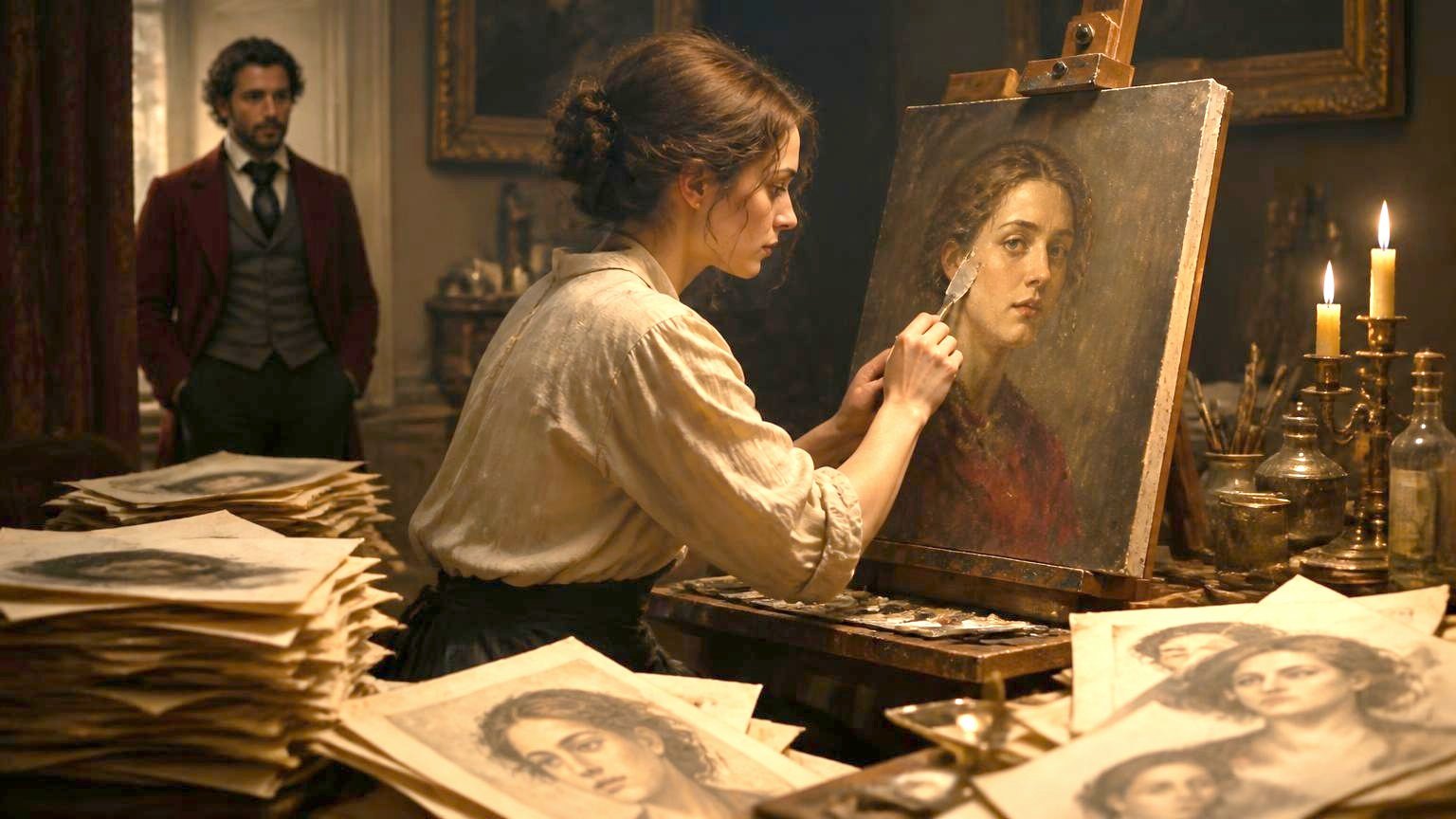
The Creator turns an unformed idea into something that can be touched, tested and used.

what is the creator archetype?
The Creator archetype is the part of a personality that treats an idea as unfinished business until it exists in the world as something real. This is not a preference for art over other pursuits, it's a relationship to unresolved potential, a discomfort with things that stay only imagined. A Creator can be a founder, a parent building a home life, an engineer, a cook, anyone who feels a private pressure to bring a private vision into shared, checkable reality. The identity forms around the act of making rather than the medium, which is why Creators move between very different crafts and still recognise the same hunger underneath each one.
The pattern at the centre
The pattern at the centre of the Creator is a specific kind of discomfort: an idea that stays inside the head starts to feel like a debt. Not a pleasant daydream, a debt, something owed to the idea itself, and the only repayment is making it real. This is why Creators describe unfinished projects as a weight rather than a loose end, because the debt doesn't close on its own.
That pressure explains both the Creator's output and its cost. They make things other people only discuss, which is genuinely rare, and it comes from refusing to let an idea stay comfortable and theoretical. The same refusal means a Creator rarely gets to enjoy an idea on its own terms, since enjoyment, for them, arrives only once the thing has been built and can be judged against the vision that demanded it.
What drives the Creator
The Creator is driven by the gap between what currently exists and what could exist instead, a gap that others notice occasionally and Creators notice constantly. Every imperfect object, process or story reads to them as a draft, which is exhilarating in creative work and exhausting almost everywhere else, since not everything in a life is meant to be redesigned.
There's also a drive toward permanence hiding underneath the drive to make. A finished thing, a book, a company, a garden, a well-run household, outlasts the moment it was built in, and the Creator senses that making something durable is the closest they'll get to leaving a mark that doesn't depend on being remembered personally.
Where the Creator becomes valuable
Every group needs someone willing to turn a vague, shared frustration into an actual alternative, and the Creator is usually the one who does it, sketching the fix while others are still describing the problem. This impatience with pure discussion is what moves ideas out of meetings and into use.
Creators are also disproportionately responsible for raising the floor of ordinary experience, because once something better has been made and shown to work, the old version stops being acceptable. A better tool, a better process, a better way of running a home, once it exists, it resets what everyone expects, and that reset rarely gets credited back to the person who forced it into being.
The tension inside the archetype
The tension inside the Creator is that the same standard which produces excellent work also makes it nearly impossible to call anything finished. A vision is infinite and a made object is finite, so there's always a gap between them, and the Creator, uniquely sensitive to that gap, can mistake it for evidence of failure rather than for the ordinary shortfall every finished thing carries.
This is why Creators complete a large project and feel dissatisfaction instead of relief. The satisfaction was supposed to arrive at the finish line, but the finish line keeps revealing the next unmade thing behind it, and the Creator moves toward that instead of standing still long enough to register what they already built.
Shadow expression
Unexamined, the Creator's shadow shows up as perfectionism that prevents anything from ever shipping, being said, or being shown. If a work can always be improved, a Creator caught in the shadow will improve it forever rather than risk releasing something that might be judged as less than the vision demanded, and the world never gets to see what they were capable of.
The other shadow expression is compulsive making that crowds out everything else, relationships, rest, presence, because a Creator can come to believe their worth is measured entirely by output. When making becomes the only proof of value they trust, stopping starts to feel like disappearing, and they keep building long after building has stopped being the healthiest choice available.
The Creator in relationships
In relationships, the Creator brings a rare kind of attention, the same instinct that improves a project applied to a person, noticing what someone could become and helping build the conditions for it. Done with consent, this is one of the most generous things a partner can offer. Done without it, it becomes a quiet campaign to improve someone who never asked to be a draft.
Creators also need partners who understand that unavailability during a making phase isn't rejection, it's absorption, and that the Creator will return once the thing they were carrying has finally been set down. Relationships that survive this well tend to build their own rituals for reconnecting after those absences rather than treating each one as a fresh injury.
The Creator in work, ambition and decisions
At work, the Creator is most alive with an open problem and genuine latitude to solve it their own way, and least alive maintaining something someone else already finished. Ambition, for them, is measured in what got built rather than in title or tenure, which puts them at odds with institutions that reward the second far more visibly than the first.
Decisions get filtered through a question most colleagues don't share: does this move the thing closer to existing, or does it only talk about the thing existing. That bias toward action is what makes Creators valuable in early, undefined stages of a project and occasionally impatient in the later stages, where the work is refinement rather than invention.
What MythRadar would notice
What keeps returning, across a Creator's dreams, relationships and decisions, is the unfinished structure, a house with a missing room, a garden half planted, a manuscript that won't quite close. These images track the same open account the waking mind is keeping, a tally of ideas still owed their finished form.
MythRadar would also notice how consistently a Creator's biggest life decisions arrive disguised as project decisions, a move, a relationship, a career change explained entirely in terms of what it would let them build. That pattern is worth naming directly, because a life organised only around what can be made eventually needs room made for what can be lived without being made.
next step
Is the Creator the one running your life right now?
The Archetype Finder takes a few minutes and reads for the pattern rather than the mood - the dominant archetype, the one emerging, and the one you keep in shadow.
Personal Mythology
Where does this archetype show up in your own life?
Save it, add a dream or a recurring thought, and MythRadar can help you read how they connect.
That reading is your Personal Mythology. It begins with what you choose to add.
Archetypes that sit close to this one
Neighbours worth reading next - they share an instinct and spend it differently.

The Magician
The Magician archetype turns understanding into change, and struggles when transformation is denied.

The Seeker
The Seeker keeps moving because arrival has always felt like a smaller idea than the road itself.

The Destroyer
The Destroyer archetype ends what no longer serves you, so something truer can take its place.
Dreams this archetype tends to send
Entries from the Dream Dictionary that keep company with this pattern.



Related reading
- The Creator Archetype: The Need to Make Something TrueThe Creator is not just artistic temperament. It is the part of you that cannot rest until something inside has been given an outside form. Here is how to live with it.8 min
- The Visionary Archetype: Seeing What Is Not Yet ThereThe Visionary is the part of you that sees the next room before it exists. Its gift is direction. Its cost is loneliness. Both are unavoidable.8 min
- The Hidden Cost Of Ignoring Your IntuitionIgnoring intuition carries a profound cost, eroding self-trust and leading to unlived potentials. This essay delves into the deeper implications of dismissing our inner knowing and how to reclaim this vital internal guide.7 min