Archetypes
The Queen Archetype: The Sovereignty of the Fully Grown Woman
The Queen is not status. She is the part of the psyche that has accepted her own authority - and uses it to make the room she rules livable.
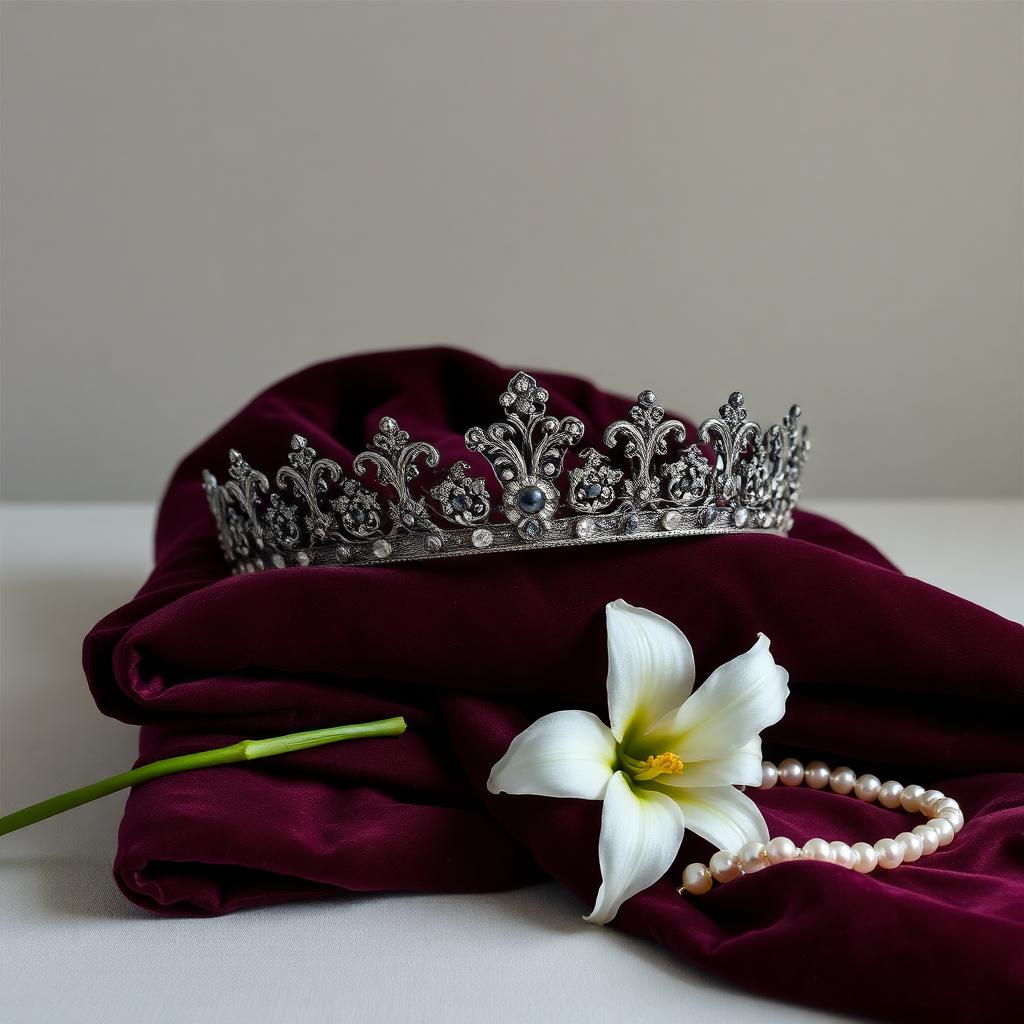
What the Queen archetype actually is
The Queen archetype is the inner figure of earned authority. She is not the princess waiting to be chosen. She is the fully grown woman - or the fully grown feminine principle inside any psyche - who has accepted the weight of her own life and the people in it, and now governs accordingly.
The Queen does not seek power. She has it. The work is not in acquiring it but in using it well. Her central question is not am I allowed? but what am I responsible for, and how shall I steward it?
Jungian writers describe the Queen as one of the great mature feminine archetypes, distinct from both the Mother and the Lover. She incorporates them and adds something neither has alone: sovereignty over her own field.
Where it comes from
The Queen rarely arrives early. She is typically forged through experience - usually a chapter or several in which a woman is required to take responsibility she did not initially want and finds, in the carrying of it, that she can.
Many Queens emerge through motherhood, through running an organisation, through losing one of the people they depended on, through the slow accumulation of decisions only they could make. None of these are required, but they all tend to forge Queen energy. The archetype is grown, not given.
How the Queen shows up in daily life
Queen-led people set the temperature of the rooms they walk into. Not through dominance, but through clarity. Other people, often without realising it, relax slightly in their presence - or, if their own behaviour is out of line, tighten.
They are unusually generous with people who have earned trust and unusually unmoved by people who have not. They do not perform warmth they do not feel. They are, however, capable of a kind of warmth that is rare: the warmth of someone who has nothing to prove and is therefore free to actually be with you.
Internally the Queen shows up as the capacity to hold a complicated picture without panicking. Several competing needs, several difficult feelings, several people relying on you. The Queen is the part that can sit on the throne in the middle of all of it and govern.
The gift
The Queen's gift is just rule. She makes her domain - a family, a team, a creative project, an inner life - into a place where things can grow because they are protected and held to standard at the same time.
She is also a model. Other women, in particular, often feel something quietly liberate inside them in the presence of an embodied Queen. They had not realised, until that moment, that this was a possible way to be.
The shadow
The shadow of the Queen has two faces. The first is the tyrant queen - the woman who governs by edict and threat, whose authority has become brittle and whose generosity has gone. This Queen is feared, not loved, and the cost to her own inner life is enormous.
The second is the queen who has not yet taken her throne. She has the capacity but refuses the responsibility, often because she has been punished for visibility before. This Queen runs the room from the corner, exhausting herself with influence she will not name as power.
The mature Queen accepts the throne. Not for ego - because the people, projects, and inner life she is responsible for need someone to actually sit there. To leave the throne empty is a failure of love.
When the Queen appears in dreams
Dreams set in castles, large estates, palaces - places that imply a domain to be governed - often carry the Queen. See castle dreams for the symbolic territory.
Dreams in which you meet, or are mistaken for, a public figure also belong here. Celebrity dreams often carry Queen material when the figure is admired for their visible authority rather than their fame alone.
Living with the Queen more consciously
Three practices help. First, name your domains. Where, exactly, do you have authority - in your own life, your relationships, your work? The Queen begins to come online once she sees the map of what she actually governs.
Second, stop apologising for the throne. Many women have spent a lifetime softening their authority because it is socially expensive. Naming the authority - to yourself, in plain language - is the beginning of using it well.
Third, govern with mercy. The mature Queen is firm and kind. She holds standards and refuses humiliation as a tool. This is one of the hardest pairings in any archetype to live, and one of the most healing for everyone around her.
The Queen in relationships
In relationships the Queen is unusually clear about what she will and will not accept. She does not perform softness she does not feel and she does not pretend not to need what she needs. Partners who can stand in equal sovereignty with her thrive. Partners who require her to make herself small in order to be loved eventually leave or are sent away.
The healing in long relationships is in continuing to take up space rather than slowly receding to keep the peace. The Queen who has spent decades adjusting downward to accommodate someone else's discomfort often arrives, in mid-life, at a quiet refusal. This refusal looks like a crisis. It is often the beginning of her actual life.
In friendships the Queen is the centre other women orbit, the one whose presence raises everyone's standard of what is possible. The cost is that she can be lonely - adoration is not the same as being known. A few peers, women or otherwise, who can meet her at her actual height, are worth more than a circle who admires her.
The Queen across the life stages
The young Queen often does not realise she is a Queen. She has been told, by the surrounding culture, to make herself small. The middle years are when, through experience and exhaustion, she begins to take her seat. The later Queen who has done this work becomes the elder women - and men - come to in a difficult moment, not because she will fix it but because in her presence the difficult thing becomes possible to face.
Watch for threshold moments. Many Queens describe a specific mid-life turning - sometimes around forty, sometimes later - at which they finally stop apologising for their authority. The years after that turn are often the most generative of their lives.
A writing practice for meeting the Queen
If you want to work with this archetype directly, the simplest entry is writing. Set aside twenty minutes, alone, with no audience. Begin with the sentence: The Queen in me wants… and keep writing without stopping. Do not edit. Do not explain. The Queen has been waiting for permission to speak in your own voice, and this is the door.
After ten minutes, switch the prompt. Write: The Queen in me is afraid of… and follow that thread for another ten. The first list is usually the gift of the archetype trying to be lived. The second is usually the wound it has been protecting. Both deserve to be on the page.
At the end, do not analyse what you have written. Close the notebook. Walk. Let the Queen integrate at the pace it can. Return to the practice in a week. Over a few weeks, patterns will appear that no amount of thinking would have produced - and you will start to live this archetype more consciously almost without trying.
Common misreadings of the Queen
It is worth naming the ways this archetype is most often misread, because the misreading shapes whether a person can recognise it in themselves at all. The Queen is dismissed as ambition, coldness, or social climbing. Each reading has a partial truth, which is what gives the misreading its grip. The fuller truth is harder to hold and more useful.
The first misreading flattens the archetype into a stereotype, which makes it easy to either claim or reject without actually meeting it. Real Queen energy is rarely as tidy as either claim. The second misreading treats the visible signs of the archetype as if they were the archetype itself, when in fact the visible signs are often only what other archetypes around it are willing to let show.
What you can hold instead is the underlying signature. You know the Queen is active not by any single behaviour but by the pattern: the same kind of pull, the same kind of cost, the same kind of question, returning across years. Once you can recognise the pattern, the misreadings stop being so dangerous. You can hear them, decline them, and continue meeting the archetype on its own terms.
This matters because the archetype's gift is unlocked by being met accurately, and the gift here is sovereign generosity. A misread archetype keeps trying to deliver its gift through whatever channel is least obstructed, which is often the shadow. The accurate reading is what allows the gift to come through cleanly.
This archetype has become especially relevant in a public conversation still half-uncertain whether women are allowed to take their seat. The Queen matures the moment sovereignty is governing your own domain with mercy and clarity. Holding that as the working definition - rather than the cultural version - is what allows the archetype to take its proper place inside a real life.
If this archetype feels familiar
Many women - and many people of any gender carrying feminine sovereignty - have a Queen waiting to be claimed. The world is in some ways shaped against her, and yet she keeps trying to arrive.
Your Mythology Profile can show where Queen energy currently sits in your pattern, and what MythRadar is explains how this symbolic reading works. You may also recognise yourself in The Mother Archetype or The King Archetype, both close relatives of the Queen.
A final word
The archetype does not need to be performed to be lived. Quiet attention, over months, does more than any dramatic gesture. Begin where you are.
Archetypes are not labels you are stamped with for life. They are the active forces shaping how you meet your days, and they shift with chapters. The one you most strongly recognise today may be quieter in a year. Another may move forward. The point is not to identify yourself with one figure and end the inquiry, but to learn to read which figures are in the room and how they are speaking, so the life you build is one you have actually chosen.
If this piece has named something you have been carrying, let that recognition be enough for now. The work of integrating an archetype is slow and largely invisible from the outside. Most of it happens in the long ordinary days between any single insight and the next. Patience with the process is part of the maturity each of these figures, in their own way, is trying to grow in you.
I post the short version of these on Instagram most days. Follow @mythradar on Instagram