Archetypes
The King Archetype: Responsibility Without Tyranny
The King is not domination. He is the part of the psyche that takes the throne of his own life, and uses the power there to bless rather than control.
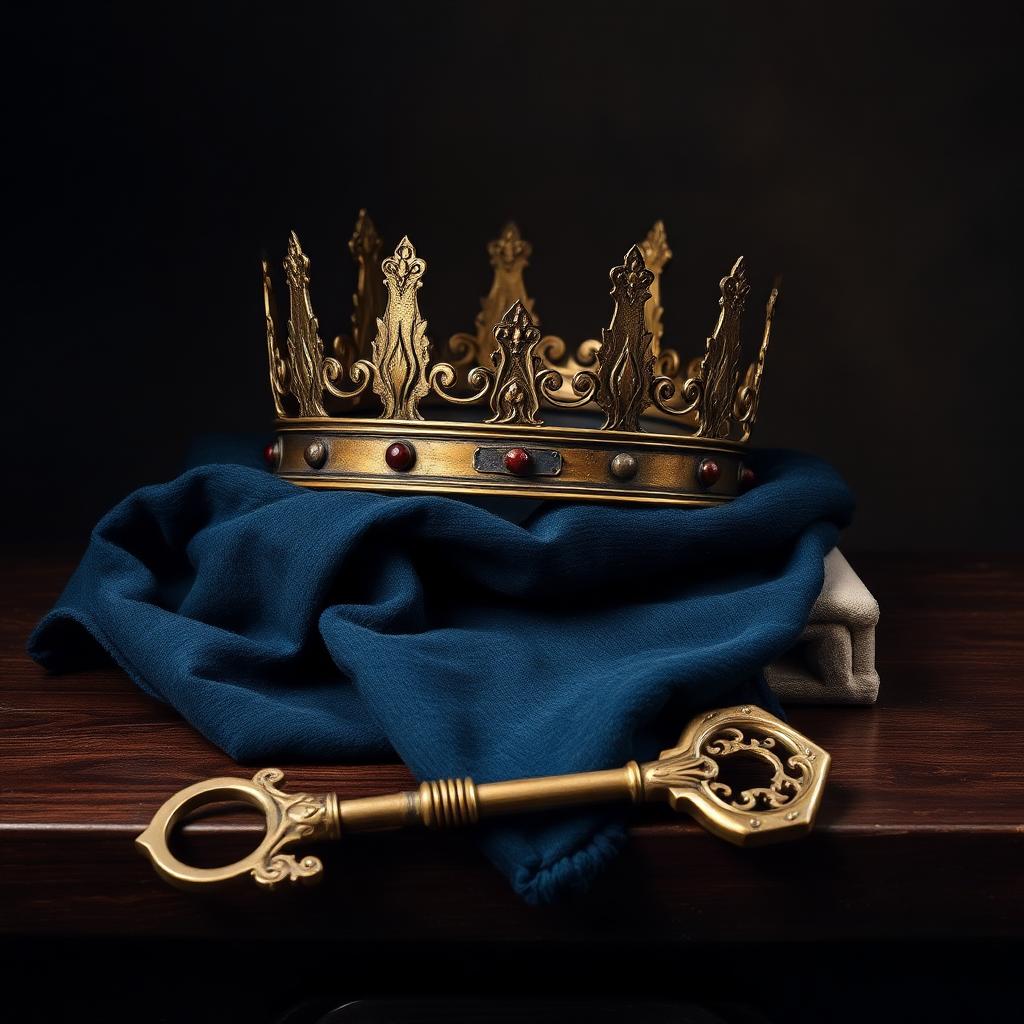
What the King archetype actually is
The King archetype is one of the mature masculine principles described by Jungian writers, particularly Robert Moore and Douglas Gillette. He is not the dominator, not the warlord, not the tyrant. He is the principle of sovereign responsibility - the part of any psyche that takes the throne of its own life and governs the domain it has been given.
The King's central act is not command but blessing. He sees, names, and elevates what is alive and growing in his realm. Where the Warrior fights, the King anchors. Where the Magician transforms, the King stabilises. Where the Lover delights, the King protects the conditions in which delight is possible.
Every person, regardless of gender, carries this archetype. The question is whether the throne is occupied - by a present, conscious self - or left empty for someone else to sit on.
Where it comes from
The King forms slowly, usually through chapters in which a person has to take responsibility for something or someone other than themselves. A team, a family, a craft, an inner life. The first chapters of taking the throne are usually clumsy. The archetype is not given; it is grown.
Many adult Kings carry the wound of an absent inner King - they did not see this archetype lived well by the people who raised them, and so are partly improvising. This is honourable and difficult work. The archetype can be learned. It just costs more when you are also being its first model.
How the King shows up in daily life
King-led people are unusually grounded. They do not need to perform power because they have stopped confusing power with display. They are typically generous with their attention and ruthless with their time, in the sense that they spend it on what actually matters.
They are also the people who name what is good. The healthy King sees the gift in others and says so clearly. This is one of the most underestimated leadership functions in any context. Without it, gifts wither for lack of recognition.
Internally the King shows up as the capacity to take responsibility for your domain without collapsing into either control or martyrdom. The voice that says, of the difficult thing in your life: this is mine to deal with, and means it.
The gift
The King's gift is order in service of life. He creates the framework inside which other things can flourish. People around a present King relax, because they trust someone is holding the centre. Whether the King is also formally in charge of anything is less important than that someone, internally and relationally, is steady.
The deepest gift of the King is blessing. The conscious act of saying, to another being: I see you, and what is in you is good. People starved of this blessing often spend decades trying to extract it from substitutes. The King who can give it freely is rare and consequential.
The shadow
The shadow of the King has two famous forms. The first is the tyrant - the King who has lost contact with his own vulnerability and now demands from others what he can no longer feel in himself. This King is paranoid, brittle, and afraid, even when the world reads him as powerful.
The second is the weakling - the King who has refused the throne. He looks humble and is often quietly resentful. He does not feel safe taking responsibility for his domain, so he leaves the seat empty. Others, sensing the absence, will eventually try to occupy it, often badly.
Both shadows pass through families, organisations, and nations. Healing the inner King - being neither tyrant nor absentee - is one of the central tasks of adult masculine maturation, in any gender.
When the King appears in dreams
Dreams set in castles, palaces, great houses with rooms to govern, often carry the King. See castle dreams for the patterns. The state of the castle in the dream often reflects the state of the inner King.
Dreams in which you are given, find, or refuse a key are also classic King territory. Key dreams often arrive when the psyche is offering you authority over a part of your life you have not yet claimed.
Living with the King more consciously
Three practices help. First, name your domain. What, in your actual life, is yours to govern? Not everything you would like to influence - what you actually have responsibility for. The King begins with an accurate map.
Second, practise blessing. Once a day, name out loud or in writing something good you have seen in another person. The King's voice gets stronger with use. Without practice, it stays underdeveloped while harsher voices speak in its place.
Third, take the throne in small ways. Make the decision that has been waiting. Hold the line that needs to hold. Sign the document. Have the conversation. Each small enactment teaches the psyche that the throne is occupied by someone competent - you.
The King in relationships
In relationships the King is steady, grounded, and clear about what matters. His partner feels held by his attention even when he is not actively giving it. The shadow is when the steadiness slides into rigidity - when he becomes the one whose preferences quietly organise everything without anyone agreeing to it.
The healing here is in remembering that the throne is occupied in service of the people in the domain, not the other way round. The King who regularly asks his partner what she actually wants and lets her answer change the plan keeps the archetype healthy. The King who governs by assumption slowly loses everyone who stays.
In friendships the King is often the one others rely on in a crisis. He shows up. He decides. He carries weight. The cost is that he can lose access to his own vulnerability, since his role has not allowed for it. A few friendships in which he is allowed to be the one who needs help rather than the one who gives it are essential to staying whole.
The King across the life stages
The young King is often unsteady - taking responsibility he does not yet know how to hold, or refusing it because the model he had was bad. The middle years are when, through practice and inevitable failure, the archetype matures. The later King who has done the work becomes the elder others come to not for answers but for the steadiness in which they can find their own.
Watch for threshold moments. Many men encounter the inner King most clearly through becoming a father, taking on real leadership, or losing a parent. Each is an invitation to take the throne more fully and govern more justly.
A writing practice for meeting the King
If you want to work with this archetype directly, the simplest entry is writing. Set aside twenty minutes, alone, with no audience. Begin with the sentence: The King in me wants… and keep writing without stopping. Do not edit. Do not explain. The King has been waiting for permission to speak in your own voice, and this is the door.
After ten minutes, switch the prompt. Write: The King in me is afraid of… and follow that thread for another ten. The first list is usually the gift of the archetype trying to be lived. The second is usually the wound it has been protecting. Both deserve to be on the page.
At the end, do not analyse what you have written. Close the notebook. Walk. Let the King integrate at the pace it can. Return to the practice in a week. Over a few weeks, patterns will appear that no amount of thinking would have produced - and you will start to live this archetype more consciously almost without trying.
Common misreadings of the King
It is worth naming the ways this archetype is most often misread, because the misreading shapes whether a person can recognise it in themselves at all. The King is conflated with patriarchy or authoritarianism. Each reading has a partial truth, which is what gives the misreading its grip. The fuller truth is harder to hold and more useful.
The first misreading flattens the archetype into a stereotype, which makes it easy to either claim or reject without actually meeting it. Real King energy is rarely as tidy as either claim. The second misreading treats the visible signs of the archetype as if they were the archetype itself, when in fact the visible signs are often only what other archetypes around it are willing to let show.
What you can hold instead is the underlying signature. You know the King is active not by any single behaviour but by the pattern: the same kind of pull, the same kind of cost, the same kind of question, returning across years. Once you can recognise the pattern, the misreadings stop being so dangerous. You can hear them, decline them, and continue meeting the archetype on its own terms.
This matters because the archetype's gift is unlocked by being met accurately, and the gift here is order in service of life. A misread archetype keeps trying to deliver its gift through whatever channel is least obstructed, which is often the shadow. The accurate reading is what allows the gift to come through cleanly.
This archetype has become especially relevant in a moment that has many leaders and few people genuinely occupying the inner throne. The King matures the moment the mature King governs in service of life, not in service of his own throne. Holding that as the working definition - rather than the cultural version - is what allows the archetype to take its proper place inside a real life.
If this archetype feels familiar
Many people, of all genders, are quietly carrying a King who has not yet been allowed to take his seat. Letting him do so is not arrogance; it is one of the most generous things you can do for the people in your life.
Your Mythology Profile shows where King energy currently sits in your pattern, and what MythRadar is explains how this symbolic reading works. You may also recognise yourself in The Queen Archetype or The Warrior Archetype, both close working partners of the King.
A final word
The archetype does not need to be performed to be lived. Quiet attention, over months, does more than any dramatic gesture. Begin where you are.
Archetypes are not labels you are stamped with for life. They are the active forces shaping how you meet your days, and they shift with chapters. The one you most strongly recognise today may be quieter in a year. Another may move forward. The point is not to identify yourself with one figure and end the inquiry, but to learn to read which figures are in the room and how they are speaking, so the life you build is one you have actually chosen.
If this piece has named something you have been carrying, let that recognition be enough for now. The work of integrating an archetype is slow and largely invisible from the outside. Most of it happens in the long ordinary days between any single insight and the next. Patience with the process is part of the maturity each of these figures, in their own way, is trying to grow in you.
I post the short version of these on Instagram most days. Follow @mythradar on Instagram