People
Dead Relative Dreams
To dream of those who have passed on can be a profoundly moving experience, sometimes feeling like a visitation, sometimes like a echo from within. It invites us to consider the enduring connections that shape us.
- grief
- continuity
- ancestry
- unfinished
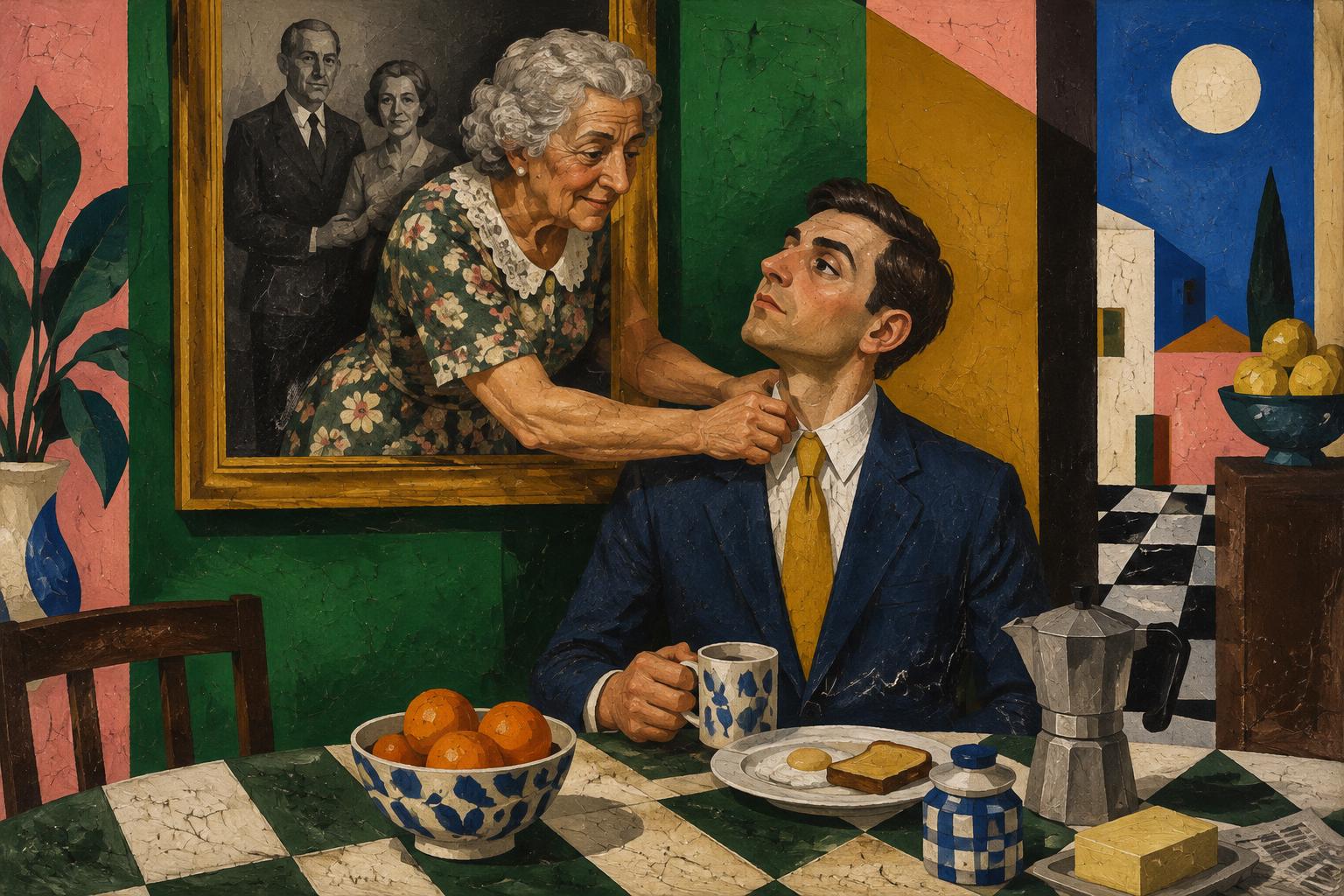
Dreaming about a dead relative is usually your mind processing grief, memory or unfinished feeling, not a genuine visit or message from beyond. These dreams are extremely common, especially in the months after a death and around anniversaries, and they tend to intensify rather than fade for a while before they settle. The dream is doing the ordinary work of integrating a loss, even when it feels far from ordinary to experience.
What the relative says or does in the dream usually reflects what you need to hear, resolve, or forgive, drawn from your own memory of them rather than any message originating outside you.
Common interpretations
Dreams about the dead cluster around a small number of patterns. Read them as grief and memory doing their work, not as communication from elsewhere.
A relative who seems healthy and at peace
This is the most common and most comforting version of the dream. It usually appears once acute grief has begun to settle, and reflects your own gradual acceptance rather than any report on their actual state.
A relative who seems distressed or trying to warn you
This pattern often surfaces unresolved guilt or anxiety connected to the relationship or the death itself, more than any real warning. It is worth reading alongside death dreams for the broader pattern.
A conversation that resolves something unfinished
Dreams where you say what was never said in life are some of the most psychologically important grief dreams. They let the mind complete a conversation reality could not, and often bring real relief on waking.
The relative behaving as if still alive
This usually happens early in grief, when the fact of the death has not yet been fully absorbed by the parts of the mind that produce dreams. It tends to become less frequent as the loss is integrated. See also dreams during major life transitions.
Dreaming of a relative you never met
These dreams often draw on family stories and photographs rather than direct memory, and can surface when you are thinking about heritage, identity, or the shape of your family history.
The relative appearing at a significant life event
A dead relative showing up at a wedding, birth or other milestone in a dream usually reflects a wish for their presence and approval at a moment when they are genuinely missed, rather than any supernatural attendance.
Personal mythology
While general interpretations offer a starting point, the true resonance of a dead relative dream often lies in your personal mythology: the unique tapestry of experiences, emotions, and meanings woven into your life. The same dream of a departed parent, for instance, might be profoundly comforting for one person, a reaffirmation of enduring love, while for another, it could stir up a complex tangle of unresolved feelings or regrets.
Consider, too, the role this specific individual played in your waking life. Were they a source of unwavering support, a challenging figure, or a silent presence? The dream may be echoing these established dynamics, or perhaps, it could be offering a new perspective on them, suggesting an opportunity for reconciliation or release that was unavailable in waking life.
The particular details of the dream, the setting, the conversation, the feeling tone, are all threads in this personal narrative. A dream where a deceased mentor offers advice in a library might speak to a current intellectual or professional challenge you are facing, whereas a conversation with a departed sibling in a childhood home might open a doorway to memories of shared history and companionship.
Ultimately, these dreams are not just about the person who has passed, but about you, the dreamer, and your ongoing relationship with their memory and legacy. They may be inviting you to explore how their influence continues to shape who you are, or perhaps, how you carry forward aspects of their spirit or lessons in your own life’s journey.
Questions worth asking
- What emotions did you experience most strongly during this dream?
- How did this person typically appear to you in waking life?
- Were there any specific words or actions from the relative in the dream?
- What themes or challenges are currently prominent in your waking life?
- Does this dream feel like a comforting presence or a call to address something unfinished?
- How has this person's memory continued to influence you since their passing?
- What might your inner world be seeking to communicate through this encounter?
What MythRadar would notice
In the quiet theatre of the dream, the appearance of a departed relative sometimes feels like a poignant re-engagement with our own history, a gentle tug on threads long thought simply tied off. It’s as if the deeper currents of the self are reminding us that relationships, in their truest sense, are rarely entirely concluded; they simply evolve into a different form.
These dreams often come at pivotal moments: times of transition, significant decision-making, or periods of intense reflection. The presence of a loved one who has passed may be a subtle suggestion from your subconscious, prompting you to consider the enduring wisdom they imparted, or perhaps, to integrate qualities they embodied into your present self. It is never about being haunted, but rather about being reminded of the rich, multi-layered inheritance of human connection.
The recurring nature of such dreams for some individuals could point towards an ongoing dialogue within the psyche, where a particular theme or unresolved emotion related to the deceased is seeking continued expression and understanding. It’s an invitation to explore the continuity of self, the way we carry the past into the present, and how memory becomes a living, breathing part of who we are.
Common questions
- What does it mean to dream about a dead relative?
- It usually means your mind is processing grief, memory or unfinished feeling connected to that person, particularly around anniversaries or major life changes. It is a normal and common part of mourning.
- Are dreams about dead relatives really visits from them?
- There is no evidence for this. What the relative says or does in the dream is drawn from your own memory and feelings about them, not from any outside message.
- Why do I keep dreaming about a dead relative who seems distressed?
- This often points to unresolved guilt, worry or unfinished business connected to the relationship or the death, rather than distress on their part.
- Why did I only start dreaming about them years after they died?
- Grief resurfaces around anniversaries, transitions and reminders. A dream years later usually means something in the present has reconnected you with feelings about the loss.
- Is it normal to dream about someone who died recently?
- Yes, this is extremely common and often becomes more frequent in the weeks after a death before gradually settling as grief is processed.
Continue the exploration
Dreams of deceased relatives, in all their varied forms, are often deeply personal communions. Take a moment to sit with the feeling of the dream, to notice any specific images or emotions that linger. Perhaps jot down what you remember, just a few notes or phrases. Sometimes, the mere act of acknowledging the dream can shift its presence within you.
As you move through your days, perhaps observe if any echoes of that dream return, or if new insights emerge regarding your relationship with the departed. Your Personal Mythology, the unique narrative of your life, is always unfolding, and these dreams, like all others, are often invitations to understand its deeper patterns.
Related symbols
From the Insights library
Other familiar faces turn up for similar reasons: People in Dreams.
the next question
One entry is a symbol. Several, read together, are a pattern - and a pattern is the beginning of a personal mythology.