Self-Awareness
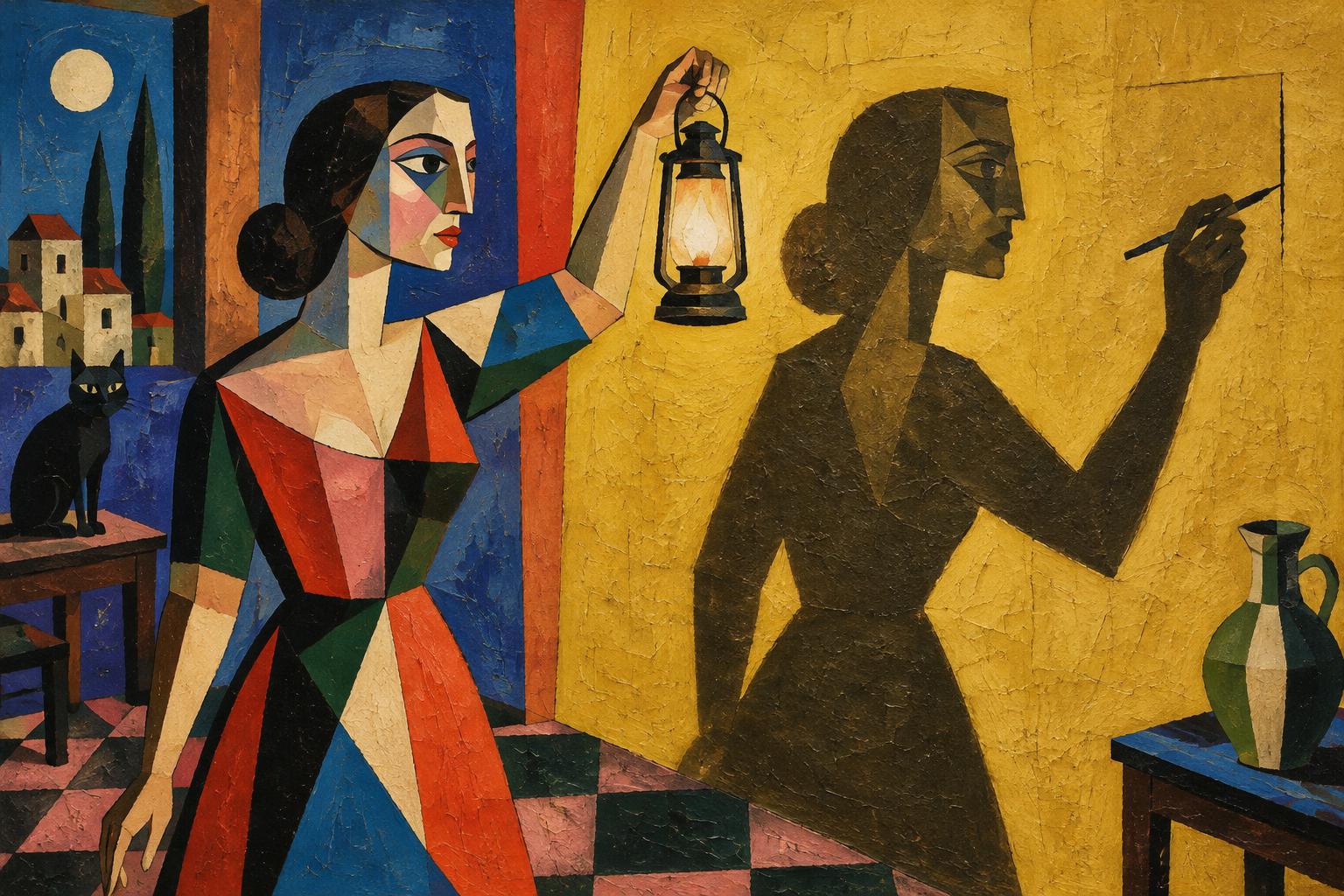
Meeting the Shadow Self
The Stranger at the Edge of the Fire There is a specific kind of quiet that arrives late in the evening, long after the obligations of the day have been dismantled and put away.
The Stranger at the Edge of the Fire
There is a specific kind of quiet that arrives late in the evening, long after the obligations of the day have been dismantled and put away. It is the hour when the house settling on its foundations sounds like a long exhale, when the ambient hum of the refrigerator or the faint rhythm of rain against the glass becomes the only score to your solitude. If you sit still enough in this quiet, devoid of screens and distractions and the easy anesthetic of endless scrolling, you will eventually feel the presence of the others. Not ghosts in the literal sense, but the quiet, displaced fragments of your own psyche that you have left outside in the cold.
You know the sensation. It arrives as an unbidden memory of a moment you would rather forget, a sudden flash of profound irritation at someone you hardly know, or an impulse so entirely contrary to your idea of who you are that it leaves you momentarily breathless. We spend the vast majority of our waking lives constructing a coherent narrative of our own goodness. We build an edifice of identity that is polished, predictable, and presentable to the society in which we must move. But what happens to the pieces of wood that did not fit the frame? What happens to the raw, unvarnished aspects of our human nature that we were told, long ago, were unacceptable?
Carl Jung called this accumulation of the unlived life the shadow. And our modern sensibility, steeped in pop psychology and cinematic villains, has done us a great disservice in how we interpret that word. When we hear the word shadow, we imagine a demon. We imagine a reservoir of pure malice, a psychopathic underbelly waiting for the cover of darkness to commit unspeakable acts. We assume the shadow is the evil in us.
But the shadow is not evil. It is simply the disowned. It is the vast, overgrown territory of your own nature that you have fenced off and refused to visit. It contains everything about you that threatens the carefully curated image you present to the world, and importantly, the image you present to yourself. It holds your unrecognized anger, yes, but it also holds your unacknowledged grief. It carries your capacity for wildness, your deeply submerged selfishness, your terrifying vulnerability, and your untamed joy. The tragedy of the shadow is not that it is inherently bad, but that it has been starved of light for so long that it has forgotten how to speak in a normal voice. When it comes knocking, it tends to break down the door.
The Architecture of the Unacceptable
To understand the shadow, you must return to the dining room tables and the hallways of your earliest years. You must look at the architecture of your childhood, before you learned to divide yourself into the acceptable and the forbidden. We do not arrive in this world cleanly bifurcated. A young child is a totality of experience, capable of shifting from pure, luminous joy to bottomless rage in the span of a single breath. A child is entirely greedy, entirely generous, unapologetically loud, and demandingly needy. They are whole.
But wholeness is inconvenient to the machinery of civilization. The shaping begins early, driven by parents, teachers, and a culture that requires compliance to function smoothly. We are taught the rules of conditional love. The process is rarely malicious; it is usually driven by caregivers who are themselves terrified of the very things they are punishing in you. And so, the negotiations begin.
If you were raised in a house where anger was considered dangerous - perhaps because a parent was volatile, or perhaps because anger was simply deemed impolite - you quickly learned that your own frustration threatened your survival. Your anger did not simply evaporate because it was forbidden. Energy cannot be destroyed; it can only be relocated. So, you packed up your anger, your forceful boundaries, your capacity to say a definitive and unapologetic no, and you handed it over to the shadow. You became the peacemaker. You became the good, compliant child who never raised their voice. You constructed a persona of perpetual calm.
If you were raised in an environment that valued stoicism and intellectual rigor, you might have learned that your tears, your sensitivity, and your emotional porosity were signs of weakness. You watched the subtle withdrawal of affection when you cried. You felt the chill in the room when you expressed an irrational fear. You took your softness, your deep intuition, and your tender need for comfort, and you exiled them to the dark. You became the rational one, the unfazed one, the pillar of logic.
Every time we are told that a piece of our humanity is unacceptable, we sever it from our conscious identity. We throw it into a heavy bag that we drag behind us, hoping no one will look inside. As the years turn into decades, the bag grows heavier. We expend an enormous, unnameable amount of psychological energy dragging this weight, keeping the drawstrings pulled tight, terrified that someone will see what we are carrying. We become exhausted, though we cannot explain to a doctor why we are so tired. The exhaustion is the cost of maintaining the division. It takes a monumental effort to keep half of your nature submerged underwater while trying to breathe normally on the surface.
The Mirrors We Hate
The universe, in its strange and uncompromising demand for balance, will not allow the shadow to remain hidden forever. What we refuse to acknowledge within ourselves, we are destined to encounter as fate in the external world. This brings us to the uncomfortable and deeply revealing mechanism of projection. Because you cannot look directly at what is inside your heavy bag, your psyche creates an ingenious, torturous workaround: it pins your disowned traits onto the people around you.
Think of the last time you walked into a room, perhaps a dinner party or a workplace meeting, and encountered someone who aggravated you instantly. You could not quite articulate the source of the friction. They hadn't insulted you. They hadn't actively done anything to harm you. Yet, the sound of their voice, the way they took up space, or their particular mannerisms ignited a disproportionate, buzzing irritation in your chest. Why does she make me want to scream? What is it about his laugh that I cannot abide?
We justify our disdain with rationalizations. We tell ourselves they are arrogant, or lazy, or overly emotional, or hopelessly rigid. But the intensity of the reaction is the tell. When a reaction to another person is wildly out of proportion to their actual behavior, you are no longer seeing the person in front of you. You are looking at a mirror reflecting your own exile.
If you have spent a lifetime ruthlessly repressing your own needs, constantly martyring yourself for the sake of others and calling it nobility, there is nothing that will enrage you more than someone who is unapologetically selfish. You will watch a person set a hard boundary, or take the last piece of cake, or decline an invitation simply because they are tired, and you will feel a rising tide of judgment. You will call them narcissistic. You will call them inconsiderate. But beneath the judgment is the shadow, howling in the dark. It is infuriated that this person possesses the freedom to do what you have forbidden yourself from doing.
If you have built your security on being hyper-responsible, meticulously organized, and relentlessly productive, the shadow will project itself onto the chaotic, the lazy, and the unstructured. You will find yourself obsessively complaining about a colleague who seems to glide through life without a calendar, arriving late but remaining remarkably unbothered. Your conscious mind despises their lack of discipline, but your shadow, exhausted from decades of relentless vigilance, secretly yearns for the permission to drop the ball, to fail, to rest.
This is the terrible elegance of projection. The people who annoy us most profoundly are our greatest, albeit unconsenting, teachers. They are walking around carrying the parts of our soul that we threw away. Confronting this requires a blistering honesty. It requires you to sit in your car after the dinner party, feel the lingering annoyance at the loud, boastful man who dominated the conversation, and quietly ask yourself: Where is the loud, boastful man inside of me? Where did I bury the desire to be seen, to be heard, to take up the center of the room without apologizing?
The Midnight Theater
When the waking world is stilled and the conscious ego finally surrenders to sleep, the heavy bag is untied. The guards you employ to police the borders of your identity fall asleep at their posts, and the shadow walks freely into the theater of your dreams. It is here, in the strange, shifting architecture of the unconscious, that the disowned parts of ourselves take on physical form.
In dreams, the shadow typically appears as a figure of the same gender as the dreamer. It is the antagonist, the pursuer, the eerie stranger standing in the periphery of a familiar landscape. Often, the setting is deeply significant: the basement of your childhood home, a decaying hotel, a locked room you forgot existed, or a murky body of water. These are the subterranean levels of the psyche.
You may find yourself running down endless, dimly lit corridors, chased by a man whose face you cannot quite see, but whose malevolence feels absolute. You may be cornered by a chaotic, disheveled woman who demands something you cannot understand in a language you do not speak. The terror in these dreams is profound. The ego, still desperately clinging to its narrative of control, interprets this approaching figure as an existential threat. And so, you wake up. You surface from the dream with a racing heart, relieved that it was only a nightmare, grateful to be back in the bright, rational world where you are safe.
But the tragedy of the nightmare is that you woke up too soon. You ran away from the very thing that was trying to heal you.
The dark figure pursuing you in the dream does not want to murder you. It does not want to destroy your life. It wants what all exiled things want: it wants to be recognized. It wants to come in from the cold. The menace it projects is entirely proportional to the force with which you have repressed it. If you push a piece of your soul into a dark cellar and starve it for twenty years, it will not emerge looking like a polished gentleman holding a bouquet of flowers. It will emerge looking like a beast. Its roar is a desperate plea for inclusion.
There are rare moments in the dreamworld - moments of profound psychological courage - when the fleeing ego stops running. What happens if, in the dream, you turn around and face the pursuer? What happens if you look at the terrifying figure standing by the broken window and, instead of fighting or fleeing, you simply ask: Who are you? What do you want from me?
Those who have managed to hold their ground in the dream state report a startling transformation. The moment the shadow is faced with curiosity rather than fear, its terrifying visage drops. The monster shrinks into a wounded child. The feral attacker becomes a weeping sibling. The existential threat dissolves into a sorrowful recognition of a lost part of the self. The dream ceases to be a horror story and becomes a deeply emotional reunion.
The Embarrassment of Recognition
Whether it happens upon waking from a profound dream, or during a sudden flash of insight amidst a waking conflict, the moment you truly recognize your shadow is devoid of cinematic glory. It is not a heroic conquest where you stand triumphant over a slain dragon. It is something far quieter, and far more humbling.
It is an acute, blushing embarrassment.
It is the moment you look back at a pattern of your own behavior - perhaps a subtle cruelty you have continuously inflicted on a partner while claiming you were only trying to help, or a silent, simmering envy you have harbored against a friend's success while congratulating them with a frozen smile - and you finally see it for what it is. You catch yourself in the mirror, not as the noble, misunderstood protagonist of your life, but as the perpetrator. You realize that you are capable of deep pettiness, of vanity, of cowardice, of a desperate, ugly hunger for approval.
There is a burning shame in this realization. The ego shudders as its pristine walls begin to crack. The false idol of your own perfect goodness crumbles into dust. For a brief period, you may feel an overwhelming despair, a sense that you are fundamentally flawed and deeply fraudulent.
But if you can withstand the heat of this embarrassment without looking away, without instantly generating a new justification or a new defense mechanism, something miraculous occurs. The shame begins to ebb, and in its place, a strange, cool relief rushes in.
The relief is the sensation of dropping the heavy bag. It is the sudden, cellular understanding that you do not have to be perfectly good all the time, because human beings are not built to be perfectly good. We are built to be whole. You realize that your capacity for darkness does not negate your capacity for light; rather, it provides the depth and the contrast necessary for true illumination. The embarrassment melts into a gentle, dark humor. You look at your own pettiness, your own foolish, grasping ego, and you nod. Ah, there you are. I see you. You belong to me, too.
Setting an Extra Plate
The goal of encountering the shadow is never to destroy it. Attempting to eradicate the dark aspects of your nature is exactly what created the problem in the first place. You cannot perform an exorcism on your own soul. The work, as Jung insisted, is integration.
Integration is an act of radical hospitality. It is the internal equivalent of pulling out a chair at your dining table and setting an extra plate for the ragged, dirty, feral creature that has been lingering near the tree line. You do not hand the creature the keys to the house - you do not let your unresolved rage drive the car or make your financial decisions - but you invite it to sit. You offer it a meal. You ask it to speak.
When you speak to the shadow, you engage in a process of retrieving the gold hidden in the dirt. Every repressed trait contains a vital, life-giving energy that has been distorted by its exile. Once you wash off the mud of repression, you find the treasure.
You speak to your repressed anger, the fury you buried because you thought it made you a bad person, and you discover that stripped of its explosive menace, anger is simply the architecture of healthy boundaries. It is the force that allows you to say, "You may not treat me this way," with steady, unshakeable conviction.
You speak to your repressed selfishness, the self-interest you shoved away to become the perpetual caretaker of others, and you discover that stripped of its narcissism, selfishness is simply the mandate of self-preservation. It is the quiet voice that reminds you that you have a right to your own life, your own rest, and your own desires, independent of what you can provide for others.
You speak to your profound, terrifying weakness, the trembling vulnerability you covered up with a shell of stoic competence, and you discover that it is the only bridge to genuine intimacy. It is the very material that allows you to connect with another human being in their own brokenness.
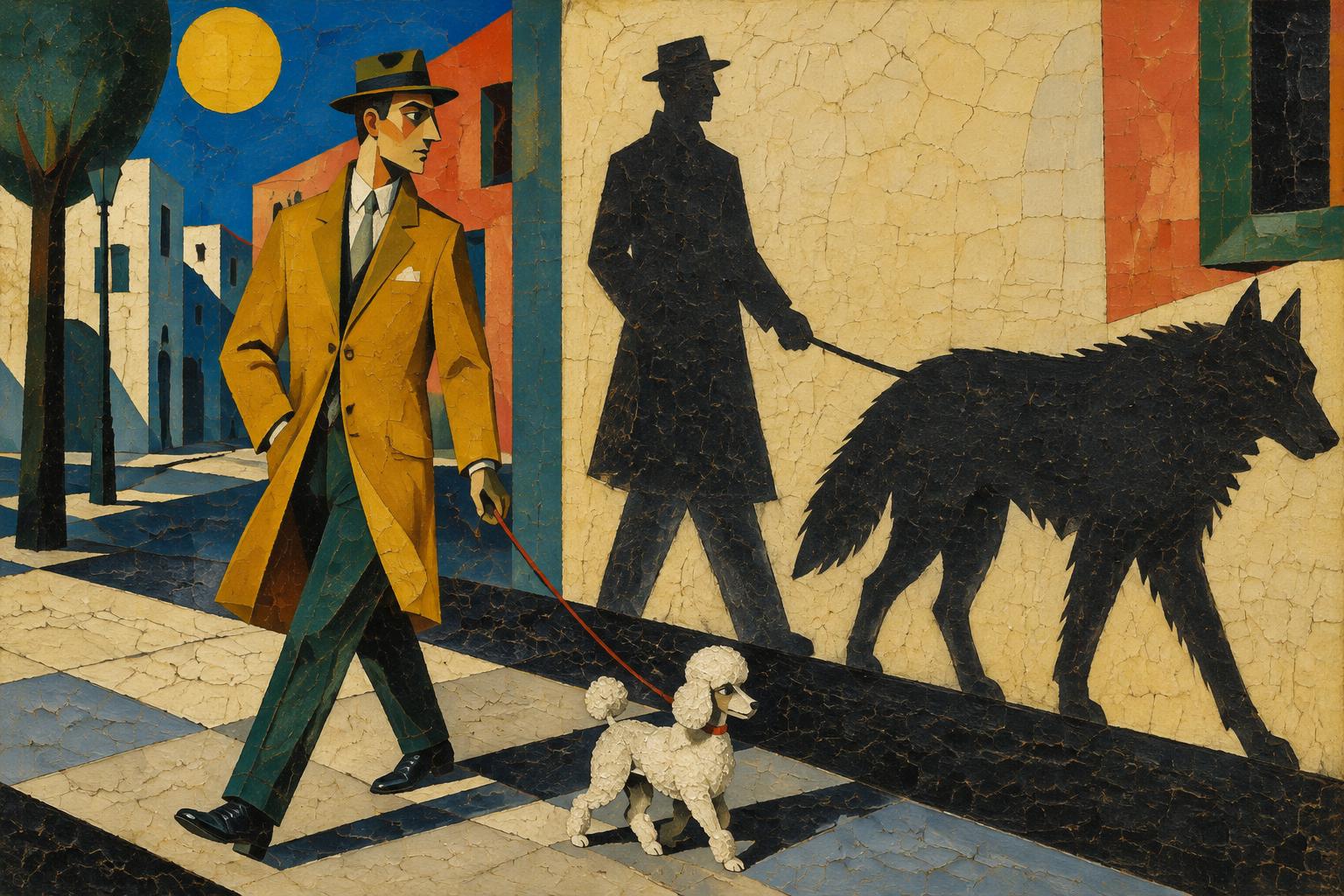
To confront the personification of one's own shadow is the most essential, and most frightening, task of becoming whole. It is the recognition that the monster at the edge of the wood was clothed in the fabric of your own lost coat.
This dialogue is not an event that happens once and is finished. It is a lifelong practice. It is the quiet, daily commitment to noticing when you are contracting, noticing when you are projecting your discomfort onto the world, and gently calling the exiled energy back home. It is the mature acceptance that you are a complex, contradictory, and deeply flawed creature, and that your beauty lies precisely in that complexity.
The Pages Found on the Floor
When you sit alone in that late-night quiet, listening to the rain and feeling the immense, shifting weight of your own psyche, you begin to understand the true shape of your journey. You were not given a life to spend it editing yourself down into a sterile, one-dimensional character fit only for quiet approval. The pattern of separating, rejecting, and eventually turning back to reclaim the lost pieces of yourself is a necessary descent. It is the profound, solitary work of retrieving the torn pages you long ago abandoned on the floor of your childhood. Only when you gather them up, smoothing out the dirt and the dark ink, do you realize they comprise the skipped chapter of the text you have been writing all along. Without those pages, the book makes no sense. With them, the story is finally yours to read.
Related Reading
Why We Attract the Same Relationships Again and Again · What Jung Really Meant · What Is Personal Mythology?
Every recurring dream, repeated relationship, and returning question is a sentence from the same deeper story. Read what Personal Mythology means at MythRadar - or explore your own with MythRadar.
Continue the thread
If this article resonated, three places to go next:
- Look up the symbols this touches in the Shadow Dreams and Nightmares entries.
- New here? What MythRadar is - why we treat dreams and recurring patterns as personal mythology rather than fortune-telling.
- Ready to map your own pattern? Begin your personal mythology profile.
Related reading
To take this further in writing, the shadow work prompts turn these ideas into questions you can answer one at a time.
I post the short version of these on Instagram most days. Follow @mythradar on Instagram