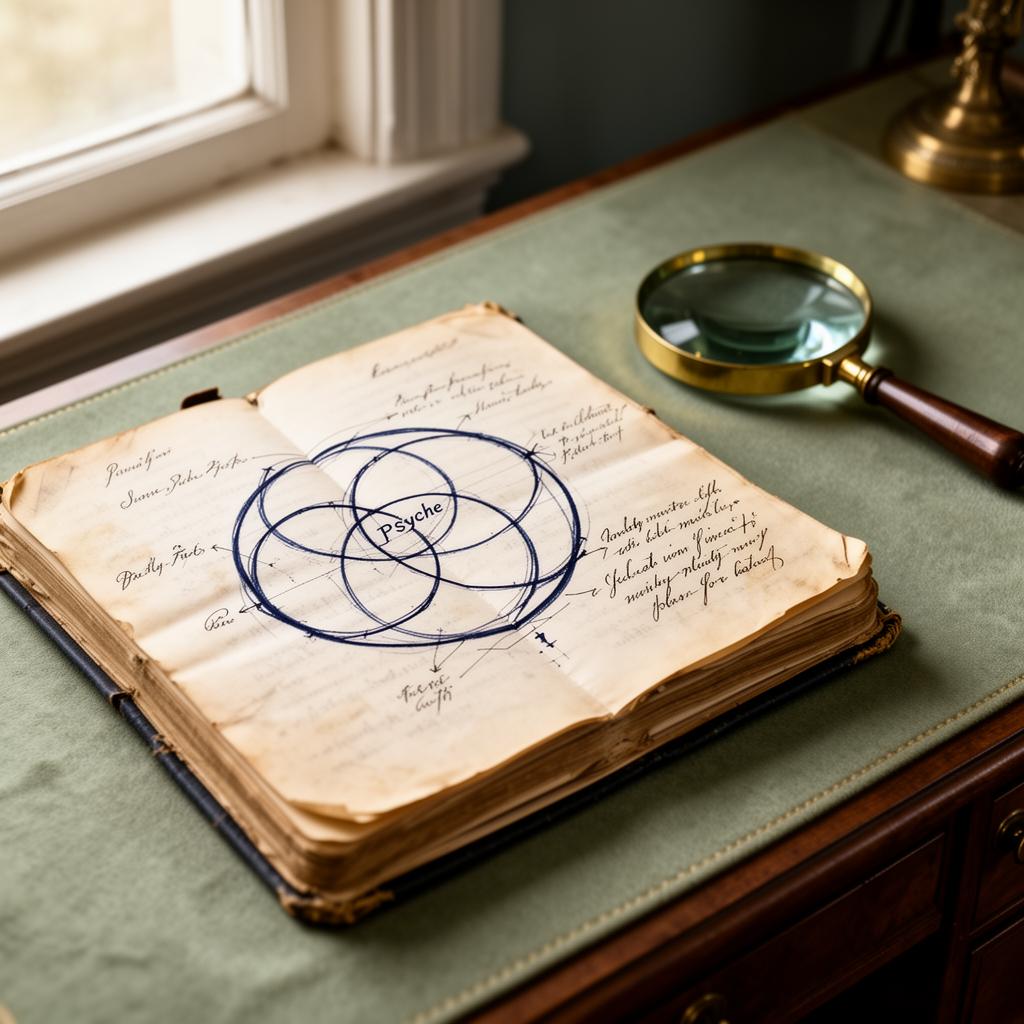
Jungian Psychology
What The Unconscious Is Trying To Do
The unconscious mind, far from being a chaotic vault, is ceaselessly working to construct meaning, guide us towards wholeness, and connect our personal narratives to universal patterns. It is an unseen architect, a tireless mender, and the wellspring of creativity, perpetually inviting us into a deeper relationship with ourselves.
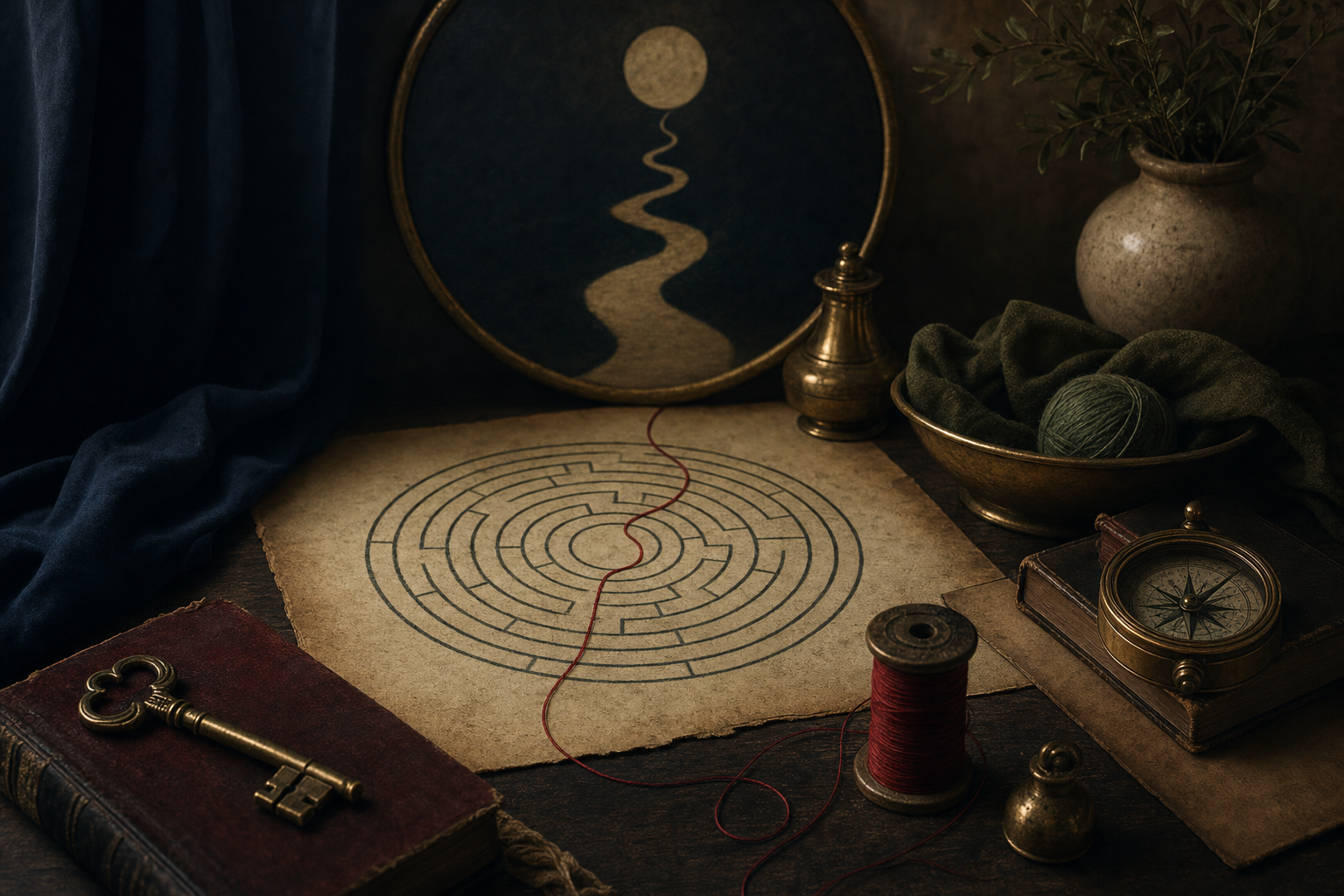
What The Unconscious Is Trying To Do
We often imagine the unconscious as a place where forgotten memories, hidden fears and strange dreams are stored.
Carl Jung saw something much more purposeful.
The unconscious is not simply where forgotten experiences go. It is an active part of the psyche, continually working to bring us into a more complete relationship with ourselves. Rather than opposing consciousness, it complements it, revealing what we have overlooked, denied or simply failed to notice.
Its language is rarely direct. Instead, it speaks through dreams, symbols, emotions and recurring life experiences. These are not random interruptions to everyday life. They are invitations to recognise something that has quietly been shaping us all along.
The unconscious is not trying to confuse you.
It is trying to make something conscious.
The Unseen Architect of Meaning
Imagine the unconscious as a river flowing beneath your conscious life. You cannot always see it, yet you continually experience its influence. It quietly connects memories, emotions and experiences into patterns long before the conscious mind notices they belong together.
While consciousness remembers events, the unconscious remembers meaning. It preserves the moments that changed us internally, even when they seemed insignificant at the time. That is why certain dreams return years apart, familiar symbols appear throughout different stages of life and completely different situations evoke exactly the same emotional response.
The unconscious is not repeating itself.
It is continuing a conversation.
Every dream, spontaneous image and recurring feeling becomes another opportunity to recognise the deeper pattern beneath the individual event. Over time, those separate moments reveal a single story that has been unfolding all along.
A Call Towards Wholeness
One of Jung's central insights was that the unconscious is always moving us towards wholeness.
As we grow, we naturally identify with certain qualities while rejecting others. We present the capable parts of ourselves to the world and quietly distance ourselves from whatever feels uncomfortable, vulnerable or inconsistent with the person we believe ourselves to be.
The unconscious does not forget these neglected parts.
It preserves them.
Over time they return through dreams, emotional reactions, recurring relationships and symbolic experiences, asking not to control our lives but simply to be recognised.
Wholeness is not about becoming perfect.
It is about allowing more of yourself to belong.
The unconscious continually invites us towards that wider, more complete understanding of who we are.
Revealing What Needs Attention
The unconscious also acts as a quiet corrective. Whenever our conscious life becomes too heavily focused in one direction, the unconscious begins drawing attention towards whatever has been neglected.
Someone consumed entirely by achievement may repeatedly dream of abandoned homes. Someone who spends every day caring for others may dream of locked rooms or forgotten children.
The symbols themselves are rarely literal. They point towards the parts of life that have quietly disappeared from awareness. The unconscious is not criticising us. It is restoring balance.
The more consistently we ignore these quiet signals, the more persistently they tend to return. A recurring dream, an unexplained emotion or a familiar life pattern is often the unconscious returning to the same conversation from a different direction.
Continue Reading Why Certain Dreams Stay With You For Years
The Source of Creativity and Innovation
The unconscious does more than reveal what has been hidden.
It also creates.
Many of our clearest insights arrive when we have stopped consciously searching for them. A solution appears during a walk. An idea surfaces while driving. A dream provides an image that suddenly makes sense days later.
This is not coincidence.
While the conscious mind focuses on the immediate problem, the unconscious continues making connections beyond our awareness. It draws together memories, emotions and experiences that appear unrelated until a new pattern suddenly becomes visible.
Creativity often begins long before inspiration arrives.
The unconscious has simply been doing the work quietly.
The unconscious is not merely a storehouse of the past, but a living, dynamic entity striving to expand the individual's future horizons. It is a guide, not a judge.
Mending the Torn Fabric of Our Lives
Life leaves its mark on every one of us. Some experiences are understood as they happen. Others are simply too painful, confusing or overwhelming to fully process in the moment.
Rather than disappearing, they remain within the unconscious, waiting until we are able to meet them differently.
This is one reason certain dreams return for years. The unconscious is not trying to keep old wounds alive.
It is trying to complete something that was never fully understood.
Dreams often revisit emotions before they revisit events. They recreate the atmosphere rather than the history, allowing us to experience what was once beyond our ability to recognise.
Healing rarely begins when we remember more.
It begins when we recognise more.
Continue Reading The Difference Between Change And Transformation
Connecting to the Collective Depths
Jung believed that the unconscious is both personal and universal.
Alongside our individual experiences exists a deeper psychological inheritance shared by every human being. This is what he called the collective unconscious.
It is why certain symbols appear across cultures that have never met. The wise elder. The child. The shadow. The journey. The house. The forest.
These are not learned in the ordinary sense.
They emerge naturally because they reflect patterns that belong to human experience itself.
When a dream moves us deeply, it is often because it touches something larger than our personal history. The unconscious reminds us that our struggles are rarely unique. They are personal expressions of themes that human beings have encountered for generations.
Recognising this does not make our story less individual.
It reminds us that we have never been living it alone.
Guiding Us Towards Our Unique Destiny
The unconscious is also concerned with becoming.
It does not only preserve what has happened. It carries an image of what still wants to emerge. Jung saw this as part of individuation, the slow movement towards a life that belongs more truthfully to the self.
This does not always match the life we planned.
The unconscious often disturbs the version of ourselves built around expectation, approval or safety. It may unsettle a career that looks successful from the outside. It may bring recurring dreams during a relationship we have convinced ourselves is enough. It may create unease exactly where we expected peace.
These disruptions are easy to mistake for problems.
Sometimes they are signals.
The unconscious is continually asking whether the life we are living still belongs to the person we are becoming.
The unconscious is not a foreign country but the deeper, more ancient homeland of the soul, always urging us home to ourselves.
A Continuous Invitation to Self-Discovery
The work of the unconscious is never finished.
It continues through dreams, moods, symbols, memories and recurring patterns. It brings forward what has been ignored. It restores balance where life has become too narrow. It keeps returning to the places where meaning has not yet been recognised.
The unconscious does not demand that we understand everything at once.
It invites attention.
The more carefully we listen, the more our lives begin to organise themselves around deeper meaning. We stop treating dreams as interruptions, emotions as inconveniences and patterns as coincidences.
We begin to recognise them as messages from a part of the self that has been speaking all along.
Closing Reflection
The unconscious is not a foreign country inside us.
It is the deeper intelligence of the psyche, continually trying to bring the hidden parts of life into view.
It does not ask us to become someone else.
It asks us to become conscious of who we already are.
If this article resonated, three places to go next:
Look up the symbols this touches in the Shadow Dreams and Recurring Dreams entries.
New here? What MythRadar is - why we treat dreams and recurring patterns as personal mythology rather than fortune-telling.
Ready to map your own pattern? Begin your personal mythology profile.
Related reading
Journal prompts
- What recurring dream, symbol or emotion has continued to return throughout my life?
- What part of myself have I been trying to outgrow instead of understand?
- If my unconscious has been trying to show me one thing repeatedly, what might I finally be ready to recognise?
Understand Your Inner Patterns
Dreams, recurring emotions and familiar life patterns are rarely isolated events. Your Personal Mythology reveals how they connect, helping you recognise the deeper story your unconscious has been telling all along.
Begin Your Personal MythologyI post the short version of these on Instagram most days. Follow @mythradar on Instagram