Jungian Psychology
What Jung Really Meant
Most people have heard of Carl Jung but few have understood why his ideas keep returning. A calm, human introduction to the unconscious, the Shadow, archetypes and the deeper story beneath your life.
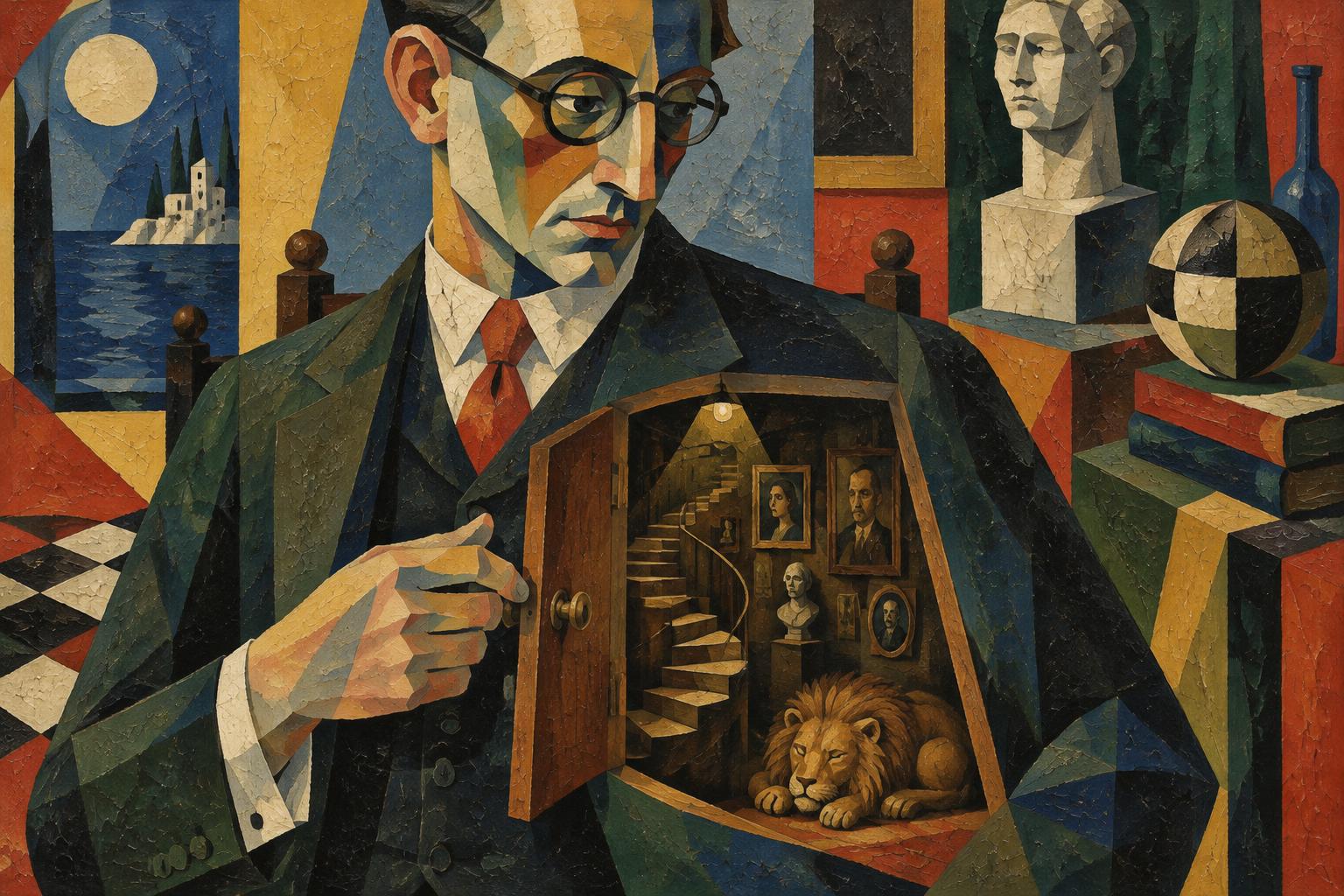
Most people think Carl Jung was interested in dreams. He was. But what truly fascinated him was something much larger - the possibility that our lives contain patterns, symbols and meanings we do not consciously recognise.
This article is for anyone who has heard the name Jung but never quite understood why his ideas continue to surface, more than half a century after his death, in conversations about meaning, identity, creativity, recovery, leadership, art and the inner life. It is not a textbook. It is not a summary of his collected works. It is a calm walk through the few ideas of his that matter most - written for ordinary people, not psychologists.
If you have arrived here from The MythRadar Guide To Dream Interpretation, consider this a natural continuation of the same conversation. If you have arrived directly from a search, welcome - everything you need is contained here.
The Feeling Most People Cannot Explain
There is a particular feeling that visits almost everyone, usually quietly, usually when the day has gone still. It is the sense that certain questions keep returning to you. Certain dreams keep arriving. Certain fears, certain longings, certain types of people, certain mistakes - the same shape repeating in different costumes.
You notice it in your twenties as a vague restlessness. You notice it in your thirties as a pattern you cannot quite name. You notice it later as a quiet voice that says, there is something here I have not yet understood.
Most of us are taught to ignore that feeling. To override it with productivity, distraction or explanation. But Carl Jung built his life's work on the opposite instinct. He believed that feeling was the most important thing happening inside you - and that learning to listen to it was the work of becoming a whole person.
Jung was not interested in dreams for their strangeness. He was interested in them because they were one of the few places where this feeling speaks clearly.
Jung's Most Important Idea
If you take only one idea from Jung, take this one: most of who you are is not visible to you.
He called the hidden part the unconscious. The word sounds clinical, but the idea is not. The unconscious is simply everything inside you that is shaping your life without your permission - the memories you no longer think about, the assumptions you absorbed as a child, the fears you inherited, the longings you never spoke aloud, the meanings you attach to things without realising you are attaching them.
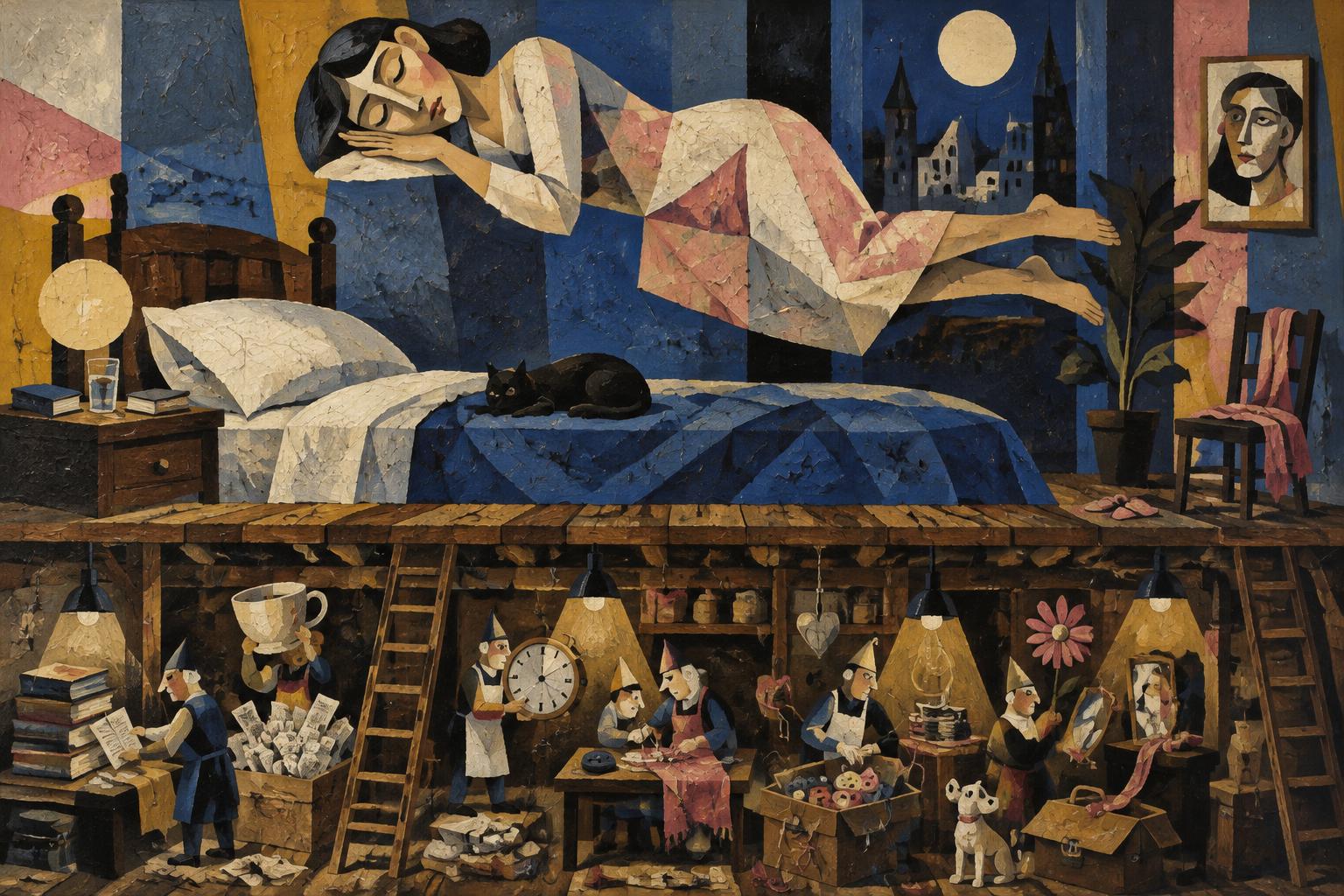
Imagine your mind as a house. The conscious mind is the room you are standing in. It is well-lit. You know where the furniture is. You can describe it to a visitor. The unconscious is everything else - the rooms upstairs you have not entered in years, the basement you have never been to, the attic full of objects you do not remember placing there.
You live in the lit room and assume that is the whole house. Jung's quiet, life-changing suggestion was: it is not.
And the rest of the house is not empty. It is full of activity. It sends messages up through the floorboards - through dreams, through moods you cannot trace, through sudden tears at a song, through the strange certainty that you should not take that job, through the person you keep falling for even though you swore you would not.
Jung did not see the unconscious as a problem to be fixed. He saw it as a partner to be known.
The Parts Of Ourselves We Do Not See
Of all the rooms in the house, one matters more than the others. Jung called it the Shadow.
The Shadow is not evil. It is not the bad part of you. It is simply the part of you that you have decided, at some point in your life, is unacceptable. Perhaps you were told as a child that anger was dangerous, so you packed your anger away. Perhaps you were praised for being agreeable, so you hid the part of you that wanted to say no. Perhaps you grew up in a family where ambition was suspect, or softness was weakness, or grief was self-indulgence - and so those parts of you went into the basement and the door was closed.
They do not stop existing. They wait.
You meet your Shadow in the people who irritate you for reasons you cannot quite justify. You meet it in the qualities you most loudly condemn in others. You meet it in the sudden reactions that surprise you - the flash of jealousy at a friend's success, the wave of resentment toward someone who has done nothing wrong, the strange pleasure when someone you envy stumbles.
Most people spend their lives trying to look away from the Shadow. Jung's invitation was the opposite. He believed that the things we have hidden from ourselves contain enormous energy, and that integrating them - not acting them out, not indulging them, simply knowing them - is one of the great works of a life.
He put it more bluntly than most psychologists would dare: the gold is in the dark.
Why Certain Things Keep Returning
Once you understand the Shadow, you begin to understand why certain things keep returning to you.
The same kind of partner, again and again. The same argument with different people. The same dream, in different settings. The same fear, dressed in different clothes. The same restlessness arriving every few years like a season.
Jung believed that the psyche has its own intelligence, and that this intelligence is patient. When something inside you needs to be seen, it does not arrive once and leave. It arrives, and arrives, and arrives, in whatever form might finally get your attention.
A recurring dream is the clearest version of this. But it is not the only version. A recurring relationship pattern is the same mechanism. A recurring conflict at work. A recurring inner sentence - I am not enough, I am too much, I am alone, I will be left. These are not random. They are the psyche knocking on the door of the lit room, asking to be let in.
This is the deeper meaning of "the unconscious." It is not a vault of repressed traumas waiting to be excavated. It is a living, communicating part of you, trying - sometimes for decades - to tell you something you have not yet been ready to hear.
The Characters Living Within Us
One of Jung's most distinctive observations was that the inner life is populated. We do not contain one self. We contain a cast.
He noticed that across cultures, across centuries, across languages that had never met, certain figures kept appearing in stories, dreams and myths. The wise old guide. The wounded healer. The trickster. The devoted mother. The hero who must leave home. The shadow king. The innocent child. These were not borrowed. They emerged independently, again and again, because they live in us.
Jung called these figures archetypes - universal patterns of human experience that each of us expresses in our own particular way.
A few of the ones most likely to walk through your inner life:
- The Hero - the part of you that wants to act, to prove, to leave the village and return changed. It gives you courage. It also tempts you into battles that were never yours to fight.
- The Sage - the part of you that wants to understand, to step back, to see clearly. It gives you wisdom. It can also use understanding as a place to hide from feeling.
- The Child - the part of you that is still curious, still vulnerable, still capable of wonder. It is the source of your aliveness. It is also the part most easily wounded.
- The Caregiver - the part of you that loves by tending. It is generous and warm. It can also disappear into other people's lives and forget its own.
- The Rebel - the part of you that refuses, that questions, that will not be tamed. It protects your integrity. It can also burn down things that did not need burning.
- The Magician - the part of you that sees connections, that creates, that transforms. It is the source of insight and craft. It can also drift into illusion if it is not grounded.
None of these is your whole self. All of them are present. The question Jung found most interesting was not which one are you? but which ones are speaking loudly right now, and which ones have you exiled?
A life in which the Hero has taken over is exhausting. A life in which the Caregiver has swallowed everything else is quietly resentful. A life in which the Child has been banished feels grey. A life in which the Sage rules alone becomes lonely.
To know which figures live within you, and which have grown too loud or too silent, is to begin to understand the shape of your own inner story.
The Story Beneath The Story
Here is where Jung becomes most worth reading.
He believed that each person was, without knowing it, living a deeper story underneath the visible one. The visible story is the one you would write on a résumé - where you were born, what you studied, who you married, what you did for work. The deeper story is the one your psyche has been writing in symbols, dreams, longings and recurring themes since you were a child.
You can sometimes glimpse it. The themes that have always moved you in books and films. The kind of person you have always quietly wanted to become. The fears that have shaped your decisions more than you would like to admit. The questions that have followed you, in different forms, since you were young.
Jung called this deeper story by many names. The individuation process. The journey toward wholeness. The making of a self. Personal mythology is the phrase that has carried best into modern language - the idea that beneath your biography lives a mythic structure that is uniquely yours, and that paying attention to it is one of the most important acts of an adult life.
When you begin to notice your own personal mythology, things shift. The setbacks that felt random begin to look like chapters. The people who arrived at strange times begin to look like teachers. The dreams that seemed nonsense begin to look like letters. You stop asking why does this keep happening to me and start asking what is this trying to show me.
That is not a small change. It is, quietly, the whole change.
How Jung Came To These Ideas
It helps, briefly, to know where these ideas came from - not as biography, but as evidence that they were lived before they were written.
Jung began his career as a psychiatrist in Zurich at the turn of the twentieth century, working in a hospital with patients whom most of his colleagues considered beyond reach. He listened to them. He noticed that their hallucinations and obsessions were not random noise but contained recurring symbols, mythic figures, themes that appeared in the dreams of perfectly healthy people too, and in stories told by cultures the patients had never encountered. Something in the human mind, he began to suspect, was producing the same images independently, in everyone.
For a time he was the closest collaborator of Sigmund Freud, who saw him as his intellectual heir. But Jung came to believe Freud's map of the inner life was too narrow - too convinced that everything mysterious in us reduced to repressed desire. The break, when it came, cost Jung his career, his friendships and very nearly his sanity. For several years he descended into what he later called a confrontation with the unconscious - recording his own dreams and visions, painting them, dialoguing with the figures that appeared to him on the page.
What he produced in those years became the seed of everything he later wrote. He was not theorising about the psyche from a comfortable chair. He had been into it, and back out, and what he reported afterwards had the unmistakable weight of someone describing a place they had actually been.
That is part of why his work has aged so well. It is not a system invented from the outside. It is a map drawn from inside the territory.
What Jung Was Not Saying
Because his ideas have travelled so far through popular culture, it is worth clearing a few small misunderstandings before going further.
Jung was not saying every dream is a hidden prophecy. He was deeply suspicious of fortune-telling and of anyone who claimed certainty about another person's symbols. He believed the meaning of an image always belonged to the dreamer, and that an interpretation imposed from outside was usually worth less than the dreamer's own slow puzzling.
He was not saying you should obey every impulse the unconscious sends up. The Shadow contains real darkness as well as exiled gold. The work was integration - knowing, naming, holding - not acting out.
He was not saying archetypes are personalities you can be sorted into. The popular versions of "which archetype are you" quizzes would have made him wince. Archetypes are patterns, not boxes. You contain all of them. The question is which are alive, which are sleeping, which are running the show without your knowing.
And he was not saying any of this could replace ordinary life - relationships, work, responsibilities, the small daily acts of care. Inner work, in Jung's view, was the thing that allowed an ordinary life to become a meaningful one. It was never a substitute for it.
Why Jung Matters Today
We live in a moment that is unusually loud and unusually shallow about the inner life. There is no shortage of advice. There is a great shortage of depth.
Most modern self-help asks you to optimise. Jung asks you to understand. Most modern psychology focuses on managing symptoms. Jung was interested in the meaning underneath them. Most modern culture treats the unconscious as something to be silenced with productivity, scrolling, content, noise. Jung treated it as the part of you most worth listening to.
This is why his ideas keep returning, even in places that have forgotten his name. Every time someone says do the inner work, they are echoing Jung. Every time someone speaks of shadow work, that is his word. Every time a film or novel feels mythically true - the hero's journey, the wise mentor, the descent into darkness and the return - you are watching Jung's map of the psyche, drawn in story.
His relevance is not academic. It is practical. Anxiety, confusion, the sense of being slightly off your own path, the suspicion that the life you are living is not quite the life you were meant to live - these are exactly the experiences Jung spent his career trying to understand. He did not promise to remove them. He promised that, taken seriously, they could become the doorway into a deeper and more honest life.
A Different Way Of Looking At Yourself
If you take Jung seriously, even a little, the way you look at your own life begins to change.
A strange dream is no longer just a strange dream. It is a message from a part of you that does not speak in sentences. A recurring thought is no longer just a habit of mind. It is a signal worth tracing back to its source. A pattern in your relationships is no longer just bad luck. It is an invitation to meet a part of yourself you have not yet met.
You do not have to interpret everything. Jung himself was wary of people who turned symbols into formulas. The point is not to decode. The point is to notice. To treat your inner life as if it were intelligent, communicating, and worth listening to - because, according to Jung, it is all three.
This is a quieter discipline than most modern self-improvement. It does not promise to fix you in thirty days. It offers something stranger and more lasting: a slow restoration of contact with the parts of yourself you stopped speaking to a long time ago.
A Natural Place To Begin
MythRadar was built for this kind of noticing.
It is a tool for the people who suspect that their dreams, thoughts and recurring patterns mean more than they are usually given credit for, and who would like a calm, intelligent place to explore that suspicion. It will not tell you what your life means. Jung would have been the first to say no tool can do that. But it can help you see the threads - the recurring symbols, the archetypes that are most active in you right now, the shape of your own Personal Mythology as it begins to come into focus.
If you are new to all of this, the dream interpretation guide is a gentle place to begin. Dreams are, as Jung put it, the royal road into everything we have been talking about here.
A Closing Reflection
Jung is sometimes presented as a mystic, sometimes as a scientist, sometimes as a heretic, sometimes as a sage. He was, in the end, simply a man who took the inner life seriously at a time when most of his profession did not, and who left behind a way of looking at oneself that has quietly survived every fashion since.
What he really meant, beneath the archetypes and the diagrams and the long German sentences, was something very simple.
That you are deeper than you have been told.
That the parts of you that confuse you are not flaws to be removed but messages to be read.
That the dreams, the patterns, the recurring feelings, the questions that will not leave you alone - these are not interruptions to your life. They are your life, trying to become more fully itself.
You already have the answers. The work, as Jung would say with a small, patient smile, is learning how to listen.
Continue the thread
If this article resonated, three places to go next:
- Look up the symbols this touches in the Shadow Dreams and Archetypal Dreams entries.
- New here? What MythRadar is - why we treat dreams and recurring patterns as personal mythology rather than fortune-telling.
- Ready to map your own pattern? Begin your personal mythology profile.
I post the short version of these on Instagram most days. Follow @mythradar on Instagram