CornerstoneCornerstone
Archetypal Dreams
Some dreams feel different, as if they don't belong only to us. They may arrive with a weight and a resonance that echoes something ancient, a story told many times before.
- collective
- myth
- initiation
- big-dream
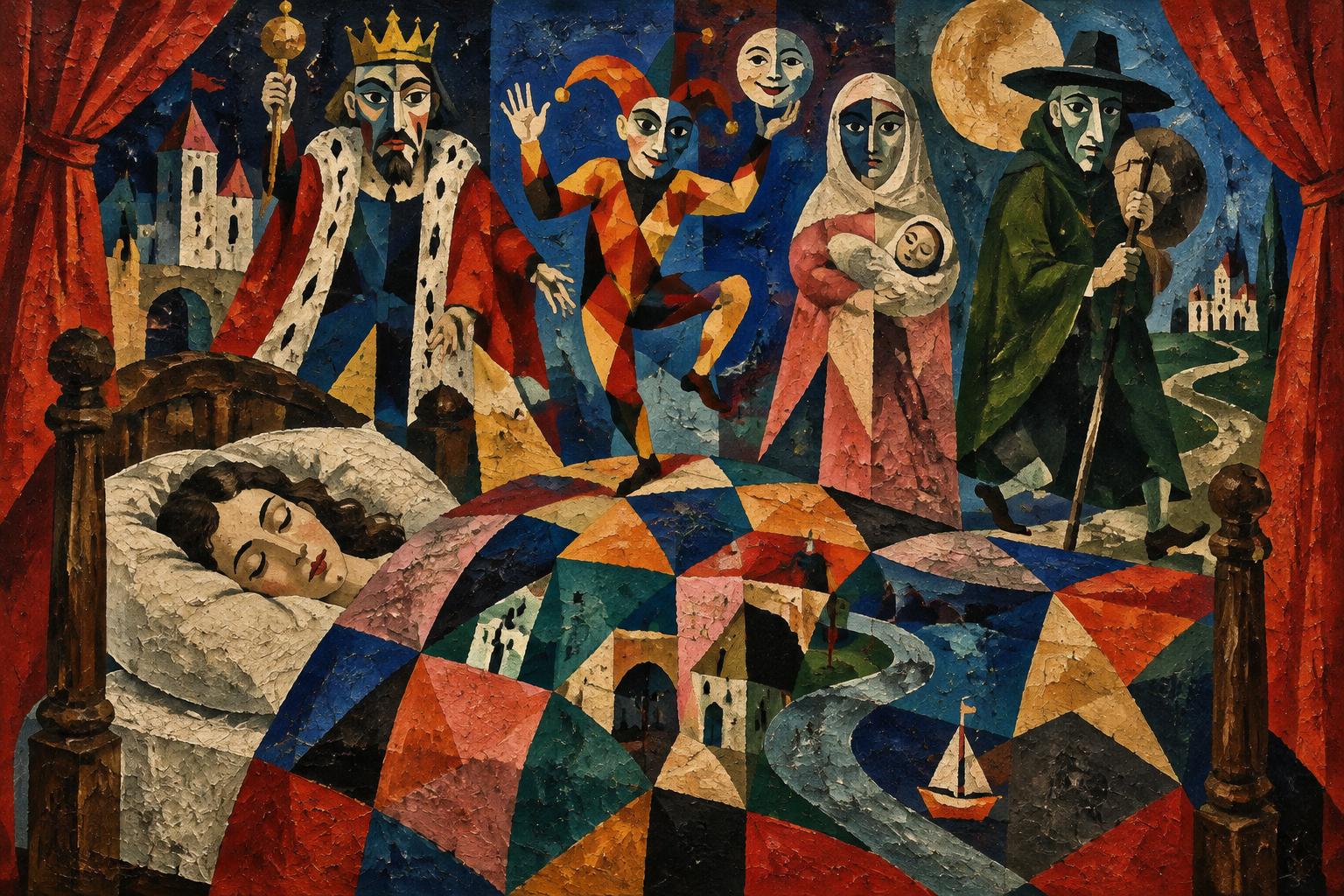
An archetypal dream is one that feels mythic rather than personal, drawing on symbols and figures that recur across cultures rather than on the specific details of your own day. Most nights the mind reworks ordinary material - conversations, worries, faces from a screen. An archetypal dream feels different in kind, not degree. It arrives with a strange gravity, as though it were dreamed on your behalf by something older and larger than your own biography.
These dreams tend to stay with you. The figures in them feel like characters from myth rather than people you know; the landscapes feel like the setting for an epic rather than your own street. Carl Jung described this shared layer of imagery as the collective unconscious, and the recurring figures within it - the wise old man, the great mother, the trickster, the shadow - as archetypes.
The useful question with a dream like this is rarely 'what does the symbol mean' in the abstract. It is why your own life has summoned this particular figure now, and what elemental theme in your waking situation is large enough to need mythic language to describe it.
Common interpretations
Archetypal dreams rarely concern the mundane detail of a day. Their themes are elemental: death and rebirth, order and chaos, guidance and abandonment. The specific figure or event usually points to which of these themes is active in your life right now.
A wise old man or woman appears
A guiding figure who seems to know more than they say - a stranger, an old teacher, a figure with no clear identity - often surfaces when you are facing a decision alone and some part of you already holds the answer. Jung read this figure as a personification of accumulated insight the ego has not yet consciously claimed.
A great mother or nurturing figure
This can appear as a vast, protective woman, a fertile landscape, or simply an atmosphere of being held. It often surfaces around questions of dependency: what you need to be given, and what you are now required to provide for yourself. Compare this with more personal mother dreams, which usually concern your actual relationship rather than the archetype.
A trickster or chaotic figure
A figure who lies, shape-shifts, or upends the dream's logic tends to arrive when a rigid plan or self-image is due for disruption. The trickster is rarely malicious in a psychological reading; it is the part of the psyche that keeps a system from calcifying.
A shadow figure or pursuer
A dark double, an enemy, or a menacing stranger is one of the most common archetypal images. It usually represents a disowned quality, not an external threat. Read this alongside shadow dreams and being chased dreams for the fuller picture.
Death and rebirth imagery
A dream built around dying and returning, or a world ending and beginning again, marks a threshold rather than a literal event. See dreams about death for how this theme plays out in more personal form.
A descent into darkness
Caves, underworlds, tunnels and deep water in an archetypal dream mirror the hero's descent found in myth worldwide: a necessary passage through difficulty before anything is gained. Related imagery appears in cave dreams and tunnel dreams.
A flood, storm or cosmic battle
Elemental destruction on a vast scale usually means the psyche is grappling with something that will not be resolved by a small adjustment. See storm dreams for the more everyday version of this same imagery.
Why the dream feels numinous
The theologian Rudolf Otto used the word numinous for an experience that feels both awesome and unsettling. This is often what separates an archetypal dream from an ordinary one: the sense that you have briefly glimpsed the machinery beneath the personal story, and the personal story is only one instance of a much older pattern.
Personal mythology
Even if an image seems to spring from a universal well, its true resonance is found where it meets the unique soil of an individual life. The arrival of an archetypal dream is deeply personal. A vast, unending ocean might appear to one dreamer as an image of overwhelming despair, a symbol of a life lost at sea amidst choices and responsibilities. For another person, perhaps someone embarking on a new spiritual path, that same ocean could represent the boundless mystery of the cosmos, an invitation to dive into the unknown with faith and courage.
Consider the archetype of the Shadow, the dark figure that often pursues us in nightmares. For someone who has spent a lifetime cultivating a persona of kindness and control, the appearance of a raging, destructive shadow figure might be utterly terrifying. The dream could be pointing toward a part of the self - anger, ambition, raw creativity - that has been repressed for too long and is now demanding to be seen. For an artist or a writer, however, meeting the Shadow might feel like a vital, creative encounter, a necessary dialogue with the chaotic, primal forces that fuel their work. The figure is the same, but the context of the dreamer’s life changes its message entirely.
Likewise, a dream of a dying king could surface for a man facing retirement, signaling the end of his reign in his professional world and the need to find a new source of identity. It could also appear to a young woman organizing a political movement, suggesting that the old, patriarchal structures she is fighting against are beginning to crumble. The power is never in the symbol itself, but in the timing of its arrival and the specific life situation it illuminates.
These big dreams often appear at life’s inflection points: marriage, the birth of a child, the death of a parent, a serious illness, or a profound career change. They seem to arrive to give a larger context to our personal transitions, reminding us that we are not the first to walk this path. The dream is not giving a generic meaning; it is holding up a mythic mirror to a very specific, personal moment, and the real work is to look at our own reflection in it.
Questions worth asking
- What was the feeling-tone of this dream upon waking, and does it still linger?
- Did the dream feel like it belonged to your daily life, or to something larger?
- If you had to compare this dream to any story, myth, or film, which one would it be?
- What in your waking life currently feels momentous or 'mythic' in scale?
- If this dream marks a transition, what might be ending and what might be beginning?
- Forget meaning for a moment. What question does the dream seem to be asking of you?
- Did the characters in the dream feel like people you know, or like timeless figures?
What MythRadar would notice
Most dreams ripple out from the events of our day. They are the mind’s way of sorting, settling, and making sense of the immediate past. They are personal letters, written in a familiar hand. But some dreams feel different. They arrive with the gravitas of a historical document, a stone tablet, or a story whispered down through generations. These dreams seem to come not just from us, but through us. They feel less like a reflection of our day and more like a reflection of our entire life, or even of life an sich.
When a dream carries this kind of weight, it may be an invitation to look at our own story through a wider lens. Perhaps the anxieties of a job loss, when seen through a dream of a burning kingdom, are not just about a career but about the necessary fall of an old identity to make way for a new one. Perhaps the grief over a loved one, expressed in a dream of a long winter, connects our personal sorrow to the ancient, cyclical pattern of loss and eventual renewal. These dreams don’t solve our problems. Instead, they dignify them. They place our personal struggles into a vast, ongoing human narrative, suggesting that our private pain is also a shared, sacred story.
Observing these dreams is like learning to read a different kind of map. It’s a map not of roads and cities, but of soul-making and life passages. They often mark the moments when we are being initiated into a new chapter of our own personal myth, whether we are aware of it or not. The dream isn't an escape from reality; it is a profound commentary on the deepest currents running through it, inviting us to recognize the mythic dimension of our own lives.
Common questions
- What makes a dream archetypal rather than ordinary?
- An archetypal dream draws on figures and events that recur across cultures - a wise guide, a great flood, a descent into darkness - rather than on the specific people and worries of your day. It usually carries a distinct weight or awe that stays with you after waking.
- Are archetypal dreams a sign of something spiritual?
- They can feel that way, but a psychological reading treats them as evidence that your waking situation has touched a theme large enough to need mythic language, not as a message from outside yourself.
- Why do archetypal dreams feel so much more vivid than usual?
- They tend to arrive during periods of major internal reorganisation, when the psyche is working with material too large for its ordinary vocabulary of daily replay, and the imagery becomes correspondingly larger.
- What should I do after a big, mythic dream like this?
- Note which archetype appeared and ask what theme in your current life is genuinely elemental, whether that is an ending, a birth, a confrontation, or a call to guidance, rather than trying to force a literal meaning onto the symbol.
- Is a shadow figure in a dream always frightening?
- It often feels frightening because it represents a disowned part of yourself, but the content it carries is not automatically negative. It can just as easily hold buried creativity or strength you have not yet claimed.
Continue the exploration
A dream of this nature might not be ‘solved’ or ‘figured out’ in a single sitting. Its value may lie not in a swift interpretation, but in a slow and patient contemplation. Perhaps consider writing it down in as much detail as you can remember. Capture not just the events, but the colors, the sounds, and the deep feeling-tone it left behind.
Notice if the images or figures return in later dreams. Sometimes, these significant dreams are not single events, but the beginning of a conversation that unfolds over months or even years. The story is not just what the dream contains, but how your relationship to its mystery evolves over time. This is the quiet, essential work of coming to know your own Personal Mythology.
Related symbols
From the Insights library
the next question
One entry is a symbol. Several, read together, are a pattern - and a pattern is the beginning of a personal mythology.