CornerstoneCornerstone
Lucid Dreams
To become aware that you are dreaming is a profound threshold. It invites a quiet question: what becomes possible when consciousness awakens within the landscape of a dream?
- awareness
- agency
- threshold
- consciousness

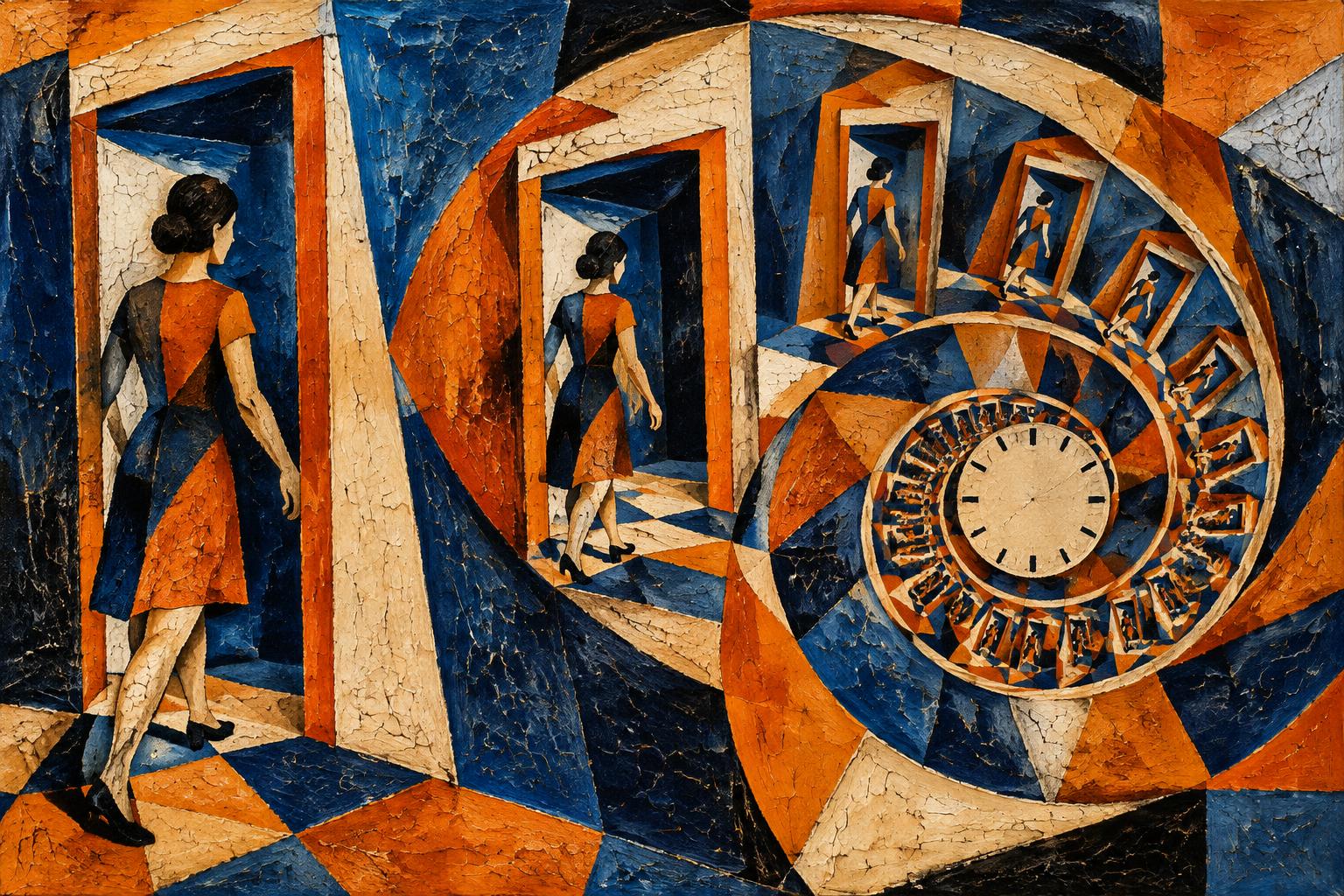
A lucid dream is one in which you become aware, while it is still happening, that you are dreaming. It is a genuine shift in consciousness: one moment you are a character swept along by the dream's current, the next you are also its audience, aware that the world around you is a construction of your own mind.
This is a rare and often startling state. Rather than asking what lucidity means in some universal sense, the more useful question is personal: why has your dreaming self opened this particular door now. Lucidity is not an answer so much as an opening, a new kind of conversation between the part of you that navigates the day and the part that populates the night.
Lucid dreams differ from ordinary vivid dreams precisely because of this awareness. You are not simply remembering the dream well; you know, in the moment, that it is one.
Common interpretations
Lucidity tends to appear in a handful of recognisable forms, each carrying a slightly different psychological weight.
Becoming lucid inside a nightmare
For people troubled by recurring frightening dreams, becoming lucid can feel like a discovered power: the chance to face a pursuing figure, change its shape, or simply choose to stop running. See nightmares and being chased dreams for how this pattern usually works before lucidity intervenes.
Realising you are dreaming because something is impossible
Noticing a detail that cannot be real - text that shifts, a dead relative appearing ordinary, gravity behaving oddly - is the most common trigger for lucidity. The moment of realisation is itself often the most memorable part of the dream.
Flying once you know you are dreaming
Flight is one of the most common acts once lucidity sets in, often experienced as relief or exhilaration rather than fear. See flying dreams for what flight tends to represent even outside lucid states.
Trying to control the dream and losing lucidity
Many lucid dreamers report the awareness slipping away the moment they try too hard to direct events. This mirrors how consciously grasping at any experience, waking or dreaming, tends to destabilise it.
Meeting a dream figure with conscious intent
Choosing to approach rather than flee a frightening figure once you know you are dreaming is often described as a turning point, and in Jungian terms could be read as a step toward integrating whatever the figure represents.
Using lucidity to rehearse or problem-solve
Some people use lucid states as a workshop, rehearsing a difficult conversation or a physical skill. This is a genuine use of the state, though it is worth noting alongside simply witnessing the dream without trying to direct it.
Brief, unstable lucidity
Most lucid dreams last only moments before either waking or lapsing back into ordinary dreaming. This instability is normal and does not indicate you are doing anything wrong.
Personal mythology
The arrival of a lucid dream can feel very different depending on the person and their current life circumstances. The meaning is not in the event itself, but in our relationship to it. For one dreamer, lucidity may be about claiming power; for another, it may be about surrender and observation.
Consider a man who feels powerless in his professional life, constantly at the mercy of his boss’s demands and a hostile work environment. He might have a recurring dream of being chased through an endless, confusing office building. The night he becomes lucid, his first impulse is one of defiance. He stops running, turns to face his pursuer, and demands to know what it wants. In his dream, he takes control. For him, the lucid state is a rehearsal for agency, a discovery of a strength he didn’t know he possessed. The dream reflects his waking life struggle and offers a space to embody a new response. The feeling of empowerment he feels upon waking may be the very resource he needs to bring a new stance to his job.
Now imagine another dreamer, an artist experiencing a creative block. She feels immense pressure to produce, to make something happen. Her lucid dreams are different. When she becomes aware that she is dreaming, she finds herself in a world of impossible beauty - a forest where the trees are made of glass and sing in the wind. Her impulse is not to change a thing. She is filled with a sense of awe and wonder. She doesn't direct; she simply wanders, observes, and listens. For her, the experience of lucidity is not about control, but about acceptance. It's an invitation to step back from the desperate need to create and instead learn to witness the creative process that is already unfolding within her. The dream offers her an experience of receptive awareness, a counterpoint to the striving that has left her feeling exhausted in waking life.
For both dreamers, the lucid state is a mirror. One needs to find his power to act; the other needs to find her peace in non-action. The dream doesn't provide a universal answer. Instead, it seems to offer a perfectly tailored experience, reflecting what each individual most needs to see about their own personal mythology and their path forward.
Questions worth asking
- When you became aware you were dreaming, what was your first impulse: to change things or to simply watch?
- What might this specific dream world have been inviting you to notice by allowing you to become lucid within it?
- Did this feeling of lucid awareness linger with you after you awoke? How did it feel in your body?
- What does it feel like to hold both the identity of the dreamer and the awareness of the dream at once?
- Is there a situation in your waking life that is asking for this same kind of dual awareness?
- Who are you in the dream when you know you are the dreamer?
- If the dream is a conversation, what changed when you realized you could speak back?
What MythRadar would notice
A lucid dream often feels like a glitch in the software of the mind, a sudden and unexpected peek behind the curtain. There can be an impulse to treat it as a skill to be hacked, a territory to be conquered. But it might be helpful to soften that impulse and consider another possibility. Perhaps this is not a conquest, but an invitation. An invitation to a different kind of seeing.
The psyche has its own rhythms, its own seasons. The arrival of lucidity could suggest that a season of greater consciousness is dawning in your life. It may be a sign that you are ready to look more directly at the fabric of your own mind, the deep patterns and personal myths that run quietly beneath the surface of your days. The dream is not just offering you a spectacle; it is offering you a seat next to the director. The question is what you do with that newfound proximity. Do you start giving orders, or do you start to listen with a new kind of attention?
Sometimes, the greatest gift of lucidity is not the power to change the dream, but the opportunity to be fully present within it. To not run from the monster, but to see it clearly. To not repaint the landscape, but to notice its impossible details. This state of conscious observation within the dream can be a powerful practice for waking life. It is training in awareness, in holding complexity, in being with what is. It may be that the dream is telling you that you are ready for a more honest, more direct relationship with your own mysterious and beautiful inner world.
Common questions
- What does it mean when you know you are dreaming during a dream?
- It means you have achieved lucidity, a state where conscious awareness is active alongside the dreaming mind. Psychologically it often reflects a readiness to engage more directly with material the dream would otherwise simply present to you.
- Can lucid dreaming help with nightmares?
- Yes. Many people use lucidity to face or transform a frightening figure rather than flee it, which can reduce the intensity of recurring nightmares over time.
- Why do I lose lucidity as soon as I realise I'm dreaming?
- The excitement or effort of realising you are dreaming often disrupts the state itself. Staying calm and curious, rather than immediately trying to control the dream, tends to help lucidity last longer.
- Is lucid dreaming a sign of good mental health?
- It is not a clinical marker either way. It is simply a distinct state of consciousness that some people experience naturally and others can develop with practice.
- How is a lucid dream different from a very vivid dream?
- A vivid dream is remembered clearly after waking, but a lucid dream includes the awareness, in the moment, that you are dreaming. The distinction is about awareness during the dream, not clarity of memory afterward.
Continue the exploration
If you have had a lucid dream, you have received a rare and personal invitation. Perhaps the best response is simply to hold it with curiosity. Revisit the feeling of that awareness, the particular quality of the light, the texture of the dream ground beneath your feet. What did it feel like to know?
Saving these moments, noticing when they arrive and what is happening in your life at that time, can begin to reveal a larger story. It is a quiet, patient process of learning the unique language of your own dreams. This is the foundation of exploring your own Personal Mythology, a journey not of finding universal meanings, but of discovering your own.
Related symbols


From the Insights library
the next question
One entry is a symbol. Several, read together, are a pattern - and a pattern is the beginning of a personal mythology.