Dreams
Why Do Some Dreams Keep Coming Back?
The Architecture of the Familiar Dark There is a distinct, almost physical weight to the air when you step across the threshold into a place you have already been.
The Architecture of the Familiar Dark
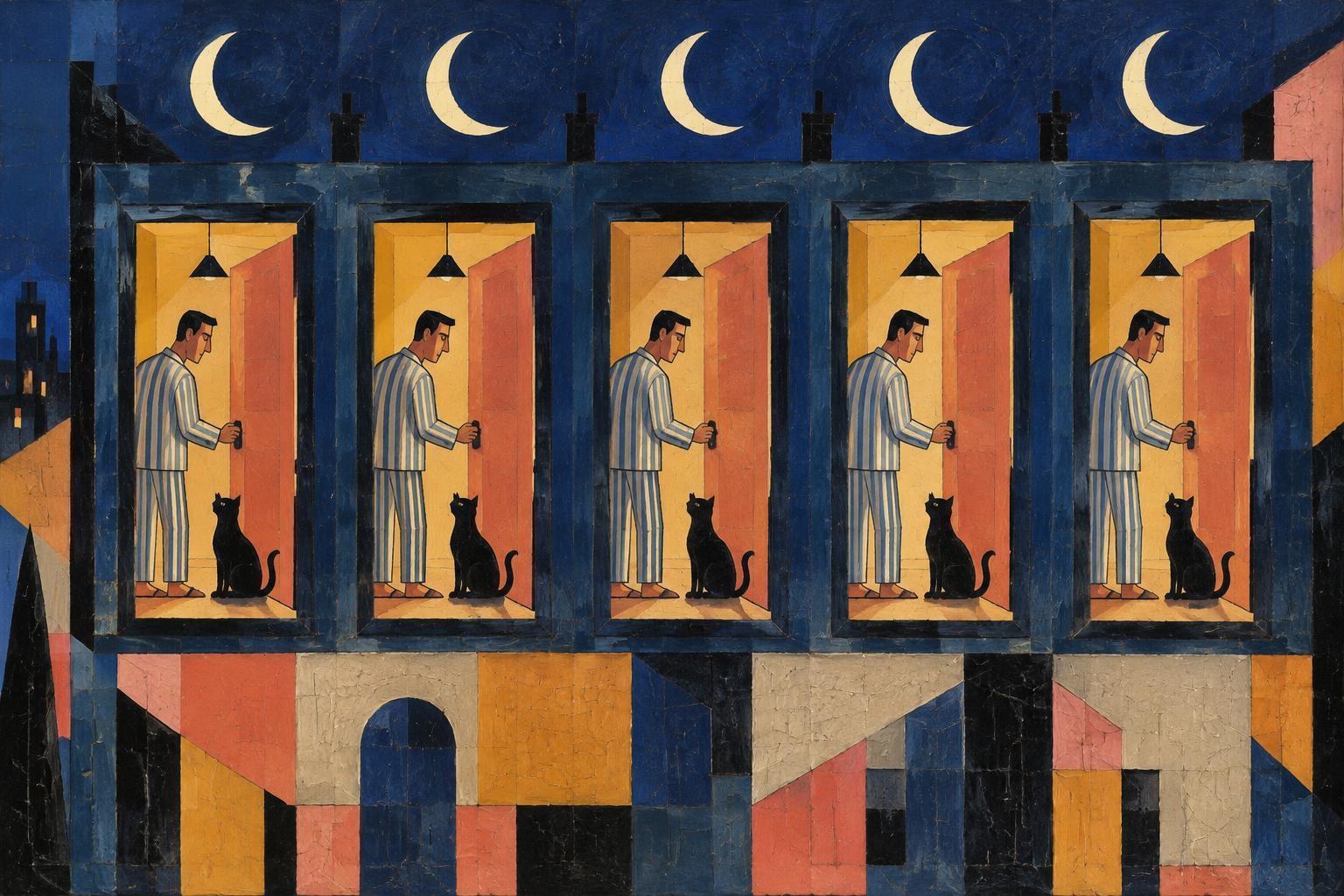
There is a distinct, almost physical weight to the air when you step across the threshold into a place you have already been. You are asleep, your body heavy and motionless beneath the blankets in a quiet room, yet a strangely electric recognition washes through your chest. You look down at your hands, or out toward the pale, shifting horizon, and the realization arrives with the quiet inevitably of a shifting tide. You are here again. The wallpaper holding the same oxidized floral pattern, the sky bruised with the identical shade of twilight, the hallway stretching out with the exact same geometric impossibilities you remember from months, or perhaps years, ago. Most dreams dissolve upon waking, scattering like ash on the morning wind, leaving behind only the faintest impression of a strange emotional weather. But this one waits for you. It sits intact in the dark outlands of your mind, like an abandoned theater keeping the stage lights burning long after the audience has gone home.
To experience a recurring dream is to participate in one of the most mysterious phenomenological events available to the human mind. You are wandering through an architecture built entirely out of your own memories, fears, and untranslated desires, yet it feels entirely autonomous. It possesses a topographical reality. When you step onto the rotting timber of that familiar porch, or find yourself running through the labyrinthine corridors of an airport that exists on no map, you do not feel as though you are creating the landscape. You feel as though you are visiting it. The bodily sensation is unmistakable. There is a settling in the gut, a tightening in the jaw, a profound emotional resonance that rings like a struck bell the moment the scenery solidifies. It is a haunting rendered in the first person, and the ghost you are encountering is some submerged fraction of yourself.
Modern culture tends to strip our nights of their dignity, treating sleep as merely a biological utility - a period of mechanical maintenance required to keep the waking self productive. We speak of dreams as random neural firings, the mind simply emptying the trash bin of the day’s residual stimuli. But the recurring dream stands as a monolithic refutation to this impoverished view. The neural garbage-disposal theory cannot account for the sheer narrative persistence, the emotional coherence, and the unyielding specificity of a dream that returns every few months across the span of a single human life. Randomness does not write the same terrifying script ten times. Randomness does not build a house with a forgotten room and place you in its doorway, year after year, with the exact same feeling of profound, trembling awe.
What we are dealing with here is intent. There is an absolute purpose driving the repetition, a localized weather system locked into the geography of your psyche. The mind is returning to a landscape because something within that landscape remains unresolved. Why am I back here? the dreaming ego asks, feeling the cold weight of the repeating scenario. The answer is written into the very walls of the dream itself. You are back here because the waking self has not yet answered the question the dream is asking. You have left the theater, but the play has not yet finished.
Consider the deeply solitary nature of waking up from one of these repetitions. The room around you is still, the streetlights throwing long, distorted shadows across the ceiling, the household quiet. Your heart is perhaps beating rapidly, tapping rhythmically against your ribs. You stare into the dark, feeling the residue of the dream dripping back into the deep water of the unconscious, and you realize that no one else can see the geography that is currently dominating your emotional reality. The recurring dream insists upon its own importance. It refuses to politely disappear. It is demanding an audience, and you are the only one who can buy a ticket.
An Envelope Pushed Beneath the Door
To understand the stubborn return of these nocturnal visions, we must shift our relationship with the unconscious mind from one of suspicion to one of reverence. Carl Jung, who spent a lifetime wading through the deep currents of human imagery, proposed a deeply comforting and radical idea: the psyche is an entirely self-regulating system. Just as the physical body initiates a fever to burn out an infection, or shifts its internal pressures to compensate for a sudden change in altitude, the psychological apparatus is constantly striving toward equilibrium. When your waking life leans too far in one direction - when an attitude becomes too rigid, when a grief is too tightly buried, when an essential part of your nature is starved of light - consciousness becomes dangerously imbalanced. The boat is tipping too far to starboard, taking on water, threatening to capsize the entirety of the self.
In response, the unconscious acts as the great counterweight. It throws its ballast into the dark hold of the ship to keep you upright. During the day, the ego is too loud, too busy managing the logistical survival of modern adulthood, to hear the creaking of the hull. But at night, when the ego’s defenses are powered down and the great, noisy machinery of waking life falls silent, the unconscious slips an envelope beneath the door. The dream is the message, an attempt to bring the overlooked reality into your field of vision, compensating for the blindness of the day.
If the waking self receives the message, digests the feeling, and subtly shifts its orientation to the world, equilibrium is restored. The dream has done its work. The envelope is opened, the letter read, the messenger dismissed. But what happens if the ego refuses the message? What happens if the waking mind wakes up, shrugs off the terror of the falling elevator or the melancholy of the abandoned house, drinks its coffee, and walks back into the exact same rigid posture of living? What happens if you steadfastly refuse to acknowledge the deep psychological hunger or fear that the unconscious is pointing toward?
The messenger returns. And because the unconscious does not possess the waking mind’s capacity for polite variation, it brings the exact same letter. It pushes the envelope beneath the door again, perhaps knocking a little louder this time. The dream repeats because it is fundamentally an unfinished sentence. The psyche is attempting to formulate a truth about your life, but the punctuation is missing. The conscious mind must provide the period, the resolution, the physical shift in waking reality that finally completes the statement.
This repetition can feel agonizing. It can feel like a curse to be dragged back down into the muddy trenches of an unresolved anxiety every few weeks. But viewed through the lens of psychological self-regulation, the recurring dream is an act of profound grace. It is the architecture of your own wholeness refusing to let you remain fragmented. The psyche will not abandon you to your own shallow self-deceptions. It will not allow you to pretend that the grief does not hurt, or that the career does not suffocate you, or that the old wound has finished bleeding. It will drag you back to the scene of the crime, or to the altar of your unlived potential, demanding that you finally look directly at what you have spent your daylight hours avoiding.
The Hallway of Unfinished Sentences
If we accept that the dream is attempting to complete an unfinished emotional sentence, we must look very closely at the grammar of the repeating vision. The details are never arbitrary. The specific feeling of the repeating dream contains the exact antidote required by your waking life. It is carrying the lost fragment of your wholeness, though it often disguises this fragment in the terrifying garb of a nightmare.
We see this clearly in the way the atmosphere of the dream dictates the exact flavor of the missing waking experience. If your daylight life is characterized by an obsessive need for control, an airtight schedule, and an intellectual detachment from your body, your recurring dream will rarely be an orderly visit to a library. Instead, the unconscious will likely plunge you into an environment entirely devoid of control. It will place you in the passenger seat of a car spinning out on black ice, the brake pedal detached, the steering wheel melting in your hands. It will send a tidal wave rushing over the sea wall, a monstrous, overwhelming force of nature roaring toward your neatly manicured lawn.
The terror you feel as the dream wave crashes over you is precisely what the waking ego spends all its energy avoiding: the surrender to forces larger than the self. Why do I keep dreaming of the flood? you wonder in the grey light of morning. You dream of the flood because your waking life has become a sterile desert of control. The unconscious does not send the water to drown you out of malice; it sends the water because the rigid structure of your life requires baptizing. It requires the chaotic, life-giving destruction that only a loss of control can bring. The sentence remains unfinished as long as you spend your days frantically reinforcing the dam.
Conversely, if your waking hours are spent adrift - if you are trapped in a prolonged adolescence of the soul, unable to commit to a path, chronically avoiding responsibility and bleeding your energy into a dozen half-finished pursuits - the unconscious will not send you dreams of beautiful, formless oceans. It will lock you in confined spaces. It will trap you in mazes where every doorway leads to a brick wall. It will place heavy, immovable objects across your path, demanding that you locate your own strength, requiring you to summon an exertion of will that your waking life desperately lacks.
The hallway of unfinished sentences is lined with these compensatory visions. Each recurring dream is a precise, tailor-made reaction to a chronicity in your waking attitude. You are not at the mercy of a broken psychological record player. You are engaged in a desperately locked dialogue with your own depth. The dream is shouting because you are deaf to the whisper, and the location of the dream, the physical environment your mind constructs, is the exact theater required to force you to feel the emotion you have outlawed from your days.
The Geometry of Anxious Repetition
There are certain repeating dreams so common they have woven themselves into the collective mythology of modern life. They are the archetypal anxiety loops, the shared nightmares of industrial, clock-driven humanity. And yet, when you step into one of them, the terror is profoundly intimate. They do not feel like clichés when the cold sweat breaks across your forehead.
Consider the dream of the unprepared exam. You are walking into a gymnasium or a cavernous lecture hall. The air smells of floor wax and old paper. You sit at a wooden desk that feels slightly too small for your adult body. The examiner places the paper face down in front of you. When you turn it over, the lines blur. The questions are written in an impenetrable cipher, or they demand formulas for a mathematical language you have never studied. Time is ticking - an impossibly loud, rhythmic thudding from a clock on the wall. The feeling that rises in your throat is not merely panic; it is the absolute devastation of being found out. It is the realization that you are an impostor, that you have arrived at the threshold of judgement completely devoid of the necessary substance.
Why does this dream return to highly competent, successful adults decades after they have left the halls of academia? Because the classroom is the primal setting where we first experienced the crushing weight of external evaluation. But the dream is rarely about an actual test. The unending repetition of the exam occurs when the waking self is moving through life burdened by a chronic, unspoken imposter syndrome. You are outwardly succeeding, answering the emails, paying the mortgage, accumulating the markers of adulthood, but inwardly, the ego feels it is merely acting a part. The recurring dream of the exam is the psyche begging you to confront the devastating internal belief that you are fundamentally inadequate. The sentence remains unfinished because you have not yet learned to validate your own existence outside the harsh, red-ink grading scale of the external world. You have not yet realized that you are the author of the curriculum.
Then there is the nightmare of the missed flight. The airport corridors stretch out endlessly, bending with the logic of a funhouse mirror. You are dragging luggage that grows heavier with every step, the straps biting into your shoulders. The departure screen flashes red, time slipping rapidly into the past. I am going to miss the threshold, the panicked inner voice screams. You run, but the air has turned heavily viscous, like moving through deep water. You reach the gate exactly as the door closes, watching the plane detach from the jet bridge through the thick, smeared glass.
To experience this repeatedly is to live under the tyrannical shadow of a waking anxiety regarding transitions. The airport is the archetypal space of limbo, the locus of passing from one phase of life to another. The luggage represents the accumulated weight of waking responsibilities, old resentments, or attachments that you are desperately trying to drag into the next chapter. The dream repeats because waking life feels like a constant state of running just to remain stationary. The unconscious is illuminating a profound fear of missing your own life, of arriving too late to the destination of your own potential. The psyche will keep you running down that carpeted corridor night after night until you wake up and finally examine the bags you are carrying. To stop the dream, you must stop hoarding the weight of the past, or you must finally admit that you never actually wanted to board the plane in the first place.
The House with the Forgotten Room
Not all recurring dreams are monuments to anxiety. Some return carrying a profound, aching melancholy, or a quiet, holy terror that borders on the sublime. Chief among these is the dream of the forgotten room. It is a dream that moves slowly, requiring a gentle, unhurried attention to interpret, for it holds the keys to the most profound shifts in personal mythology.
You find yourself standing in a house. Most often, it is a hybrid architecture - a house that feels intrinsically like your current home, but the hallway bends like the home you grew up in, and the light filtering through the windows holds the amber quality of late afternoon in an unknown country. Everything is silent. You are moving through the living room, trailing your hand along the familiar furniture, when your eye catches an anomaly. There is a doorway you have never noticed before. It is tucked beneath the stairwell, or situated at the end of a corridor that you always believed culminated in a blank wall.
You reach out, the brass handle cold beneath your fingers. The door yields with a heavy, wooden groan, and you step across the threshold. The bodily sensation here is overwhelming. The air smells slightly of dust and untouched time, but it is not a dead air; it hums with latent energy. You look around, stunned. The room is massive. Perhaps it is bathed in golden light, holding an ancient library, or perhaps it overlooks an impossibly green valley that should not exist behind a suburban street. In the dream, you are struck by a dual realization: this room is incredibly beautiful, and this room has belonged to my house the entire time. You have lived here for years, entirely ignorant of this vast, enclosed expanse of square footage.
When you wake into the grey light of your physical bedroom, a deep sense of loss often accompanies the opening of your eyes. You mourn the forfeiture of that imagined space. But why does the unconscious bring you to this hidden door time and time again? Why the insistence on this undiscovered architecture?
In the language of the deep psyche, a house is never simply a structure of wood and stone; it is the physical representation of the ego. It is the boundary of your known identity, the structure you have built to inhabit the world. The living room is the persona you show to guests; the kitchen is where you digest the events of the day; the bedroom is the seat of intimacy and rest. To discover a forgotten room in your own house is to discover a massive, unlived portion of your own soul.
The house of the self is always larger than the ego believes it to be, but we lock the doors to the most expansive rooms because we fear the light they might let in.
The dream of the forgotten room returns when your waking life has become too small for the spirit inhabiting it. It is a recurring summons to expansion. Perhaps you have spent a decade climbing a corporate ladder, functioning purely through the intellect, entirely disconnected from the raw, creative intuition that governed your childhood. The forgotten library or the sunlit studio in the dream is the unconscious pointing toward that buried creative capacity. It is saying: You own this space. It is yours. Why are you living in the cramped, narrow hallway when there is an entire wing of your own nature sitting in the dark?
The tragedy of the dream, and the reason it must repeat, is that we often wake up from it and go straight back to residing in the tiny, acceptable confines of our established identity. We admire the room in the dream, but we do not undertake the terrifying waking work of occupying it. The psyche will keep generating the vision, keep guiding your sleeping avatar to the brass handle, until you finally claim the unlived life it represents. The repetition is an invitation to wholeness, an architectural plea for you to finally move into the entirety of your own being.
When the Waking World Learns to Move
If a recurring dream is an unfinished sentence waiting for punctuation, how do we finally provide the period? How do we break the loop and allow the psyche to rest? The answer lies in the deeply interconnected reality between the dark continent of the unconscious and the brightly lit streets of the waking world. The dream cannot be resolved merely by understanding it. Insight is a powerful tool, but insight without physical action is merely a new form of psychological entertainment.
To stop a recurring dream, the waking world must learn to move. As long as your daylight attitude remains entirely rigid, continuing to act out the exact behavioral patterns that necessitated the dream in the first place, the unconscious is forced to play the same track. You cannot out-think a recurring dream; you must incrementally outgrow the version of yourself that the dream is trying to address. The bridge between the two states of consciousness is action.
Consider the dreamer who is tortured by the vision of the broken brakes on the icy road. To stop the dream, they must introduce an element of conscious surrender into their waking life. They must deliberately relinquish control over a situation they are gripping too tightly. They must allow a project to fail, or let a partner handle a crisis without intervening, or explicitly confess to a friend that they are terrified of their own vulnerability. The moment the waking ego willingly steps into the chaotic waters it has been avoiding, the unconscious no longer needs to send the tidal wave.
For the dreamer caught in the labyrinth of the airport, the physical waking action might be an act of radical grounding. It might involve formally resigning from an overcommitted board position, or cancelling a trip, or finally stating aloud that the relationship they are dragging through time is over. They must drop the luggage in the daylight so the sleeping mind no longer has to carry it in the dark. For the dreamer finding the forgotten room, the action is perhaps the most daunting: they must buy the canvases. They must begin the writing. They must drastically alter the architecture of their waking routine to make physical spacetime for the unlived potential to manifest.
When you finally make the corresponding shift in your waking life, something incredibly mysterious happens in the realm of sleep. The next time the dream gathers its familiar storm clouds, the atmosphere shifts. The dream alters. Perhaps, for the first time in ten years, you are sitting at the exam desk, but the paper turns out to be blank, and you calmly stand up and walk out of the gymnasium. Perhaps you arrive at the airport, look at the screen, and realize you are perfectly on time, walking slowly toward a sunlit gate. Perhaps you enter the forgotten room, open the window, and sit down at the desk.
And then, quietly, the dream stops coming. There is a strange, subtle melancholy to the final iteration of a recurring dream. You never know it is the last time you will walk those specific haunted corridors until years later, when you realize the landscape has entirely faded from your nights. It leaves a quiet vacancy behind, an empty stage where a great drama was fought and finally won. You have crossed the bridge, the psychic equilibrium has been restored, and the mind is free to build new architectures.
The Loudest Signal in Your Mythology
To view your own life through the lens of personal mythology is to recognize that you are not simply a biological organism being dragged through a random sequence of days. You are a sprawling, interconnected story, wrestling with timeless archetypal forces. The myth is not a fiction you invent to comfort yourself; it is the deepest structural reality of your emotional existence. It is the language your soul speaks when it is trying to communicate with your ego.
In the vast script of this internal myth, your recurring dreams are the bolded text. They are the loudest, most insistent signals you will ever receive regarding the actual trajectory of your inner life. While the waking mind chatters endlessly about money, status, social friction, and logistical maintenance, the repeating dream sits silently in the center of the night, stubbornly pointing toward the true north of your psychological development.
We spend so much of our lives seeking guidance from the external world. We read books, consult experts, stare into the glowing rectangles of our devices looking for a roadmap to our own fulfillment. Yet, all the while, an intelligence far older and infinitely more intimate than any waking guru is projecting a customized cinematic revelation onto the back of your eyelids. It is showing you exactly where the knot is tied. It is showing you exactly which room of your life remains unlit.
The next time you cross the threshold into that familiar, darkened architecture - whether it is the maze of hallways, the falling elevator, the unreadable test, or the beautiful, dusty library - do not violently pull yourself awake. Do not reject the envelope pushed beneath the door. I am here again, you might tell yourself, grounding your phantom feet on the floorboards of the dream. Look around. Breathe the heavy air. Listen to what the silence in the room is asking of you.
The dream is not a punishment. It is an incredibly faithful companion. It is the unwavering insistence of your own depths that you do not settle for a fragmented existence. It is waiting there, in the quiet reaches of the night, patiently holding the unresolved chord, waiting for you to strike the final note. It will wait as long as it takes. And when you finally answer, when you finally align the bravery of your waking life with the truth of the nocturnal vision, the sentence will complete itself, and you can finally sleep in peace.
Related Reading
Why Do We Forget Most of Our Dreams? · The MythRadar Guide To Dream Interpretation · What Is Personal Mythology?
Every recurring dream, repeated relationship, and returning question is a sentence from the same deeper story. Read what Personal Mythology means at MythRadar - or explore your own with MythRadar.
Continue the thread
If this article resonated, three places to go next:
- Look up the symbols this touches in the Recurring Dreams and Nightmares entries.
- New here? What MythRadar is - why we treat dreams and recurring patterns as personal mythology rather than fortune-telling.
- Ready to map your own pattern? Begin your personal mythology profile.
I post the short version of these on Instagram most days. Follow @mythradar on Instagram