Dreams
Why Dreams Never Explain Themselves
Dreams rarely deliver direct answers. They communicate through symbols, emotion and association because the psyche is describing a Pattern rather than recounting an event.
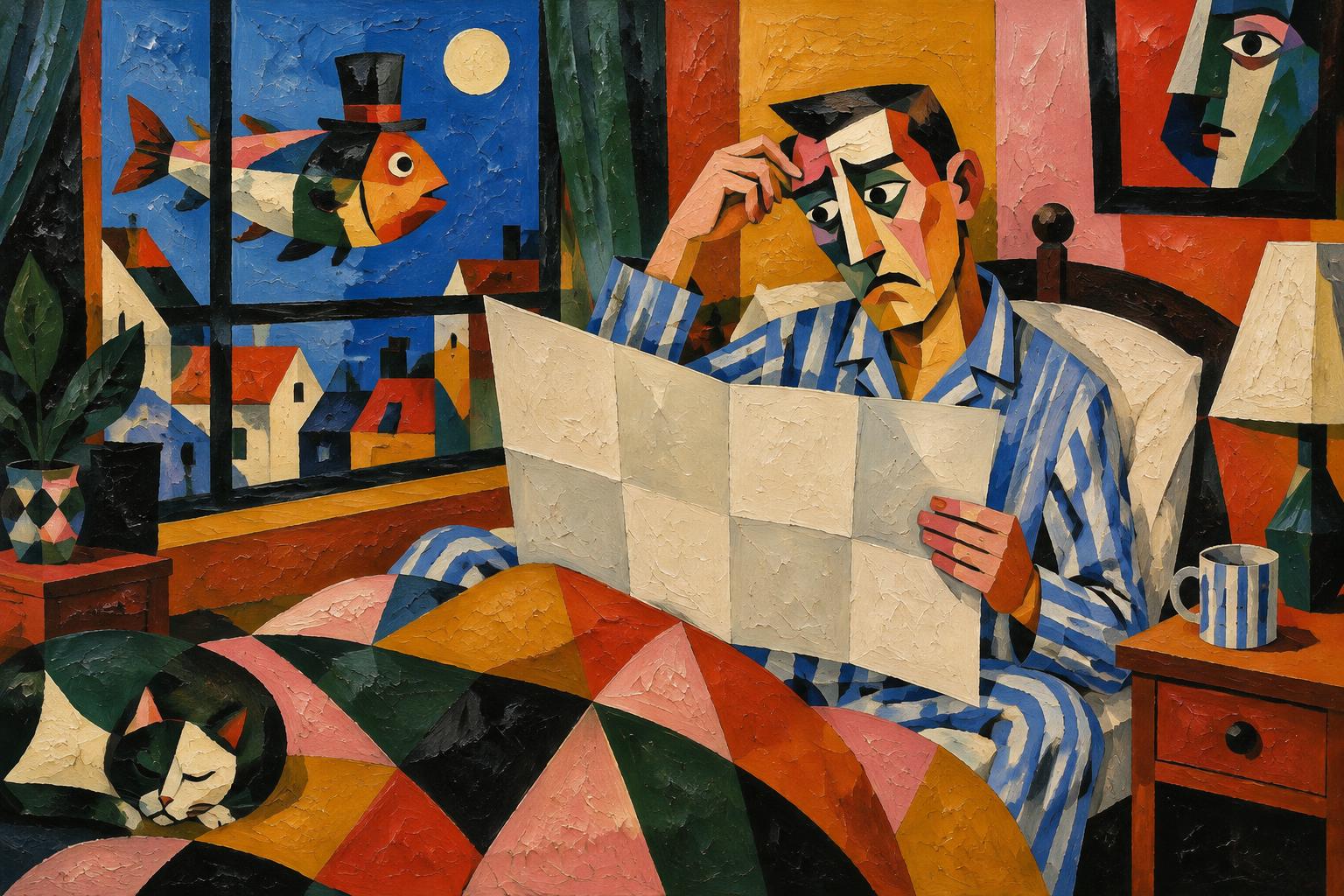
Dreams are frequently judged by the same standards used to judge waking experience. A coherent story is expected, familiar logic is preferred and the dream is measured according to whether its events could happen in ordinary life.
By the time consciousness has finished applying those standards, the dream often appears confused or meaningless. The difficulty lies elsewhere.
Dreams were never attempting to describe reality with the precision expected by consciousness, they are describing psychological reality, where significance matters more than chronology and association carries greater authority than literal explanation.
The expectation that dreams should explain themselves creates the first misunderstanding. Consciousness prefers direct language because direct language produces certainty. The psyche has never shared that preference, it communicates through images, relationships and emotional atmosphere because these are capable of carrying several meanings simultaneously.
A single symbol can illuminate memory, emotion and identity within the same moment, allowing the dream to describe an entire Pattern without ever reducing it to a single explanation.
The Dream Is Describing A Pattern
Dreams rarely begin where waking thought expects them to begin. A familiar house suddenly contains unfamiliar rooms, a childhood friend appears with the face of a stranger, or a conversation unfolds between people who have never met outside the dream itself.
Consciousness immediately begins correcting these inconsistencies, searching for the missing logic that would transform the dream into an ordinary narrative. The psyche is already following a different logic altogether, it has assembled these images because they belong together psychologically, even though they remain separated by years, places or circumstances in ordinary life.
This explains why a dream can continue occupying the mind long after its details have begun to fade. The emotional atmosphere survives because the atmosphere was carrying the greater part of the communication.
Long after the images become difficult to recall, the feeling remains remarkably precise. The psyche preserves emotional relationships more faithfully than literal events because emotions reveal the structure through which experience has been organised.
Symbols Speak More Than Once
Consciousness tends to ask what a symbol means. The question appears sensible, although it assumes that symbols behave like words in a dictionary. Dream symbols resemble living relationships rather than fixed definitions, a river may represent movement within one dream, separation within another and renewal within a third. The symbol has not changed. The psychological Pattern surrounding it has.
This is why dream dictionaries can never provide complete answers. They offer useful observations, although no symbol possesses meaning independently of the dream in which it appears.
Every image receives its significance from the wider architecture of the dream, just as every sentence receives its meaning from the paragraph that surrounds it. Remove a symbol from its psychological context and its deeper significance begins to dissolve.
The Story Is Rarely The Message
A dream may appear to concern a journey, an argument, an empty building or a conversation with someone long forgotten. Consciousness naturally assumes the story itself contains the meaning, while the psyche frequently uses the story as a structure upon which a deeper communication can be organised. The narrative allows unrelated memories, emotions and symbols to exist together within a single experience, making visible relationships that waking consciousness rarely notices.
The question therefore changes. Instead of asking what happened in the dream, attention gradually shifts towards asking what remained psychologically consistent throughout it. Certain emotions appear repeatedly despite changing locations, different characters produce remarkably similar responses and familiar symbols return wearing different forms.
The surface narrative changes from dream to dream, while the underlying Pattern frequently remains unchanged.
Dreams Continue Conversations
Many dreams refuse to disappear after waking because they have not completed their psychological task. Consciousness assumes the dream ended when the sleeper awoke, although the psyche frequently continues the conversation throughout the following day.
A passing remark suddenly recalls part of the dream, an ordinary place begins carrying an unfamiliar emotional atmosphere or an unexpected memory emerges without any obvious connection to the present moment. These experiences appear unrelated until they are recognised as belonging to the same psychological movement initiated during sleep.
Dreams therefore extend far beyond the night in which they occur. They become part of an ongoing dialogue between consciousness and the psyche, revealing associations that continue unfolding long after the dream itself has faded from immediate recall.
What appears forgotten frequently remains psychologically active, waiting for another experience capable of revealing the same underlying Pattern.
Reading A Dream Differently
The value of a dream rarely depends upon discovering a single hidden meaning. The psyche seldom communicates in conclusions. It presents evidence, leaving consciousness to recognise the architecture gradually emerging beneath recurring symbols, emotions and relationships.
One dream rarely completes the picture because the psyche is describing something considerably larger than an isolated event. Each dream contributes another fragment to an unfolding psychological document, allowing meaning to deepen as the evidence accumulates.
Dream interpretation therefore begins with a different assumption. The dream is not attempting to explain itself, it is inviting the dreamer to recognise a Pattern that has already begun organising experience beyond the boundaries of sleep.
Once that possibility becomes visible, dreams cease to appear mysterious, and they become another language through which the psyche has been describing the same life all along.
CONTINUE READING
Principle 001 The Pattern Comes First
Dreams become meaningful through repetition. Discover why recurring Patterns are the basic language of the psyche.
Principle 003 The Pattern Will Continue Until You Read It
Explore why recurring dreams return until their underlying Pattern has been recognised.
Principle 004 The Psyche Always Seeks Balance
Understand why dreams frequently reveal what consciousness has overlooked.
Principle 009 You Never Forget What The Psyche Still Needs
Discover why dreams preserve psychologically significant experiences long after ordinary memory has allowed them to fade.
Journal prompts
- Choose one dream that has remained with you for years.
- Ignore the storyline.
- Instead, write down every symbol, place, person and emotion you remember.
- Then ask a different question.
- If the dream were describing a Pattern instead of an event, what would it be trying to show you?
Begin reading your Personal Mythology.
Dreams rarely appear in isolation. Read alongside your recurring thoughts, memories, relationships and emotional Patterns, they become part of a much larger psychological story.
Begin reading your Personal MythologyI post the short version of these on Instagram most days. Follow @mythradar on Instagram