Jungian Psychology
What Synchronicity Really Feels Like
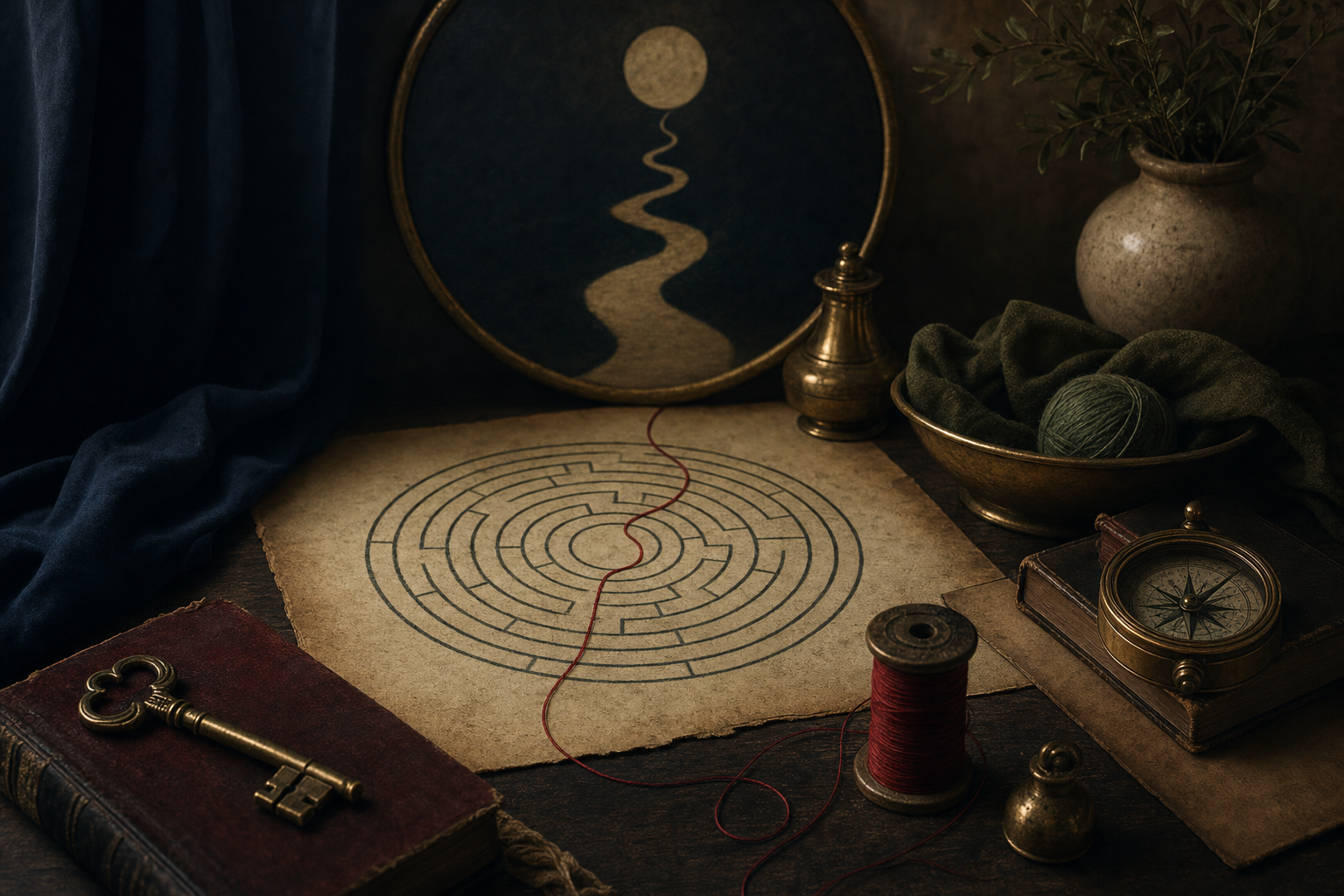
We often define synchronicity, but what does it truly feel like? It is less a crash of thunder and more a quiet resonance, a subtle recognition that our inner world has found an echo in the outer.
What Synchronicity Really Feels Like
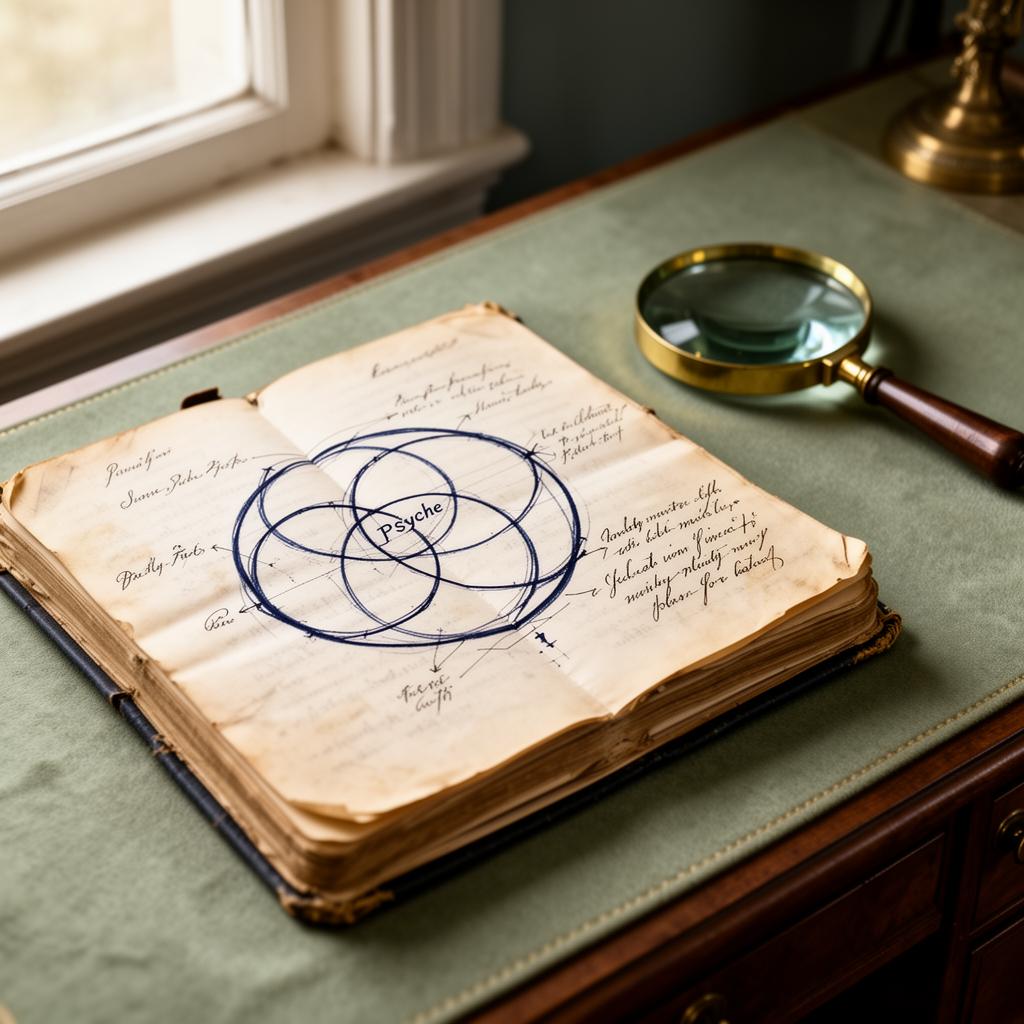
We have a name for it - synchronicity, the meaningful coincidence - but a definition is not a description of a feeling. We have language to chart the event, to mark the X on the map where an inner state and an outer event surprisingly converge. But what of the inner territory itself? What is the texture of the air in that moment of recognition, the taste on the tongue, the quiet resonance that shivers through the bones long after the moment has passed? To ask what synchronicity is, is a question of mechanics. To ask what it feels like, is a question of meaning.
The Initial Shiver of Recognition
It rarely arrives like a thunderclap. The first feeling of a true synchronicity is more akin to the faint, pure tone of a bell struck miles away, a sound that travels not through the air but through the subtle substrate of your own awareness. It is a quiet hum that rises above the noise of ordinary life. One moment, you are walking through the day, preoccupied with its lists and obligations; the next, something has stopped you. Not physically, but psychically. You are thinking of an old friend you haven't spoken to in a decade, and their name is spoken by a stranger passing on the street. You are wrestling with a specific, esoteric question, and a book falls open in a store to the one page that addresses it.
The mind scrambles for an explanation, for the comfort of probability. Coincidence. Randomness. The Baader-Meinhof phenomenon, a trick of newly primed attention. And it could be. But the feeling that lingers is not one of statistical anomaly. It is a feeling of being seen. It is a small, sharp intake of breath, a recognition that the rigid wall between your inner world - your thoughts, your memories, your quietest anxieties a nd hopes - and the seemingly indifferent outer world has momentarily become porous. A message has, it seems, been passed through.
This feeling is a shiver of pattern recognition, the sudden, intuitive grasp of a connection that logic cannot immediately sanction. It is the sensation of a thread being pulled, a thread you did not even know you were holding, that connects you to the vast and intricate tapestry of the world. For an instant, the universe does not feel like a cold, empty expanse of random particles, but a living, breathing body of intelligence that has, for reasons unknown, decided to whisper your name. It feels less like a miracle and more like a secret, shared between you and everything else.
Beyond the Horizon of Coincidence
To live in the modern world is to be armed with a fortress of rationality against the strange and the uncanny. We are taught to dismiss what we cannot measure, to explain away the whispers at the edge of perception. When a synchronicity occurs, our first impulse is often to debunk our own experience. We calculate the odds. We point to confirmation bias. We dissect the moment until the magic bleeds out, leaving only the cold corpse of a statistically plausible event. It is a defense mechanism against a world that might be vastly more mysterious, and more personal, than our tidy models allow.
Yet, the feeling remains. The feeling of synchronicity has a weight and a warmth that rational dismissal cannot easily cool. It is the difference between looking at a sheet of music and hearing the symphony. The notes on the page are the facts of the coincidence - the friend's name, the open book, the repeated symbol. The music is the feeling it evokes - the awe, the curiosity, the uncanny sense of rightness. This feeling is not an intellectual conclusion; it is an emotional and somatic truth. Your body knew it before your mind could argue. It is a calming of a certain kind of existential loneliness.
To move beyond the horizon of mere coincidence is to allow for the possibility that the universe communicates in a language of image and event, not just cause and effect. It feels like stepping out of a small, well-lit room and into a vast, starlit landscape. The familiar rules of the room are comforting, but the vista of the landscape is where the real beauty lies. Acknowledging the feeling of synchronicity is not an abandonment of reason. It is an expansion of it, an agreement to include the data of the heart and the intuition alongside the data of the senses. It is to admit that there may be patterns woven into the fabric of reality that we can only perceive when we are properly attuned.
A Dialogue Between Two Worlds
Synchronicity feels, above all, like a conversation. It is not a monologue delivered by the universe, nor a solipsistic projection of our own minds. It is a dialogue. We pose a question, often unconsciously, through the posture of our soul. We carry a secret longing, a deep-seated fear, a burgeoning creative idea. We are a tuning fork, vibrating with a specific, personal frequency. And then, the world seems to strike a corresponding note. It answers.
The feeling is one of profound, unexpected reciprocity. The boundary between subject and object, between the self and the world, dissolves into a collaborative dance. The dream image that haunts your nights appears as a pattern on a stranger's forgotten scarf. The animal emblem you have begun to sketch in your journal shows up three times in one day - as a logo on a truck, a reference in a song, and a fleeting shape in the clouds. It feels as though the world is not merely a passive backdrop for our lives but an active participant in our inner journey. It is listening, and it is responding in the only language it has: the language of form, of symbol, of the present moment.
Continue reading: Why Certain Dreams Stay With Us For Years
This dialogue doesn't feel like a psychic power or a supernatural intervention. It is quieter, more natural. It feels like learning the rhythm of the tides or the direction of the wind. It is an ecological awareness, but of the psyche. You begin to notice the subtle interplay between your inner weather and the climate of the world around you. This is not about the world conforming to your will, but about your attention being guided to something that was already there, waiting to be seen. The feeling is one of creative participation in the unfolding mystery of your own life.
There are moments when the story we are living and the story the world is telling us align so perfectly that we can no longer tell them apart. We are not just reading the book; we are also being written by it. And in that mutual becoming, the feeling is not one of control, but of grace.
Reading the Language of Symbol
When we experience synchronicity, we are not being given a set of instructions written in plain language. We are being handed a symbol. A recurring number, a chance-met person who embodies a quality we are struggling with, a phrase from a song that cuts straight to the heart of our predicament - these are not literal directives. They are psychic and poetic images. The feeling, then, is one of being drawn into a deeper, more symbolic mode of perception. It feels like remembering a forgotten language.
For a time, the world ceases to be a collection of things and instead becomes a vocabulary of meaning. A raven is not just a bird; it is a sudden slash of black ink against the grey sky, an emblem of mystery or intelligence. A dead battery in your car on the morning of a dreaded meeting is not just a mechanical failure; it is a pause, a moment of enforced stillness asking you to consider your own depleted energy. The feeling is not paranoid, as if the world is plotting around you. It is poetic. The world is rhyming with your inner state.
Engaging with this feeling requires a shift from analysis to association, from logic to intuition. You don't ask, "What does this raven objectively mean?" You ask, "What does this raven mean to *me*, now? What string does it pluck within my own story?" It feels like decoding a personal myth as it is being told. There is a sense of creative responsibility. The symbol is offered, but its meaning must be constellated within your own psyche. The synchronicity provides the image; you provide the context and the heart. The feeling is one of being invited to become the interpreter of your own unfolding path.
The Gravity of the Numinous Moment
Not all synchronicities are created equal. Many are small, delightful winks from the universe. But some land with a different weight. They arrive wrapped in an atmosphere of the numinous - that potent combination of awe, reverence, and a hint of trembling fear. These are the events that stop you cold, that bring tears to your eyes, that seem to rearrange the very molecules in the air. They are not just meaningful; they feel sacred.
This feeling often accompanies life's great thresholds: birth, death, a profound loss of faith, a transformative love. At the exact moment you surrender a long-held struggle, the answer appears from a wholly unexpected source. After a loved one's passing, their most cherished and unlikely song plays in three different public places in a single day. These events are so improbable, so perfectly timed, so deeply resonant with your emotional core that they shatter the confines of the ordinary. It feels as if you have brushed up against the hidden architecture of the cosmos, the unseen order that underpins the apparent chaos.
The feeling of the numinous in synchronicity is unmistakable. There is a sense of gravitas. The air feels thicker. Time seems to slow down, and your perception becomes intensely focused. You are utterly present. It is the feeling of being in the presence of a great mystery, one that does not ask for a solution but for silent witness. It is humbling. It strips away the ego's illusion of control and reminds you that you are part of a story far larger and more ancient than your own. These moments are not just coincidences; they are minor revelations. They don't provide answers so much as they deepen the question of your own life, rendering it in sacred terms.
The moments that truly change us are rarely the ones we orchestrate. They are the moments of irruption, when a crack appears in the smooth surface of our expectations and something else, something from a deeper reality, shines through. We are not the masters of our journey; we are its privileged witnesses.
The Invitation, Not the Commandment
So the universe has rhymed with your soul. A pattern has been revealed. A symbol has been offered. What now? A common mistake is to treat a synchronicity as a divine commandment, an unambiguous sign pointing down a single, correct path. But the feeling of synchronicity is rarely that of a directive. It is not a stop sign or a green light. It is more subtle. It is an invitation.
It feels like a hand on your arm, gently turning your attention. "Look here," it seems to say. "Pay attention to this. There is something for you in this moment, this person, this idea." The choice remains yours. To see the recurring image of a boat as a commandment to sell your house and sail around the world is to miss the poetry of the encounter. It might instead be an invitation to explore concepts of journey, of navigation, of the unconscious mind (the sea), of solitude. The synchronicity doesn't give you the destination; it gives you a compass that points toward a theme worthy of your exploration.
To honor the invitation is to engage with the theme. You might read books about sailing, visit the sea, reflect on your life's journey, or simply hold the image of the boat in your mind and see what feelings or memories arise. The feeling is one of being given a thread to pull. Following it does not guarantee a specific outcome, but it promises a richer, more conscious journey. Responding to the invitation is an act of faith in your own unfolding process. It is a commitment not to a pre-written fate, but to a life lived in dialogue with mystery. It is the beginning of a genuine inner shift, the kind that moves beyond simple change and into the realm of true transformation.
Continue reading: The Difference Between Change And Transformation
The Quiet Architecture of Belonging
To live with an awareness of synchronicity is to gradually inhabit a different world. It is not about constantly hunting for signs or forcing meaning onto random events. That way lies paranoia and delusion. It is the opposite. It is about cultivating a state of receptive, open attention, and allowing meaning to emerge when it will. The practice is one of relaxation, not effort. It is a quiet trust that if you are paying attention to your own inner life, the outer world will provide the necessary mirrors.
Over time, the feeling of synchronicity changes. The initial shock and awe of individual events softens into a steady, underlying hum. It becomes a quiet assurance. The world begins to feel less alien, less random. The gnawing ache of existential isolation begins to subside, not because your problems have vanished, but because the context in which you hold them has expanded. You feel a connection not to a specific outcome, but to the process itself. You are part of an intelligent, responsive, and deeply mysterious whole.
Ultimately, the most profound feeling that synchronicity leaves in its wake is a sense of belonging. This is not the belonging of tribe or nation, but a more fundamental, cosmic belonging. It is the feeling that your small, particular, and unique life is a meaningful thread in an impossibly vast and beautiful tapestry. It is the calm, quiet, and deeply heartening realization that you are not just a stranger here, passing through. You are a part of the pattern. The story of the universe is also your story, and in these brief, luminous moments of recognition, you feel, finally, completely at home.
Continue the thread
If this article resonated, three places to go next:
Look up the symbols this touches in the Archetypal Dreams and Bird Dreams entries.
New here? What MythRadar is - why we treat dreams and recurring patterns as personal mythology rather than fortune-telling.
Ready to map your own pattern? Begin your personal mythology profile.
I post the short version of these on Instagram most days. Follow @mythradar on Instagram