Human Behaviour
Why We Attract the Same Relationships Again and Again
The Ghost in the Opposite Chair There is a specific kind of silence that descends upon a room when you realise you have been here before.
The Ghost in the Opposite Chair
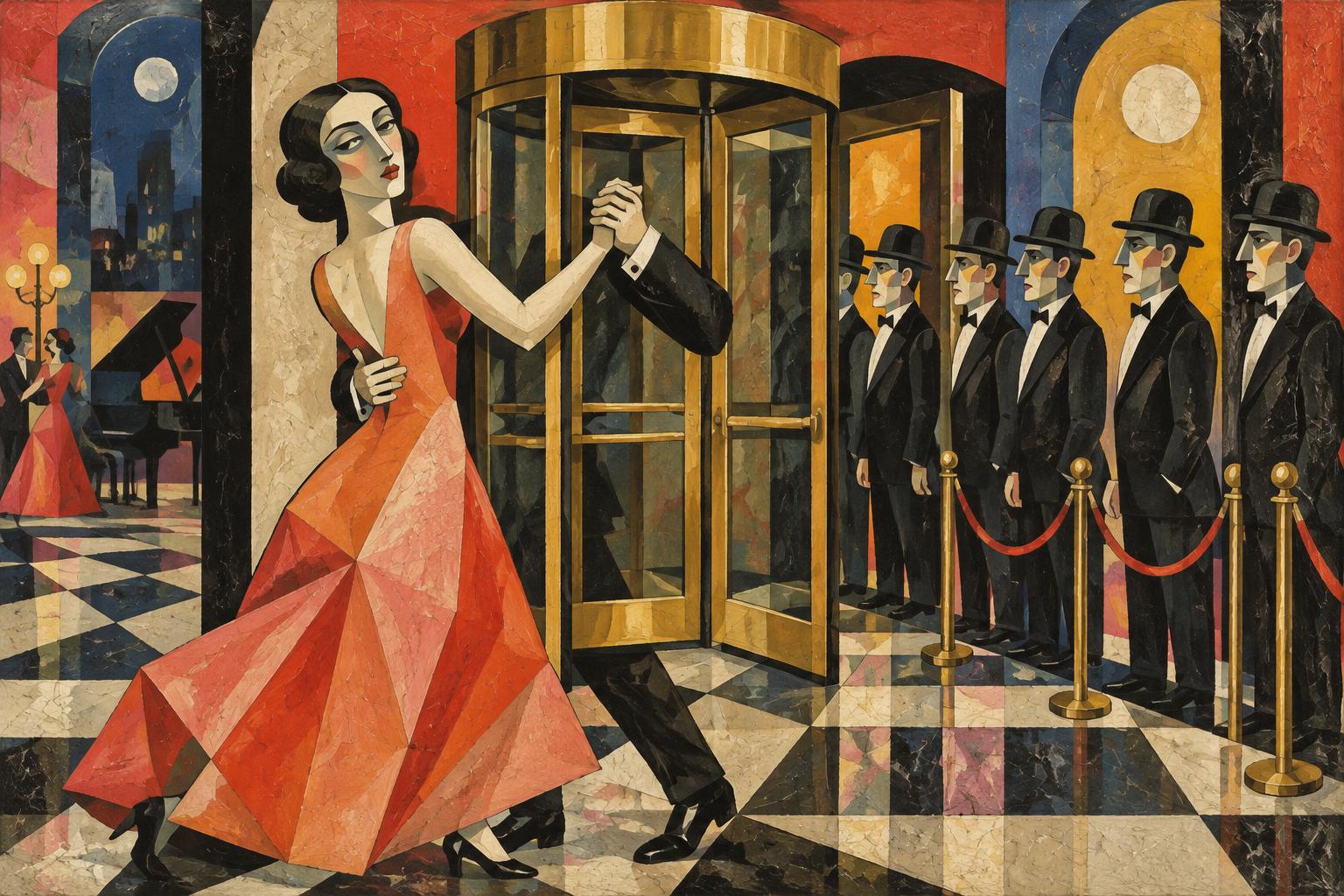
There is a specific kind of silence that descends upon a room when you realise you have been here before. You are sitting across from someone new, perhaps in a dimly lit restaurant where the condensation is slowly pooling at the base of your water glass, or perhaps on the edge of a bed in an apartment you have only just begun to memorise. The face looking back at you rests upon different bone structure. The voice carries a different cadence. They grew up in a different town, hold a different profession, and they wear their hair in a way that belongs entirely to them. By all measurable, surface-level metrics, this person is a distinct and unprecedented event in your life. And yet, beneath the ordinary exchange of early conversation, a subterranean bell begins to toll. You watch them avert their eyes when a certain topic is raised, or you hear the particular, guarded sharpness in their laugh, and a cold, entirely familiar weight drops into your stomach. It operates under a new name, you think quietly to yourself, but the ghost has returned.
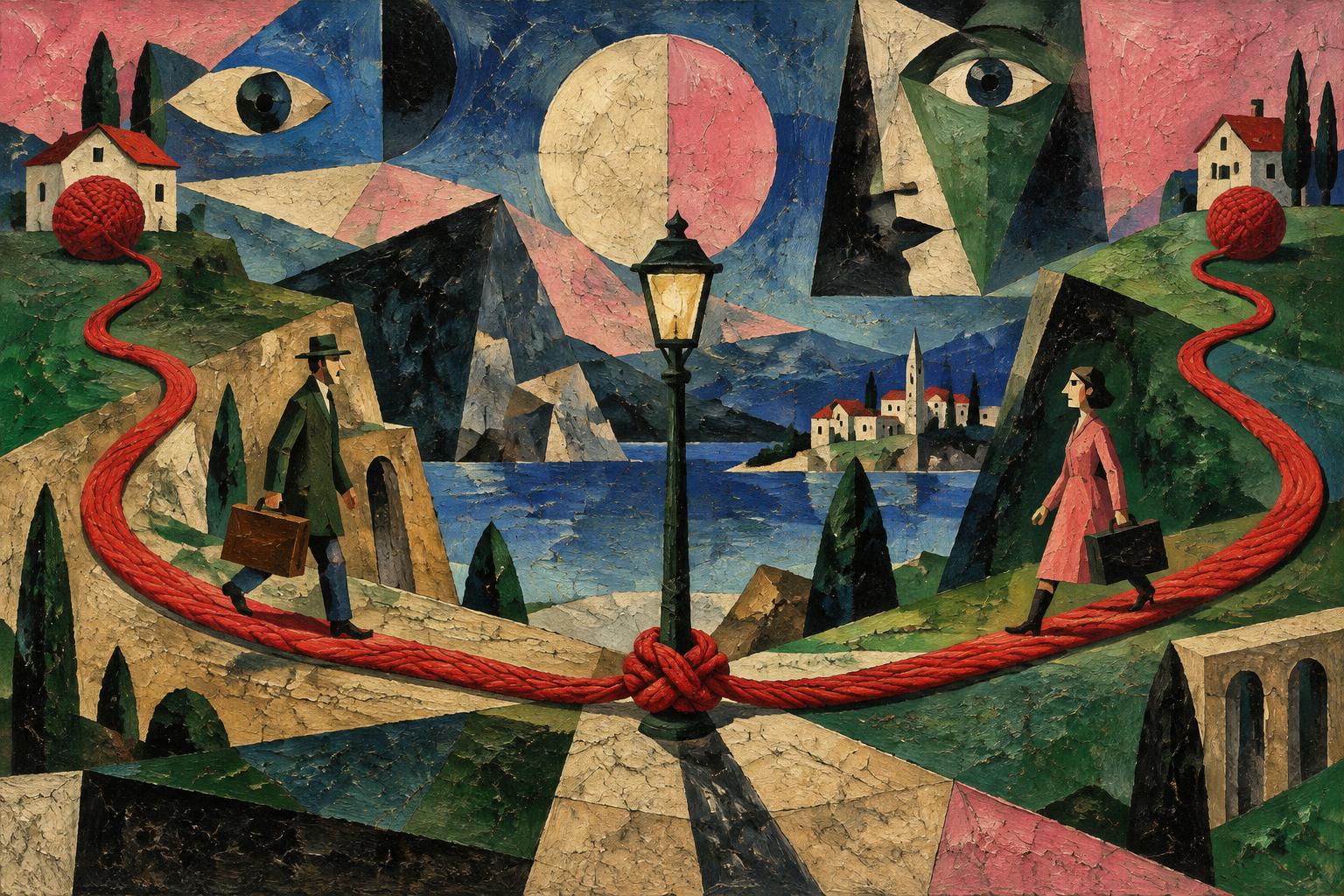
We do not like to admit how frequently we find ourselves locked in the exact same relational architecture we swore we had burned to the ground. When a painful partnership finally collapses, we tend to undergo a period of intense conscious surveying. We map the ruins. We draw hard, decisive borders around the behaviours we will never tolerate again. If the last person was prone to sudden, volatile outbursts of anger, we vow that our next encounter will be with someone quiet, measured, and exceedingly calm. If the previous lover was emotionally withheld, a fortress of ice, we seek out warmth, expressiveness, and a heart worn openly on the sleeve. We construct a rigorous checklist of opposites, believing that by reversing the symptoms, we have cured the disease. We walk out into the world convinced that our selection process has been radically upgraded.
But the unconscious mind is not a reader of checklists. It is a creature of deep, historical topography. It does not care about the clothing a person wears or the volume of their voice; it is hunting for a specific atmospheric pressure. And so, we find the measured, quiet person, only to discover a year later that their silence is not peaceful, but punitive - a withdrawing of affection that leaves us feeling just as intensely exiled as the shouting matches of the past once did. We invite in the brilliantly expressive, warm-hearted soul, only to find that their emotional landscape is a chaotic, engulfing flood that requires constant managing, leaving us entirely drained of our own centre. The wallpaper has been changed, the furniture rearranged, but we are essentially wandering through the exact same house. The argument we find ourselves having on a Tuesday evening in a rain-streaked kitchen is a script we know by heart, though we never meant to memorise it.
This eerie recognition is not evidence of a cursed existence. It is not necessarily bad luck, nor is it a punishment handed down by a universe intent on seeing you suffer. It is, rather, the quiet, relentless mechanics of the human psyche attempting to finish an interrupted task. We are pulled, as if by an invisible gravity, toward the same kind of relationship until the inner question those relationships were asking finally gets answered.
The Shadow and the Mirror
To understand why we recruit essentially the same individual to break our hearts or test our borders time and time again, we must look away from the other person and stare directly into our own unlit corridors. Carl Jung suggested that we rarely see others as they objectively are, especially in the intoxicating, gravity-defying early stages of romance. What we see instead is a projection of our own unlived material, cast outward onto the conveniently blank screen of a stranger. We meet our own exiled parts walking toward us in another’s body.
Projection is often misunderstood as merely assuming other people share our flaws, but it is far more complex and frequently far more beautiful than that. If you spent your childhood learning that you had to be utterly self-reliant, strictly logical, and fiercely independent to survive, you likely banished your vulnerability, your need for care, and your spontaneous emotion into the shadow. These qualities do not evaporate simply because you refuse to acknowledge them. They remain alive, humming beneath the floorboards, desperately seeking expression. And then, you attend a party, and you meet someone who exudes a chaotic, vibrant, openly vulnerable energy. They are messy, they are emotional, they are deeply in need of a grounding force. You feel an immediate, electrical pull toward them. You call it love at first sight. You call it chemistry.
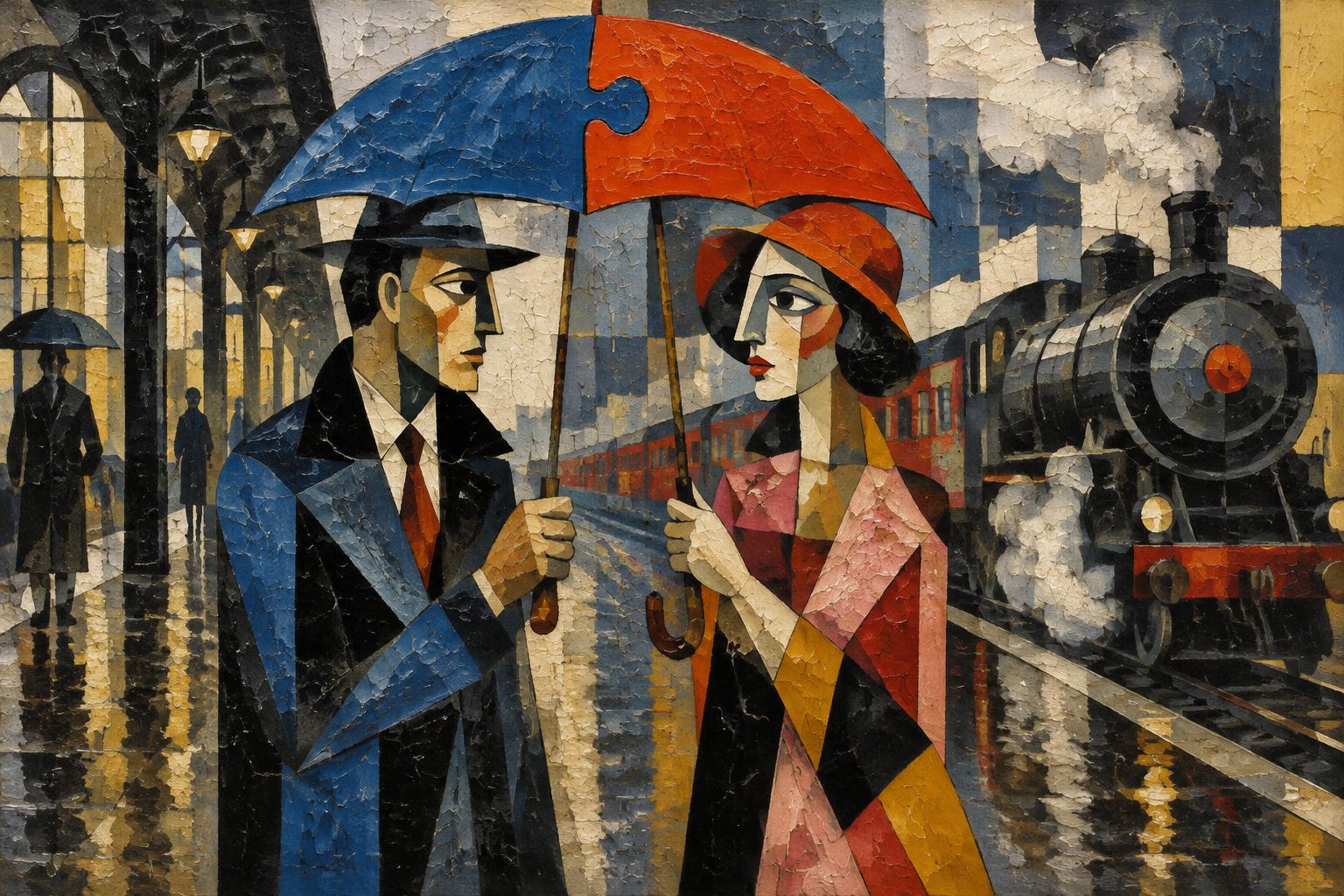
But what is truly happening in that moment of profound attraction? You are falling in awe with your own disowned softness. You are outsourcing your own unlived emotional life to this new person, asking them to carry the weight of the vulnerability you cannot permit yourself to feel. Similarly, they look at your stoic, grounded presence and see the stability they have never been able to cultivate within themselves. You enter into a silent, unconscious contract. You will be the rock; they will be the storm. It feels intoxicatingly perfect, an interlocking of puzzle pieces.
Yet, an inevitable tragedy awaits this kind of arrangement. When we relate to someone as a mirror reflecting our unlived life, rather than as a freestanding human being, the illusion eventually shatters under the weight of reality. The mirror cracks. The very qualities that drew you to them - their emotional spontaneity - soon begin to feel like a suffocating burden. You start to resent them for being so needy, completely forgetting that you unconsciously selected them precisely because you wanted to be needed, because their reliance on you kept your own vulnerable, frightened self safely hidden behind a wall of competence. The argument begins anew. The shape is identical to the last one. You are, once again, the rational adult trying to manage an erratic child, feeling desperately alone and misunderstood, wondering how you ended up here yet again.
This is the fundamental difference between a partner and a mirror. A partner is someone you relate to across a bridge of separateness. They are allowed to be entirely distinct from your needs. A mirror is an individual you have unknowingly drafted into a private play, assigned a role they never consciously agreed to take. And as long as you remain unaware of the casting call you are broadcasting, the same archetypal figures will keep arriving at the audition.
The Original Scene of the Crime
There is a profound, albeit painful, wisdom in the way we wander back into the jaws of the familiar. The human mind is deeply unsettled by unresolved trauma, by emotional loops that were left hanging open in our formative years. If a child grows up in an environment where affection was conditional, where love had to be meticulously earned through high achievement or extreme compliance, that child internalises a very specific map of intimacy. Love, on this map, is intrinsically tied to anxiety. It is tethered to the constant risk of abandonment. It requires work, vigilance, and the absolute suppression of one's own inconvenient needs.
When this individual reaches adulthood, they will walk into a room full of potential partners. There may be people in that room who are secure, warm, and ready to offer affection freely, without requiring a performance in return. But to the unconscious mind carrying the old map, this freely given love feels deeply suspicious. It registers as boring, or lifeless, or terrifyingly foreign. There is no friction, no familiar edge of danger. Out of the entire crowd, the individual will inexplicably lock eyes with the one person who is slightly aloof, who demands perfection, who runs hot and cold. The old map lights up. The internal compass needle spins and locks into place. Here, the unconscious whispers. This is the one. I know this terrain.
We recreate the original scene of the crime not because we want to suffer again, but because the psyche is attempting a daring rescue mission. We unconsciously seek out a replica of the parent or early caregiver who wounded us, hoping that this time, with this new person, we can finally get it right. If we can just love them enough, if we can just be patient enough, if we can say the perfectly calibrated string of words, the emotionally unavailable partner will finally open up. The harsh judge will finally grant us total approval. We believe we can retroactively heal the past by winning a victory in the present.
But the person standing in front of you is not your father, and they are not your mother, and they are not the ghost of your past. They are trapped in their own history, fighting their own ghosts, and they cannot give you the retroactive salvation you are demanding. The harder you try to extract the missing love from them, the more they will retreat into the familiar patterns of the wound, giving you exactly the rejection or chaos you subconsciously expected from the very beginning. The argument that ensues is never truly about the dishes left in the sink or the text message left unanswered for four hours. The argument has the towering, mythological proportions of childhood grief. You are fighting for your right to exist. You are fighting against the annihilating fear of being unseen. The stakes feel like life and death because, to the younger version of you running the control panel in that moment, they truly are.
The Argument With the Ghost
Consider the physical sensation of the recurring argument. You know its geography intimately. It begins with a seemingly innocuous misstep - a misplaced tone of voice, a sigh in the hallway, a forgotten promise. Immediately, a heavy, metallic taste fills your mouth. Your heart rate alters its rhythm. Before a single word is raised in actual conflict, you can already see the entire trajectory of the evening stretching out ahead of you, inevitable as gravity. You know exactly what they will say, and you know the defensive, tightly coiled response that will rise in your own throat. You try to steer away from the cliff edge, but the momentum of the pattern is too vast, too ancient to be stopped by sheer willpower.
As the voices rise, the room seems to detach from the present year. The walls of your current living room dissolve, and you are standing in a composite space built of every time you have ever felt this specific flavour of despair. You explain, you beg, you rationalise, you retreat into icy silence. Whatever your default defensive posture is, you assume it perfectly. You feel cornered, completely misunderstood, shouting across a chasm at a partner who suddenly looks like a stranger.
We do not weep for the argument happening in the room; we weep for the unbroken chain of arguments stretching backward into the dark, all asking the same impossible question to an empty room.
In these moments, if you could suddenly freeze time and step outside of yourself, you would see two people who are not actually interacting with one another at all. You are both interacting with phantoms. You are reacting to the projection you placed upon them; they are reacting to the projection they placed upon you. The real, breathing, complex human beings have left the room entirely, replaced by archetypal figures locked in a primal struggle. This is why these recurring arguments never find resolution. You cannot solve a historical wound by negotiating with a proxy.
The tragedy of remaining blind to this cycle is the deep, spiritual exhaustion it produces. After the third, or fourth, or fifth relationship ends in the exact same smouldering ruin, a cold cynicism begins to settle over the heart. We begin to believe that love itself is fundamentally flawed, or that all human beings are inherently deceitful, or that we ourselves are simply broken beyond repair. We gather our evidence. We point to the string of ex-partners who all committed the same emotional crimes, using their behaviour as proof that the world is a hostile place. It is deeply terrifying to consider the alternative: that the world is neutral, and we have been acting as the invisible scriptwriter orchestrating our own tragedies.
Withdrawing the Projection
How, then, does the pattern break? It is a question whispered into the dark of countless solitary bedrooms when the dust of the latest departure has finally settled. The most common, and most ineffective, strategy is to double down on the external search. We read books on red flags, we employ new dating strategies, we move to new cities, desperately hoping that geographical or tactical changes will filter out the ghosts. But the ghosts do not live in the city, and they do not care about your tactics. They live in your own unresolved longing.
The breaking of the pattern almost never occurs in the presence of another person. It happens in the quiet, often devastatingly lonely periods between relationships, when there is no one left to whom you can hand your shadow. It requires a process that Jung called the withdrawal of projection. This is an act of profound courage, for it requires you to stand before the cracked mirror of your past relationships and ask a terrifying question: What was I asking them to carry for me?
If you consistenly find yourself with partners who are emotionally chaotic, you must sit in the silence and ask where you have buried your own unruliness. If you always attract individuals who fundamentally need you to fix them, you must confront the frightening reality of what your life would mean, and who you would be, if you were not useful. You must examine the secret, shameful payoff of the toxic dynamic. What did the familiar pain protect you from? Often, we choose the familiar agony of being dismissed over the absolute terror of being truly seen, because being truly seen carries the risk of a much deeper, more authentic rejection.
Withdrawing the projection means pulling all the scattered pieces of your psyche back into your own physical form. It means taking the heavy, leaden cloak of your childhood needs off the shoulders of the person sitting across from you. It is a moment of profound grief, for you must finally mourn the reality that no romantic partner will ever be the idealised parent who can reach back into the past and save you. You must grieve the fantasy that salvation can be outsourced. But beneath the grief, there is a slow, steady gathering of power.
When you realise that the anger you felt toward them was also the anger you needed to feel on behalf of your younger self, you reclaim your own fire. When you understand that their captivating spontaneity was actually your own repressed joy calling out to you, you can begin to dance without needing them to lead. You begin to stitch yourself back together. The gaping void that you kept trying to fill with the bodies of flawed strangers begins to close, healing from the perimeter inward.
Becoming a Different Reader of the World
There is a distinct, quiet morning that arrives eventually, provided you stay with the discomfort of the inner work. You walk out into the world, perhaps into a coffee shop, or a social gathering, and you encounter the familiar pull. You lock eyes with someone, and the old chemistry flares to life. They possess the exact same dark, brooding unavailability, or the exact same chaotic, enthralling neediness that would have hooked you completely five years ago. Your heart gives a slight, reflexive flutter.
But the sequence has been interrupted. The space between the impulse and the action has widened. You view the magnetic pull no longer as a sign from the universe or the undeniable spark of true love, but simply as a memory ringing in the flesh. You recognise the ghost, raise a quiet glass to it, and decide not to invite it to sit down. You realise, with a rush of cool, clear air, that chemistry is often just trauma recognising trauma. And you are no longer interested in returning to that particular theatre.
This is the moment the pattern truly breaks. You do not break it by finding a perfect, flawless person. You break it by becoming a different reader of people. You learn to listen for a different kind of music in others. Instead of the loud, adrenaline-fueled crash of the familiar dysfunction, you start to become curious about the quietness of actual peace. Real, healthy love, especially to a nervous system accustomed to wartime conditions, frequently feels deeply boring at first. There is no chase. There is no desperate need to translate their silences or manage their moods. They say what they mean, they stand where they are, and they ask you to do the same.
It takes time to acclimatise to this uncharged atmosphere. You will spend months waiting for the other shoe to drop, waiting for the familiar shadow to emerge from the walls. But slowly, the nervous system settles. You begin to look at the person across from you and see them entirely. You see their distinct flaws, their beautiful idiosyncrasies, and their separate, breathing humanity. You are no longer asking them to be the stand-in for an ancient wound. They are no longer a mirror reflecting your terrified inner child; they are a window looking out onto an entirely new landscape.
You begin to realise that the endless repetition of those past relationships was not a life sentence, but a profound curriculum. You were forced to walk around the exact same mountain, wearing down the path until the friction finally generated enough light for you to see your own feet. You forgive yourself for the years spent arguing with ghosts, understanding that you were doing the absolute best you could with a map drawn in the dark.
When you step back and view the long, winding trajectory of your life, you can see that this repetitive loop was never a mistake or a detour. It was the anvil upon which your self-awareness was forged. The lovers who bore the faces of your deepest fears, the arguments that echoed across different apartments and different years, the painful reckonings in the silent aftermath - they were the necessary drafts of a story you were trying to understand. This pattern, with all its sorrow and eventual reclamation, was always meant to be woven into the fabric of your becoming; it is merely one completed chapter of the vast, unfolding architecture of your own personal mythology.
Related Reading
Meeting the Shadow Self · Why Certain People Feel Significant the Moment We Meet Them · What Is Personal Mythology?
Every recurring dream, repeated relationship, and returning question is a sentence from the same deeper story. Read what Personal Mythology means at MythRadar - or explore your own with MythRadar.
Continue the thread
If this article resonated, three places to go next:
- Look up the symbols this touches in the Ex Partner Dreams and Recurring Dreams entries.
- New here? What MythRadar is - why we treat dreams and recurring patterns as personal mythology rather than fortune-telling.
- Ready to map your own pattern? Begin your personal mythology profile.
I post the short version of these on Instagram most days. Follow @mythradar on Instagram