Body & IdentityCornerstone
Death Dreams
To dream of death can be a profound, sometimes unsettling, experience, yet it rarely points to a literal ending. More often, such dreams invite us into a deeper consideration of change, transition, and the cycles of life.
- transformation
- ending
- letting-go
- fear
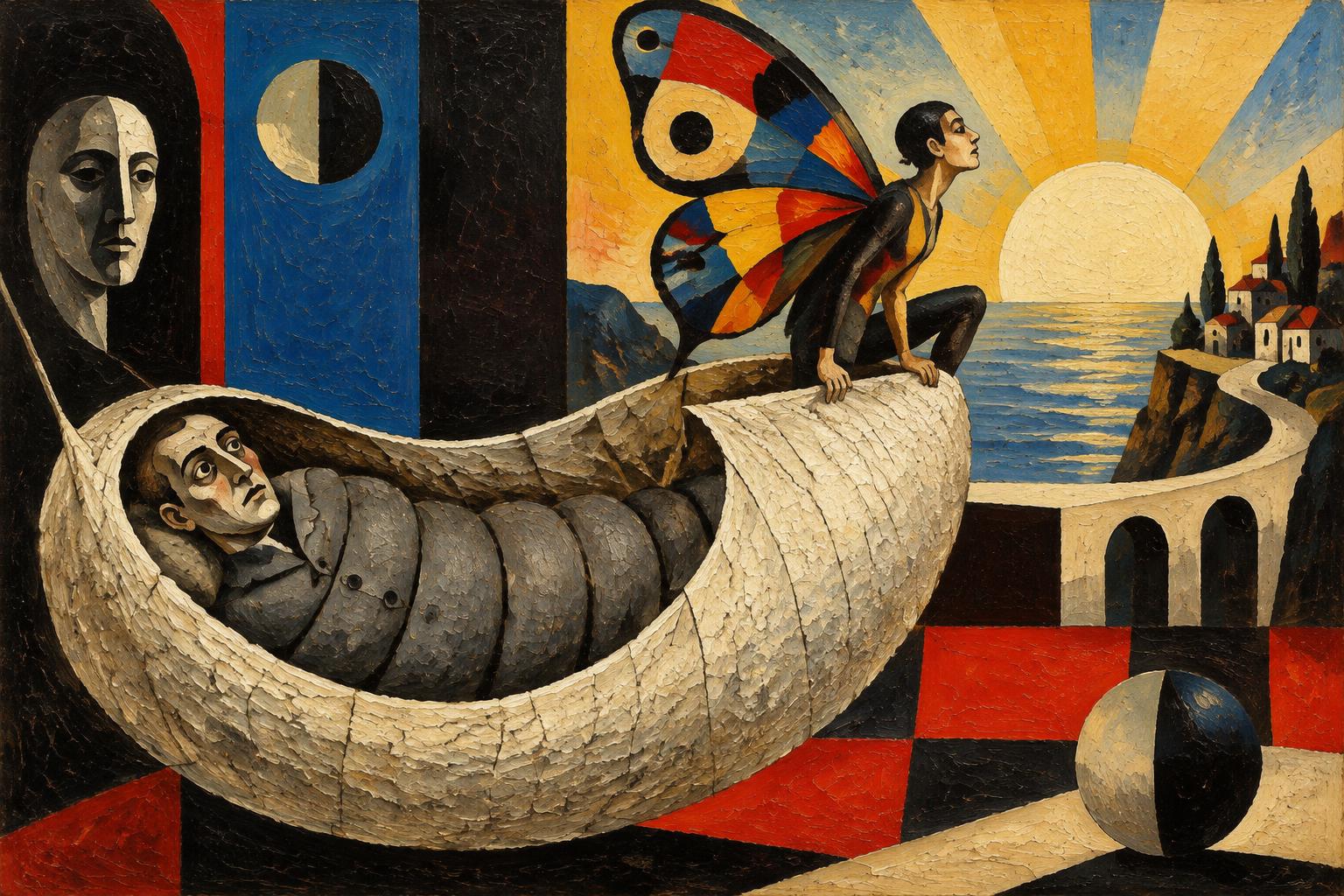
Dreaming about death almost never predicts death. It signals an ending: a phase of life closing, a role you are leaving, a version of yourself that no longer fits. The psyche uses death as its clearest image for transformation because nothing states finality as plainly.
This is why death dreams so often arrive during genuine transitions - a job change, a move, the end of a relationship, growing into a new stage of adulthood. Something has to stop existing for something else to begin, and the dream pictures that honestly rather than gently.
The more useful question is rarely "am I going to die". It is why your dreaming mind reached for the most final image it has, and why now. The timing of a death dream is usually the clearest clue to what it is actually about.
Common interpretations
Death dreams describe endings and the transformations that follow them. Look at who or what is dying and what stage of change you are actually in.
Your own death
Dreaming of your own death usually marks the end of a chapter of identity - a career, a belief about yourself, a way of living that no longer applies. It is rarely literal and often arrives right before or during real growth.
The death of a parent or loved one
This is one of the most common and most misunderstood death dreams. It usually reflects anxiety about change in the relationship, guilt about distance, or fear of loss rather than any premonition. See also dead relative dreams for what appearances of the already deceased tend to mean.
A stranger dying
An unfamiliar person's death often represents an unclaimed part of yourself - a possibility, an old ambition, a quality you have stopped using. The dream marks its retirement, not a threat to anyone real.
Attending a funeral
Funeral dreams are the psyche's way of processing something already over. Read alongside funeral dreams for how mourning appears even when nothing has literally ended.
Dying and coming back to life
This pairing is one of the oldest transformation images there is. It usually describes a real, felt sense of having been through something and emerged changed, matching the pattern in transformation dreams.
Killing someone in a dream
This tends to be about ending an influence, a habit or a relationship's hold over you rather than any wish for real harm. The dream is naming a decisive severing that waking life has not caught up with yet.
A sense of dread before death, without seeing it happen
Anticipatory death dreams often accompany major life transitions still in progress. See dreams during major life transitions for how the mind rehearses change before it is finished.
Watching yourself die from outside your body
Observing your own death rather than experiencing it often suggests some psychological distance from the change taking place, as though one part of you is watching another part let go. That distance is usually protective rather than a problem.
A violent or sudden death
How the death happens tends to describe how the waking change feels rather than how anything will actually end. An abrupt or violent death often accompanies a transition that was not chosen, or arrived faster than you could prepare for.
Being at peace with death in the dream
Calm, even welcoming death imagery is common alongside deliberate endings - a retirement, a finished project, a decision you made yourself - and usually reflects acceptance rather than distress.
Funerals and thresholds
Older dream traditions read a funeral as an omen of a wedding: the symbolic death of one life stage making room for another. Read alongside funeral dreams and wedding dreams, which describe the same threshold from opposite sides.
Personal mythology
While certain interpretations resonate widely, the true echoes of a death dream can only be found within the landscape of your own life. For one person, the death of a beloved pet in a dream might profoundly reflect the grief of a real-world loss, carrying the weight of that unfinished farewell. For another, that same image could symbolize the letting go of a deeply ingrained dependency, a part of themselves they once cherished but now find limiting.
Consider, for example, the death of an antagonist in a dream. This could, in one dreamer’s experience, simply represent a release from conflict or a resolution of an external struggle. For another, it might point to the integration of a shadow aspect of themselves, a part they previously projected onto others but are now reclaiming or transforming. The death is not about the external figure, but about the internal dynamic.
A dream of one's own death, while potentially alarming, might for some signify a powerful rebirth, a deep shedding of an old identity that no longer serves. For others, it might highlight feelings of being overwhelmed or exhausted, where a part of them feels metaphorically 'dying' under the weight of responsibilities or expectations. The emotional texture of the dream (was it peaceful, terrifying, liberating?) could offer vital clues to its unique significance in your personal story.
Questions worth asking
- What aspects of your current life feel as though they are coming to an end or undergoing a significant transformation?
- Is there something you are actively trying to let go of, or perhaps something that is letting go of you?
- What emotions did the dream evoke, and how do those feelings relate to your waking life experiences?
- Consider what 'dying' might metaphorically mean for you in terms of habits, beliefs, or relationships.
- What new beginnings or renewed energies might be emerging as a result of these endings?
- How does your resistance to change manifest, and how might this dream be inviting you to explore that?
- If this dream were a wise mentor, what lesson might it be offering about impermanence or growth?
What MythRadar would notice
At MythRadar, we are often reminded that our dreams are not just random flickers of the subconscious; they are complex narratives crafted by the deeper self, often in response to the great themes of our existence. A dream of death, in this light, is not a morbid premonition but a profound invitation.
It asks us to lean into the understanding that life is a perpetual state of flux, a continuous cycle where what once was must give way for what is to come. These dreams could be gentle nudges, or sometimes potent shocks, designed to ensure we do not ignore the inevitable currents of change flowing through our own story. They might highlight areas where we are holding on too tightly, or conversely, areas where we are resisting necessary evolution.
Your dreams of death might be a powerful manifestation of your psyche initiating a process of clearing, of making space. They beckon you to consider what old structures, old ideas, or old selves are ready to be respectfully laid to rest, so that the ground may be fertile for new growth, new perspectives, and new phases of your enduring personal mythology.
Common questions
- What does it mean to dream about death?
- Death in a dream almost always represents an ending or transformation rather than a literal event. It marks a phase of life, identity or relationship that is closing so something else can begin.
- Does dreaming about someone dying mean they will die?
- No. These dreams are far more often about anxiety, guilt or fear of change connected to that person than any prediction. The unconscious uses death as a symbol because it states finality clearly.
- What does it mean to dream of your own death?
- Your own death in a dream usually marks the end of a version of yourself - a role, belief or way of living you are outgrowing. It commonly appears just before or during real personal growth.
- Why do I keep dreaming about death?
- Recurring death dreams usually mean a transition is still unresolved. The dream repeats the ending until you have consciously registered what is actually finishing in your life.
- What does it mean to dream of dying and coming back to life?
- This pairing describes a felt transformation - going through something difficult and emerging changed. It is one of the oldest symbolic patterns for genuine psychological change.
- What does it mean to watch yourself die in a dream?
- Observing your own death from outside your body usually reflects psychological distance from a change already underway, as though one part of you is watching another part let go.
- Why did my death dream feel peaceful?
- Calm death imagery is common alongside endings you chose yourself, such as a retirement or a finished chapter, and tends to reflect acceptance rather than distress.
Continue the exploration
The appearance of death in your dreams is a potent signal, a moment to pause and reflect on the changing tides within your life. If this dream resonates, perhaps make a note of it. Observe whether fragments of it return, or if new dreams emerge carrying similar themes of transformation and release.
Your personal mythology is unfolding with every dream, weaving together the profound and the mundane. Paying attention to these significant images, like those of death, can offer invaluable insights into your inner landscape and the journey you are undertaking.
Related symbols
From the Insights library
Related archetypal patterns
This pattern can surround this kind of dream, depending on what is happening in your life at the time. A symbol doesn't belong to a single archetype - read it as context, not as a verdict.
Not sure which of these sounds like you? Take the Archetype Finder.
the next question
One entry is a symbol. Several, read together, are a pattern - and a pattern is the beginning of a personal mythology.