Archetypes
The Trickster Archetype: Why Life Sometimes Arrives in Disguise
The Trickster is the figure who refuses the official version. He arrives uninvited, undoes the plan, and turns out to have been carrying the gift the plan would never have delivered.
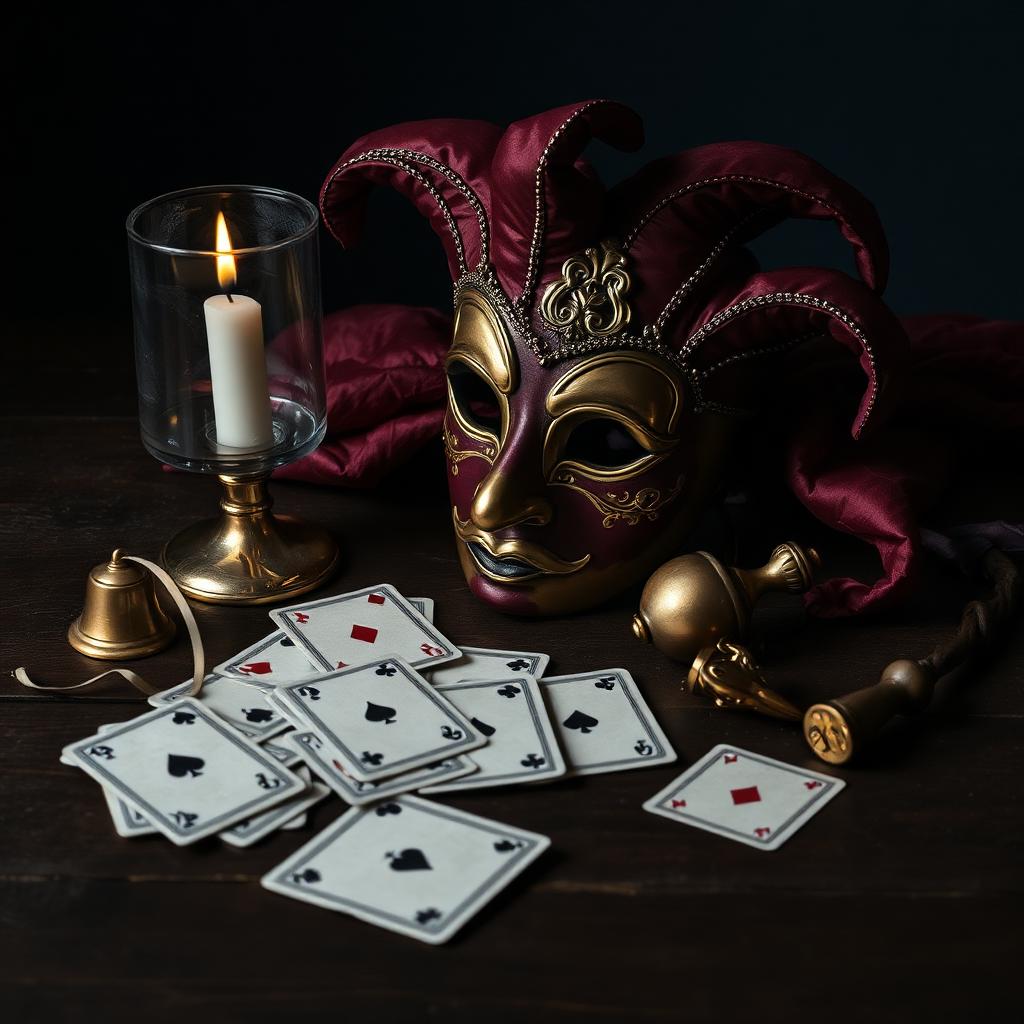
Every culture has a version of him. Hermes in the Greek world. Loki in the Norse. Anansi the spider, Br'er Rabbit, the fool in the king's court, the coyote in the desert stories of the American southwest. He is the figure who arrives uninvited, breaks the careful arrangement, and somehow, infuriatingly, turns out to have brought something the careful arrangement could never have produced.
Jung was unusually interested in him. He thought the Trickster was not a marginal figure of folklore but a structural pattern of the psyche itself. The part of us that refuses the official version. The part that makes the slip of the tongue at exactly the moment when the slip reveals the truth. The part that, when life has become too tidy, breaks the cup on the floor.
Not chaos, exactly
It is easy to misread the Trickster as simply chaotic. He is not. Chaos is undirected. The Trickster is something more interesting. He is directed disruption. He disrupts in ways that, in retrospect, look almost choreographed. He breaks the thing that needed breaking. He says the line that needed saying. He arrives at the exact wrong moment that turns out, much later, to have been the only right moment.
This is what makes him so disorienting to live with. You cannot dismiss him as randomness, because the events he produces are too pointed. You also cannot frame him as wisdom, because nothing he does is dignified. He is something else, an order that does not look like order, a teaching that arrives only through the form of mischief.
Why life sometimes arrives sideways
Most people, asked to describe the turning points of their lives, do not describe planned events. They describe accidents. The job they did not apply for. The meeting they almost did not attend. The illness that interrupted the trajectory. The conversation with the stranger on the train.
These are Trickster events. They are the moments when the carefully drawn map of a life is folded over on itself, and a road appears that was not on the original. The person who walks the new road usually does not, at the time, see it as a gift. They see it as an interruption, often a painful one. Only later, sometimes years later, do they notice that the interruption was the doorway.
This is one of the things mythology has always known, and our planning culture has mostly forgotten. The things that actually shape a life are rarely the things the life was aimed at.
The Trickster and the shadow
Jung connected the Trickster, sometimes, to the shadow. Not because the Trickster is evil, but because he carries what the official self has refused to integrate. The official self wants to be competent. The Trickster makes the official self trip on the stairs. The official self wants to be virtuous. The Trickster makes the official self laugh at the wrong joke. The official self wants to be in control. The Trickster spills the coffee.
Each of these small humiliations is doing the same work. It is loosening the official self's grip on its own image. It is reminding the person that they are not, in fact, a polished and finished thing. They are a creature, embodied, fallible, full of unmetabolised material, and the Trickster is what that unmetabolised material does when it gets out.
People who try to repress the Trickster entirely tend to produce a particular kind of tightness. Their lives become rigid in a way that everyone around them can feel. And then, eventually, the Trickster arrives anyway, but in larger, less negotiable forms. The affair. The breakdown. The job lost on a principle nobody else can quite understand. The Trickster does not consent to being ignored. He simply waits, and then arrives in a costume large enough that one cannot pretend not to see him.
Humour as an instrument
The Trickster's primary instrument is humour, and not the polite kind. The kind that lands sideways, that nobody quite knows what to do with, that releases the room only by exposing what the room was not saying.
Comedy of this kind is one of the most underrated transformative forces in human life. It does what no argument can do. It dissolves a posture. The person who has been gripping their certainty for an hour cannot keep gripping it if they have just laughed, genuinely, at something that revealed the certainty's silliness. The grip releases for a second. Sometimes a second is enough for a new thought to enter.
The cultures that have had the most sophisticated Tricksters have usually been cultures that understood the political importance of the jester. The fool in the king's court was the one person allowed to tell the king the truth. He could only do it because he wore the costume of foolishness. Through the costume, the truth could enter.
The trouble with the Trickster
None of this means that the Trickster is uniformly benevolent. He is not. He is also, plainly, the part of us that lies for fun, that sabotages out of restlessness, that picks the fight because the room had become too peaceful and the peace was unbearable.
The shadow Trickster is the saboteur. The one who breaks what should not be broken. The one whose disruption serves no transformation, only the relief of his own boredom. Many people have a Trickster who has gone feral inside them, who undoes their lives at intervals, who they have learned to dread and to apologise for.
The work, with such a Trickster, is not to suppress him. Suppression only delays him and makes his next appearance more violent. The work is to give him a role. To let him have territory. To let some part of one's life be improvisational, unmanaged, allowed to surprise even oneself. A Trickster with a sanctioned outlet tends not to break the load-bearing walls.
Welcoming the disguise
If there is a practice for living with the Trickster, it is probably this. When something arrives unplanned, especially something inconvenient, before responding with the official self's strategy, pause. Ask, with real curiosity, whether the inconvenience might be carrying something the plan could not have carried.
This is not a recipe for accepting genuine harm. Some unplanned events are simply losses, and pretending otherwise is a kind of spiritual bypassing the Trickster himself would mock. But many unplanned events are not losses. They are deliveries in unexpected wrapping. The wrapping looks like interruption. The contents look, very often, like the next chapter.
The Trickster will keep arriving for the whole of one's life. He cannot be planned for, and that is the point. The most one can do is to develop, over time, a slightly faster recognition. To learn that when life has just done something the official self did not authorise, it is worth, at least, opening the box before throwing it away.
Living with surprise
A life that has reached a certain age usually contains a small private catalogue of Trickster events. The job lost that turned out to be the doorway. The illness that, in its enforced quietness, returned a sense of self that the productive years had mislaid. The friendship that began as an unwanted introduction and became, somehow, one of the deepest in the life. The catalogue is rarely shared in full, because the events, told as a list, sound too neat. But almost everyone has one.
Recognising your own catalogue is a useful exercise. Not in order to romanticise the past, but in order to update the present. If the most important deliveries of your life arrived in interruption-shaped packages, it is reasonable to suspect that the next important delivery will too. This does not make the next interruption pleasant. It does, however, change the quality of the resistance. You hold the interruption a little longer before you decide what it is.
The fool's prayer
There is an old tradition, present in many cultures, of treating the foolish day as sacred. The day on which the regular order is suspended. The day on which the lowest and the highest exchange roles, in which the unsayable is allowed to be said, in which the formality of normal life is briefly turned inside out.
This tradition is not as quaint as it looks. It is recognition that any human order, kept too tightly, eventually distorts the people inside it. The day of inversion is a release valve. It says, in effect, that the order is provisional, that the people are larger than the roles they play, that something deeper is in motion underneath the surface arrangements.
Most modern lives no longer have such a day. We have lost the structural permission for the Trickster to visit ceremonially, and so the Trickster has to visit privately, often as crisis. There may be a small wisdom in giving him a ceremonial place again. A day, or even an hour, in which one's normal seriousness is allowed to stand down. The Trickster, given somewhere to sit at the table, becomes a much better guest.
I post the short version of these on Instagram most days. Follow @mythradar on Instagram