The Sage Archetype
The Sage turns confusion into structure, then uses that structure as a wall between themselves and feeling.

what is the sage archetype?
The Sage archetype is the part of a person that responds to difficulty by trying to understand it completely before feeling any of it. It shows up as research before decisions, frameworks before conversations, and a settled conviction that if a problem can be explained, it can also be managed. This pattern rewards the Sage with genuine insight, the kind that helps other people see their situations more clearly than they could alone. But understanding and resolution are not the same thing, and the Sage mistakes the first for the second, building an impressively accurate map of a territory they've never actually had to walk through.
The pattern at the centre
Every archetype organises itself around a single unresolved question, and for the Sage that question is whether enough understanding could make a difficult feeling unnecessary. Confusion is treated as a temporary condition, solvable with enough information, and the Sage keeps gathering information long after the point where a decision was already possible.
This is why the Sage's insight arrives ahead of their action. They can describe, with unsettling precision, the dynamics of a relationship they haven't yet left, or the flaw in a plan they haven't yet abandoned. Understanding becomes the finish line itself, which explains why so much of it never gets applied to the Sage's own life.
What drives the Sage
What drives the Sage is the belief, formed early, that clarity is safer than feeling. If a situation can be named correctly, it can be handled without being fully experienced, and the Sage's whole cognitive style is built to convert experience into explanation as quickly as possible.
Underneath that belief sits a harder motive: a fear of being caught unprepared by something they should have seen coming. Reading, analysing and theorising in advance is a way of pre-loading the world with enough structure that nothing arrives as a total surprise. Being surprised, for the Sage, feels like a small failure of the self.
Where the Sage becomes valuable
The Sage becomes valuable wherever a group is overwhelmed by information and short on interpretation. They can take a tangle of conflicting facts and produce the single sentence that makes the whole situation legible, and that sentence changes how a room makes its next decision.
This capacity for synthesis also makes the Sage a genuinely steadying presence in a crisis, because panic thrives on ambiguity and the Sage is constitutionally opposed to leaving ambiguity unresolved. Where others spiral, the Sage narrows the problem down to its actual size, which is usually smaller than the fear made it look.
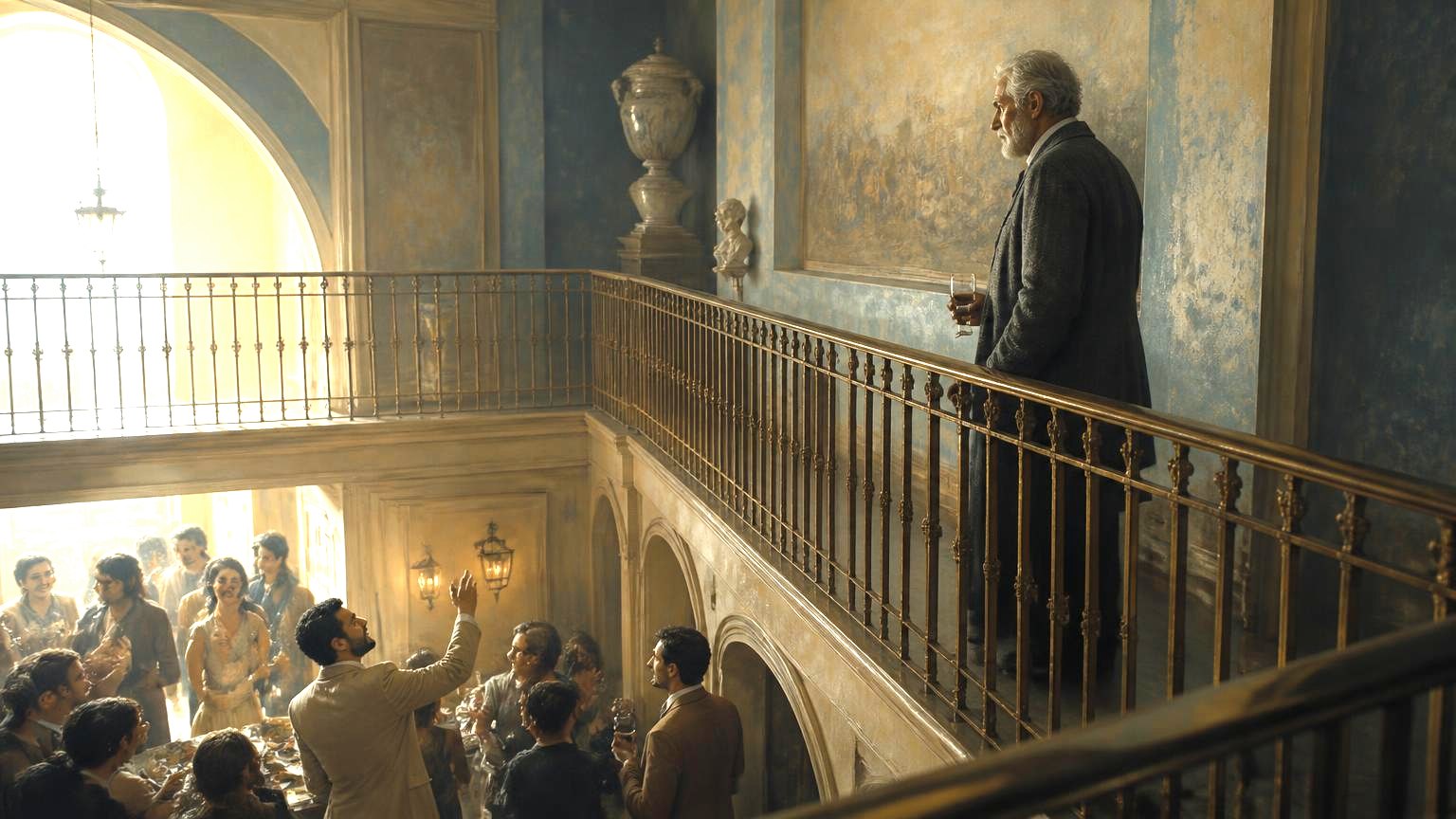
The tension inside the archetype
The tension inside the Sage is that the habit which produces clarity for others produces distance from themselves. Explaining a feeling instead of having it doesn't make the feeling disappear; it postpones it, and postponed feelings tend to return heavier than they left.
The Sage also wants closeness, the kind that requires being known rather than being consulted, but closeness asks for a version of them that hasn't yet been organised into a framework. Offering that unfinished version feels, to the Sage, like handing someone an early draft, and they would almost always rather wait until it's revised.
Shadow expression
In its shadow form, the Sage's need to understand curdles into a need to be the one who understands, and insight starts to function as a form of control rather than a form of help. Every conversation becomes an opportunity to demonstrate a framework, and the person on the other end starts to feel analysed rather than heard.
Taken further, this becomes intellectual withdrawal disguised as depth: the Sage retreats into theory precisely when a relationship needs presence, using complexity as a reason not to commit to a simple, uncomfortable feeling. The shadow Sage can explain exactly why they're distant while doing nothing to close the distance.
The Sage in relationships
In relationships, the Sage offers a kind of attention that feels rare, because they genuinely notice patterns their partner hasn't named yet and can reflect them back with real precision. Early on, this reads as being deeply understood, which is intoxicating in its own right.
Over time, though, partners of the Sage start to want less accuracy and more availability. Being correctly diagnosed isn't the same as being held, and a partner who keeps hearing sharp observations about their behaviour eventually asks for something the Sage finds harder to give: an admission that the Sage doesn't have it all figured out either.
The Sage in work, ambition and decisions
In work, the Sage thrives in roles built around diagnosis: strategy, research, teaching, any position where the value produced is clarity itself. They're the person a team turns to when a plan feels wrong but no one can say exactly why, because naming that reason is the Sage's native skill.
Where the Sage struggles is in decisions that require moving before every variable is understood, since most real decisions are made with incomplete information and a deadline that doesn't wait for certainty. Handled well, the Sage learns to treat a good-enough analysis as sufficient. Handled poorly, they keep researching until someone else makes the call for them.
What MythRadar would notice
What MythRadar would notice about the Sage isn't any single insight but its recurrence: the exam that keeps appearing in dreams with the material never quite covered, the owl that watches without acting, the staircase that keeps ascending toward a landing that never arrives.
The pattern shows up outside sleep too. A relationship analysed in exhaustive detail while the actual conversation that would change it keeps getting postponed. A decision researched for months past the point where more research changed the answer. MythRadar's role isn't to make the Sage stop thinking; it's to show them the moment thinking became a substitute for acting, so the choice to act finally becomes visible.
next step
Is the Sage the one running your life right now?
The Archetype Finder takes a few minutes and reads for the pattern rather than the mood - the dominant archetype, the one emerging, and the one you keep in shadow.
Personal Mythology
Where does this archetype show up in your own life?
Save it, add a dream or a recurring thought, and MythRadar can help you read how they connect.
That reading is your Personal Mythology. It begins with what you choose to add.
Archetypes that sit close to this one
Neighbours worth reading next - they share an instinct and spend it differently.

The Seeker
The Seeker keeps moving because arrival has always felt like a smaller idea than the road itself.

The Magician
The Magician archetype turns understanding into change, and struggles when transformation is denied.

The Ruler
The Ruler archetype seeks order and responsibility, and fears the chaos that comes when control slips.
Dreams this archetype tends to send
Entries from the Dream Dictionary that keep company with this pattern.



Related reading
- The Sage Archetype: When Understanding Becomes a RefugeThe Sage is the part of you that wants to understand. It is also the part that can use understanding to stay safely outside your own life. Both are true.9 min
- The Difference Between Insight and UnderstandingThe lamp on the desk casts a circle of light that seems narrower than it did an hour ago, as if the room itself is leaning in to listen.6 min
- The Difference Between Reflection And RuminationFrom a distance, they look identical. Both involve a quiet person thinking about themselves. Up close they are doing opposite things, and only one of them gets anywhere.8 min