Thought Patterns
The Difference Between Reflection And Rumination
From a distance, they look identical. Both involve a quiet person thinking about themselves. Up close they are doing opposite things, and only one of them gets anywhere.
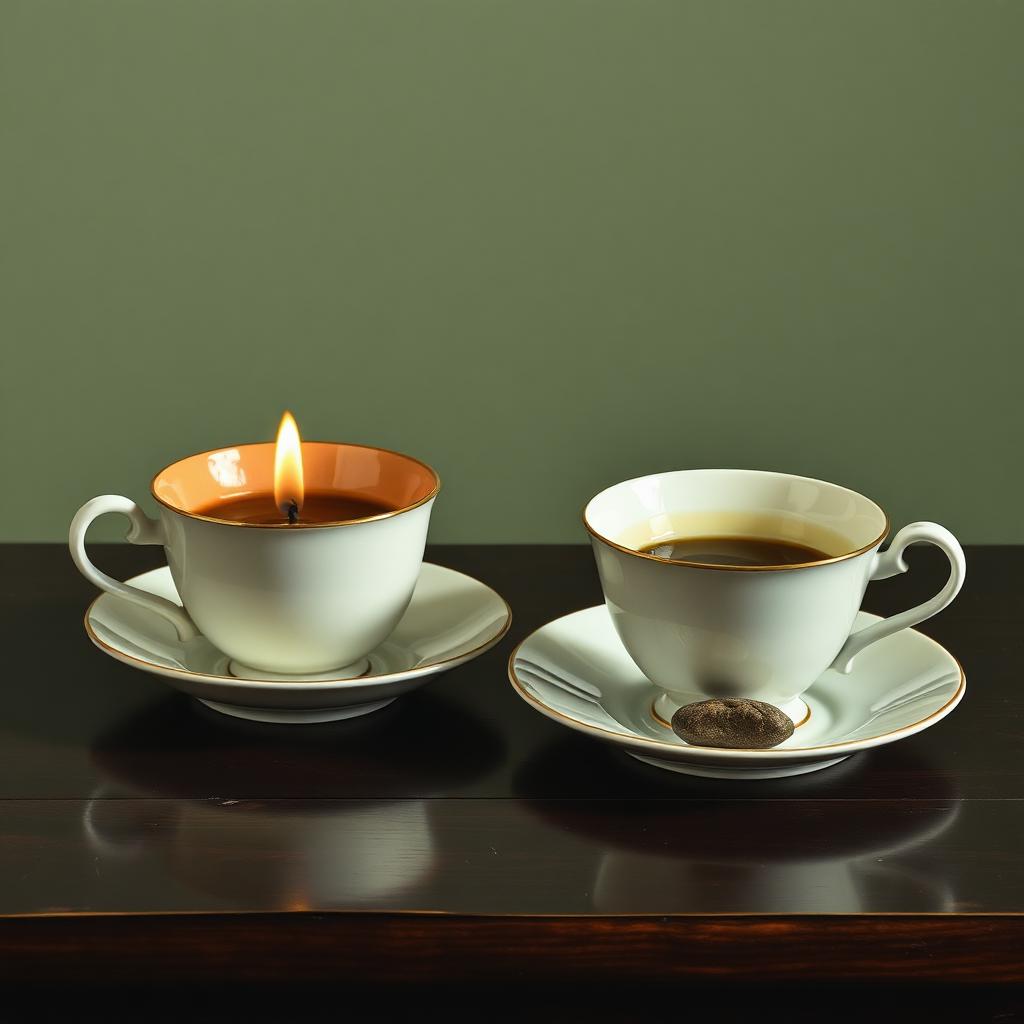
Two people sit at adjacent tables in a quiet café, each alone, each clearly turned inward. One of them is reflecting. The other is ruminating. From any reasonable distance, they look identical. Underneath, they are doing opposite things, and only one of them will leave the café better than they came in.
This is worth taking seriously, because in modern life the two are routinely confused. People who are ruminating describe themselves as reflecting. People who are reflecting are suspected of ruminating. Whole movements have grown up around the idea that turning inward is, in itself, a healthy practice, and other whole movements have grown up around the idea that turning inward is, in itself, a kind of self-imprisonment. Both readings are too crude. Inwardness is not the variable. What you do once you are inward is the variable.
The mark of reflection
Reflection moves. Slowly, sometimes circuitously, but it moves. At the beginning of a reflective session, the person holds a question, a situation, a feeling. They turn it. They consider it from different angles. They notice things they had not noticed before. By the end, even if no conclusion has been reached, something has shifted. They understand the matter slightly differently than when they sat down. The interior weather has changed.
Reflection is patient. It can sit with something for a long time without needing to resolve it. But it is not static. It is doing the slow work of integration, the slow weaving of an experience into the larger pattern of a life.
This is what makes reflection nourishing, even when its subject is painful. A reflective hour spent on a hard loss leaves a person tired but, somehow, more themselves. The substance of the loss has not changed. The person's relationship to it has, by a small degree, matured.
The mark of rumination
Rumination does not move. It cycles. The same thought, the same sentence, the same emotional register, returns again and again, with the illusion of progress and no actual progress. At the end of a ruminative session, the person knows exactly what they knew at the beginning. They have simply been thinking it more intensely.
Rumination is impatient. Underneath the surface it is desperate to resolve, to nail down, to be done with the discomfort. Because it cannot tolerate the openness that real reflection requires, it tries to substitute repetition for movement. It mistakes the heat of repeated attention for the warmth of slow understanding.
This is what makes rumination depleting, even when its subject is small. A ruminative hour spent on a passing slight leaves a person not tired but worn, not more themselves but slightly less. The substance of the slight has not changed. The person has spent themselves against it.
Why they are so easily confused
They are confused because, from the inside, they often feel similar. Both involve quietness. Both involve focus. Both involve a sense of being absorbed in something important.
They also use similar language. The ruminator says, sincerely, I am trying to understand what happened. The reflector says the same sentence. Only over time, and only with honest observation, does the difference become visible. The reflector, six months later, has a different relationship to what happened. The ruminator, six months later, has the same relationship, only more deeply grooved.
This is the most reliable test. Reflection leaves tracks. Rumination leaves ruts.
What rumination is actually doing
It is tempting to treat rumination as a malfunction, as if the mind were simply spinning its wheels for no reason. But minds do not spin without a reason. Rumination is doing something. It is just not doing what it claims to be doing.
Most rumination is, on close inspection, an avoidance strategy in the costume of attention. The ruminator is circling a feeling they do not want to land in. The endless circling allows them to keep facing the feeling without ever actually touching it. The circling feels like work. It is, in a way, work. It is the work of not arriving.
Behind almost every long episode of rumination is a feeling the person cannot yet bear to feel directly. Sometimes it is grief. Sometimes it is shame. Sometimes it is anger that has nowhere safe to go. The rumination is the mind's strategy for staying near the feeling without crossing into it.
This is why simply telling a ruminator to stop is ineffective. The rumination is doing protective work. Removing the rumination, without addressing what it is protecting against, simply collapses the person into the unbearable feeling without preparation. The mind, sensibly, refuses.
What reflection is actually doing
Reflection, by contrast, is doing the work of arriving. It is allowing the feeling, the situation, the question to be approached, gradually, until the person is genuinely in contact with it. Once contact is made, the feeling can do what feelings do when they are felt. It can move. It can complete. It can release the energy it had been holding.
This is why reflection, even on heavy material, is sustainable. Reflection respects the pace at which the inner life can metabolise things. It does not demand premature resolution. It also does not collude with avoidance. It simply offers, again and again, the possibility of arrival.
Over a long enough time, a reflective practice changes a person's relationship to their own interior. The interior becomes a workable space rather than a dangerous one. The person learns, in their own body, that feelings, when allowed to be felt, do not destroy them. They become, in a quiet way, less afraid of themselves.
How to tell which one you are doing
If you want to know, in any given moment, which one your mind is doing, there are a few honest questions to ask.
Has anything moved in the last twenty minutes? If you can articulate, even partially, an insight, a softening, a small shift in how you are holding the matter, you are probably reflecting. If the twenty minutes have produced only intensity, you are probably ruminating.
Are you trying to feel the thing or to think your way out of feeling it? Reflection is willing to feel. Rumination uses thinking as a barrier against feeling. The body will usually tell you which is happening. Reflection breathes. Rumination holds the breath.
Would you let a wise friend interrupt you? Reflection welcomes the interruption, because the friend might add something useful. Rumination resists the interruption, because the interruption breaks the circling, and the circling, however unpleasant, has become the way of staying close to the unbearable thing without crossing into it.
Moving from one to the other
It is possible, with practice, to notice when you have slipped from reflection into rumination, and to gently move back. The move is rarely dramatic. It usually involves a small physical change. Standing up. Walking outside. Picking up a pen and writing instead of thinking. Speaking the matter aloud to someone, or to no one. Anything that changes the channel from the closed inner repetition to a slower, more embodied form of attention.
The move is also helped by a small change in stance. Rumination is gripping. Reflection is holding. The same material, held rather than gripped, behaves differently in the mind. You can practise this physically by noticing where the body has tightened, and letting that one place soften by even a small percentage. Often the inner activity follows the body's lead.
Reflection and rumination will both be available, all your life. The work is not to eliminate one of them, which is impossible, but to learn which one you are doing, and to know how to move from one to the other when it matters. The café table looks the same either way. The hour you spend at it does not.
The role of writing
One of the older technologies for converting rumination into reflection is writing. Not strategic writing, not productive writing, but slow private writing with no audience. The kind that lets the half-formed thought finish its sentence on the page, where it can be read back, instead of in the head, where it can only be repeated.
What writing does, almost mechanically, is force the speed of the mind to match the speed of the hand. Rumination thrives on speed. The thought that has been looping at high velocity inside the head loses some of its grip the moment it has to be written out at the pace of handwriting. By the time the sentence is finished, it has become a thing, separate from the thinker, available to be looked at.
This is why so many traditions of self-knowledge have included some form of journal. The journal is not a record of insights. The journal is the place where rumination is slowed, against its will, into a pace at which reflection can occur. Most of what gets written never needs to be read again. The writing did its work in the writing.
The shape of a reflective life
People who have built a steady reflective practice across years tend to share certain qualities. They are less reactive to small upsets, because they have learned that most upsets shift if attended to with patience. They are less afraid of their own difficult feelings, because they have spent time inside them and discovered, again and again, that the feelings move through rather than destroy. They are better at long conversations, because they have been having long conversations with themselves for years and the muscle exists.
None of this requires retreat or solitude or a particular spiritual identity. It only requires that some part of the week is reserved, regularly, for the kind of attention that lets things move rather than lets things repeat. Twenty minutes a day will, over a decade, change a person. Twenty minutes of rumination, every day for the same decade, will also change a person, in the opposite direction. The same time. The same posture. Two different lives. The difference is not the hour. The difference is what you let happen inside it.
I post the short version of these on Instagram most days. Follow @mythradar on Instagram