Nature
Water Dreams
Dreams about water are among the most common dreams people experience. Discover their psychological meaning and why water often appears during periods of emotional change, uncertainty and personal transformation.
- emotion
- unconscious
- change
- life
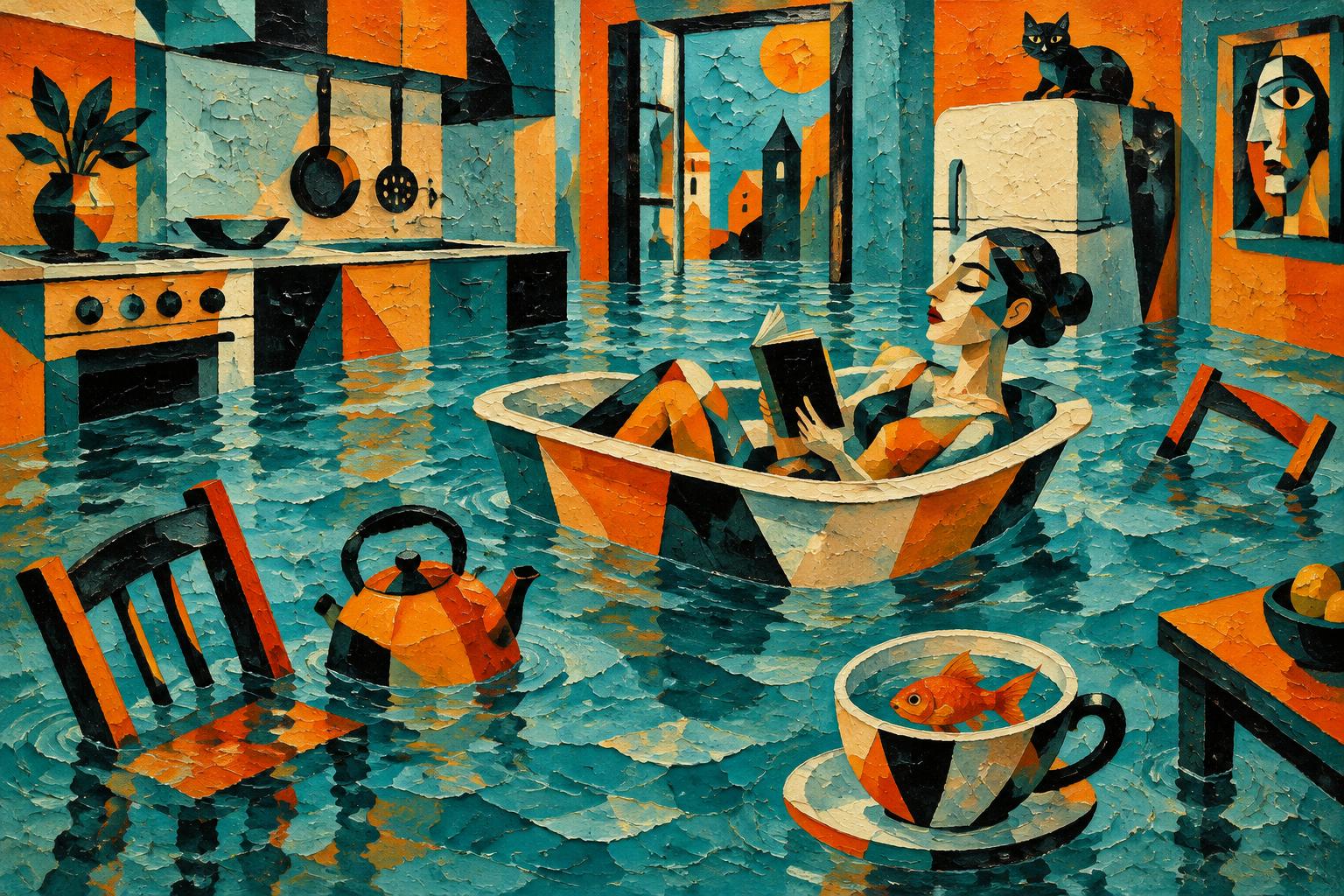
Water in a dream almost always represents emotion, and its condition, calm, murky, rising, frozen, describes the state of your feelings more precisely than any single fixed meaning could. Because emotion itself is fluid, changeable and sometimes hard to see the bottom of, water has served as its natural image across most interpretive traditions for the same practical reason: it fits.
The specific form water takes in a dream, ocean, river, rain, flood, is rarely interchangeable. Each version carries its own emphasis, so it is worth reading the exact scene rather than treating all water dreams as one symbol.
Common interpretations
Water dreams vary by clarity, movement and volume, each tracking a different aspect of emotional life. Read the water's condition as you would a mood.
Calm, clear water
Still, transparent water usually reflects emotional clarity, a period where you understand what you feel and why. These dreams tend to be reassuring rather than eventful.
Murky or dirty water
Cloudy water usually describes confused or unprocessed emotion, feelings you are aware of but cannot yet see clearly through. It often appears during periods of ambivalence or unresolved conflict.
Rising water or flooding
Water that rises around you usually reflects emotion outgrowing its container, a situation that has become bigger than your current capacity to manage it. This is closely related to drowning dreams when the rising water becomes threatening.
Being submerged or drowning
Submersion usually describes being overwhelmed by feeling rather than physical danger. See drowning dreams for a fuller reading of this specific and common variation.
Swimming with ease
Swimming comfortably usually reflects confidence in navigating your own emotional life, a sense that you can move through difficult feeling without being overwhelmed by it.
The ocean versus a river or lake
Different bodies of water carry different emphases: the ocean tends to represent the vast, less personal unconscious, while a river implies direction and a lake implies containment. Compare ocean dreams and river dreams for those distinctions.
Frozen water or ice
Ice usually represents emotion that has been suppressed or held rigid rather than absent, feeling that is still there beneath a hardened surface.
Water changing suddenly, like a calm sea turning rough
A sudden shift in water's behaviour usually mirrors an emotional shift you have noticed but not yet named, often the earliest sign of a feeling changing before you consciously register it.
Personal mythology
Every Personal Mythology contains places where life feels predictable.
You build routines, relationships and beliefs that give shape to your world. Over time they begin feeling permanent.
Then life moves.
The certainty remains.
Reality does not.
Water dreams often appear during these moments because they reveal movement before identity has fully adjusted to it.
You may still be living by yesterday's assumptions while today's life has already begun asking something different of you.
The water is not there to provide answers.
It reflects the distance between the life you expected and the life now unfolding.
Some people stand beside the water.
Others enter it.
Others fight against it.
Each experience reveals a different relationship with change.
The water remains the same.
The way you move through it becomes the story.
Questions worth asking
- What was the quality of the water in your dream: was it clear, murky, calm, or turbulent?
- How did you feel about the water in the dream: did it invite you, or did it feel threatening?
- What memories or associations does water hold for you in your waking life?
- Could the movement of the water reflect how you navigate emotional currents right now?
- Were you observing the water, or were you immersed in it?
- In what area of your life might there be something flowing, changing, or in need of release?
- What might your dream be inviting you to acknowledge about your inner emotional landscape?
What MythRadar would notice
People usually remember the water.
MythRadar notices its movement.
Still water.
Flowing water.
Rising water.
Endless water.
The Pattern begins there.
Water rarely asks you to notice itself.
It asks you to notice what can no longer remain still.
Every water dream contains movement that has already begun somewhere in your life. The dream gives that movement a form you can experience before you fully understand it.
That is why people often wake remembering the feeling more clearly than the details.
The image fades.
The movement remains.
Long before life changes on the outside...
Something has already begun changing within the story you are living.
Common questions
- What does it mean to dream about water?
- Water almost always represents emotion, and its condition, calm, murky, rising or frozen, describes the specific state of your feelings rather than a single fixed meaning.
- What does murky or dirty water in a dream mean?
- Murky water usually reflects confused or unprocessed emotion, feelings you sense but cannot yet see clearly through, often during a period of ambivalence.
- What does rising water in a dream mean?
- Rising water usually describes emotion or a situation outgrowing its container, becoming bigger than your current capacity to manage. It often precedes or accompanies drowning dreams.
- What is the difference between dreaming about the ocean and a river?
- The ocean tends to represent the vast, less personal unconscious, while a river implies direction and momentum in your own life. Both are water dreams but carry different emphases.
- Does frozen water in a dream mean suppressed emotion?
- Usually, yes. Ice tends to represent feeling that has been held rigid or suppressed rather than absent, still present beneath a hardened surface.
Begin Your Personal Mythology
Dreams become meaningful when they are connected to the life you are living. Discover the Patterns, stories and identities shaping your dreams through your Personal Mythology.
Begin Your Personal MythologyContinue the exploration
Water dreams often appear alongside dreams about falling or returning to familiar places that somehow feel different.
Each dream explores a different relationship with certainty, identity and change. Read together, they begin revealing Patterns that remain hidden when each dream is interpreted on its own.
Dreams repeat themes far more often than they repeat stories.
The image changes.
Continue exploring the Dream Dictionary to discover how recurring dreams reveal the deeper architecture of your Personal Mythology.
Related symbols

From the Insights library
the next question
One entry is a symbol. Several, read together, are a pattern - and a pattern is the beginning of a personal mythology.