Actions
Getting Lost Dreams
Dreams about getting lost are among the world's most common dreams. Discover their psychological meaning and why they often appear during periods of uncertainty, identity change and life transitions.
- disorientation
- life-direction
- searching
- threshold
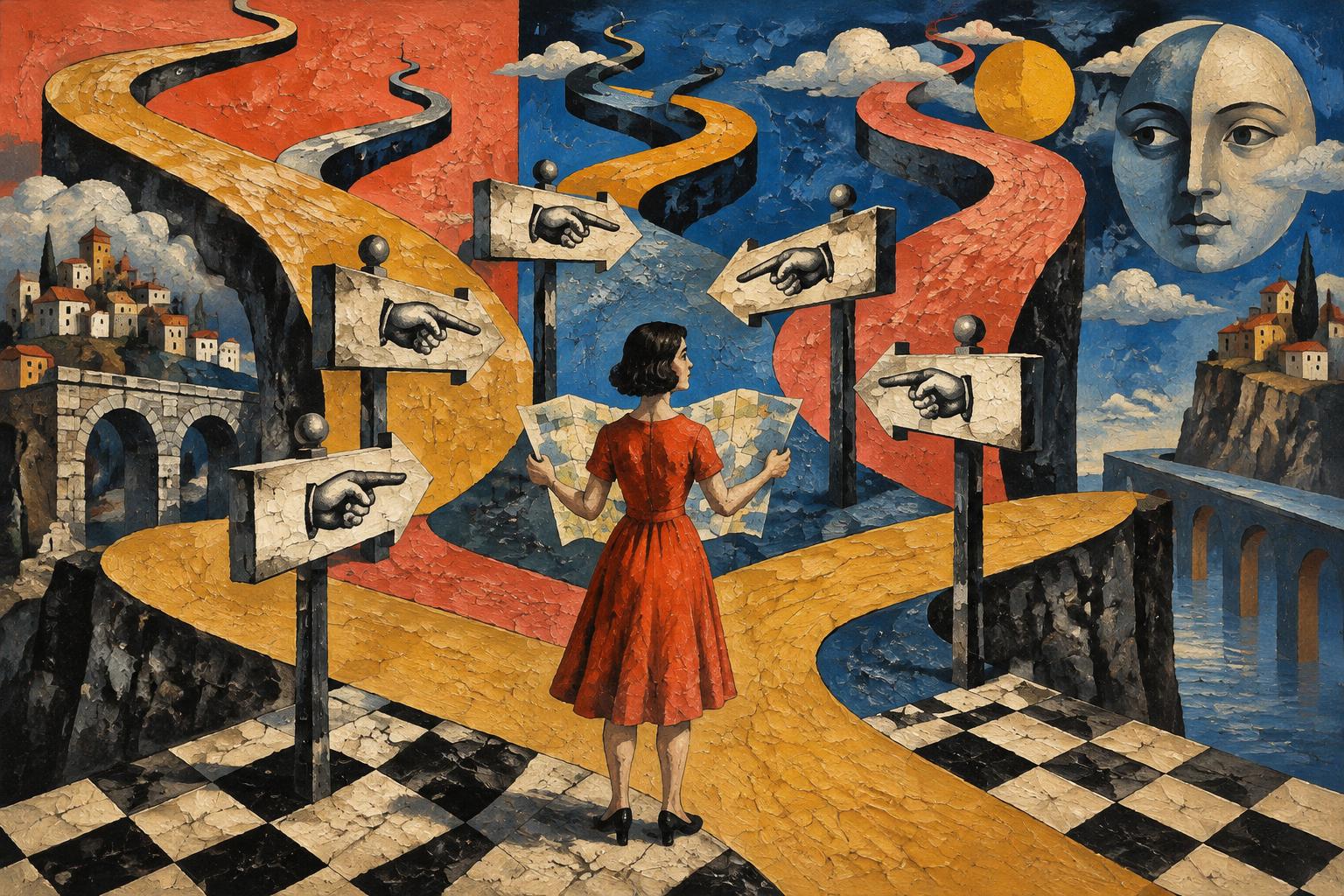
A getting lost dream usually means you feel you have lost direction in some part of waking life, not that you are bad with maps. The unfamiliar streets, the wrong turns and the map that will not resolve are a description of not knowing which way to go next in a decision, a career, or a stage of life. The disorientation in the dream matches the disorientation you are managing while awake.
These dreams often arrive at genuine crossroads, when an old plan has ended and a new one has not yet formed. The dream does not offer directions. It confirms that you are, for now, without them.
Common interpretations
Where you are lost, and what happens while you search, both shape what the dream is describing.
Lost in an unfamiliar city
A city you do not recognise often represents an unfamiliar life stage or environment you have recently entered - a new job, city, or relationship structure you have not yet learned the rules of.
Lost in your own neighbourhood or a familiar place
Getting lost somewhere you should know well is more unsettling, and usually means a situation you thought you understood has changed in ways you have not caught up with.
Lost and unable to find your way home
An inaccessible home in this context often points to a sense of having drifted from your own values or sense of self, rather than a literal residence. Compare with house dreams.
Lost in a maze, forest or unfamiliar corridors
Enclosed, winding spaces intensify the sense of a problem with no clear solution. See forest dreams for what the setting itself might add to the meaning.
Lost while trying to reach an important event
Being lost on the way to a wedding, exam or flight usually reflects anxiety about missing a genuine opportunity or deadline in waking life, or a fear of arriving unprepared. Compare with wedding dreams and exam dreams depending on the destination.
Asking for directions and not understanding the answer
Directions that make no sense, or advice you cannot follow, often reflect real guidance you have received that has not actually helped you feel less lost.
Eventually finding your way
Dreams that end with orientation returning, even suddenly, often coincide with a decision beginning to take shape, even before you can articulate it consciously.
Personal mythology
Every Personal Mythology begins with a psychological map.
It tells you who you should become, what success looks like, who deserves your trust and which direction will eventually lead to happiness.
Most people never notice they are following it.
Until it stops working.
A dream about getting lost often appears when your life begins asking for directions your old story cannot provide.
You may still be following the same goals, living in the same place and making the same decisions.
Yet something feels different.
The destination has not changed.
You have.
That creates one of the strangest experiences in adult life.
The road ahead still exists.
The person who first chose it does not.
The dream captures that moment before a new map has been drawn.
Questions worth asking
- Where in your life do you feel a discernible lack of direction or clarity?
- What familiar landscapes or routines feel suddenly unfamiliar or challenging?
- When you felt lost in the dream, what was the prevailing emotion?
- Is there a threshold or significant change you are currently navigating?
- Are you searching for something specific, or perhaps an undefined sense of purpose?
- What choices currently feel overwhelming or without a clear 'right' path?
- Might this dream be an invitation to explore unknown parts of yourself?
What MythRadar would notice
People usually ask one question after a dream about getting lost.
"What does it mean?"
The most common answer is that you feel uncertain about your life.
That explanation makes sense.
It also explains very little.
People feel uncertain for hundreds of different reasons.
Very few of them dream about getting lost.
The image matters.
Getting lost only happens after something you trusted stops helping you.
A map.
A road.
A landmark.
A familiar route.
The dream turns psychological uncertainty into something you can experience.
That is why people remember it so clearly.
You are not remembering confusion.
You are remembering the moment certainty stopped working.
Common questions
- What does it mean to dream about being lost?
- It usually reflects a genuine loss of direction in waking life, such as a career, relationship or life stage where the next step is unclear, rather than anything about literal navigation.
- Why do I keep dreaming about getting lost in the same place?
- A recurring lost dream in a specific setting suggests the area of life it represents has not yet been resolved. The dream keeps returning to the same image until the underlying uncertainty changes.
- What does it mean to be lost and unable to find your way home?
- This often points to feeling disconnected from your own sense of self or values, rather than a literal fear about your house. Home in this context usually means identity.
- Does getting lost in a dream mean I am making the wrong decision?
- Not necessarily. It more often means a decision has not yet been made, and the resulting uncertainty is being experienced directly rather than judged.
- Why do getting lost dreams happen more during big life changes?
- Because transitions genuinely remove familiar landmarks. The mind represents that real disorientation using the most direct image available, which is being lost.
Begin Your Personal Mythology
Dreams become meaningful when they are connected to the life you are living. Your Personal Mythology helps you recognise the Patterns, stories and identities shaping your experiences, one dream at a time.
Begin Your Personal MythologyContinue the exploration
Dreams rarely appear alone.
A dream about getting lost often accompanies other dreams of transition, uncertainty and identity. Reading those dreams together can reveal a Pattern that would remain hidden if each dream were interpreted in isolation.
Continue exploring:
Related symbols


From the Insights library
Related archetypal patterns
These patterns can surround this kind of dream, depending on what is happening in your life at the time. A symbol doesn't belong to a single archetype - read them as context, not as a verdict.

The Seeker Archetype
The Seeker keeps moving because arrival has always felt like a smaller idea than the road itself.
The Trickster Archetype
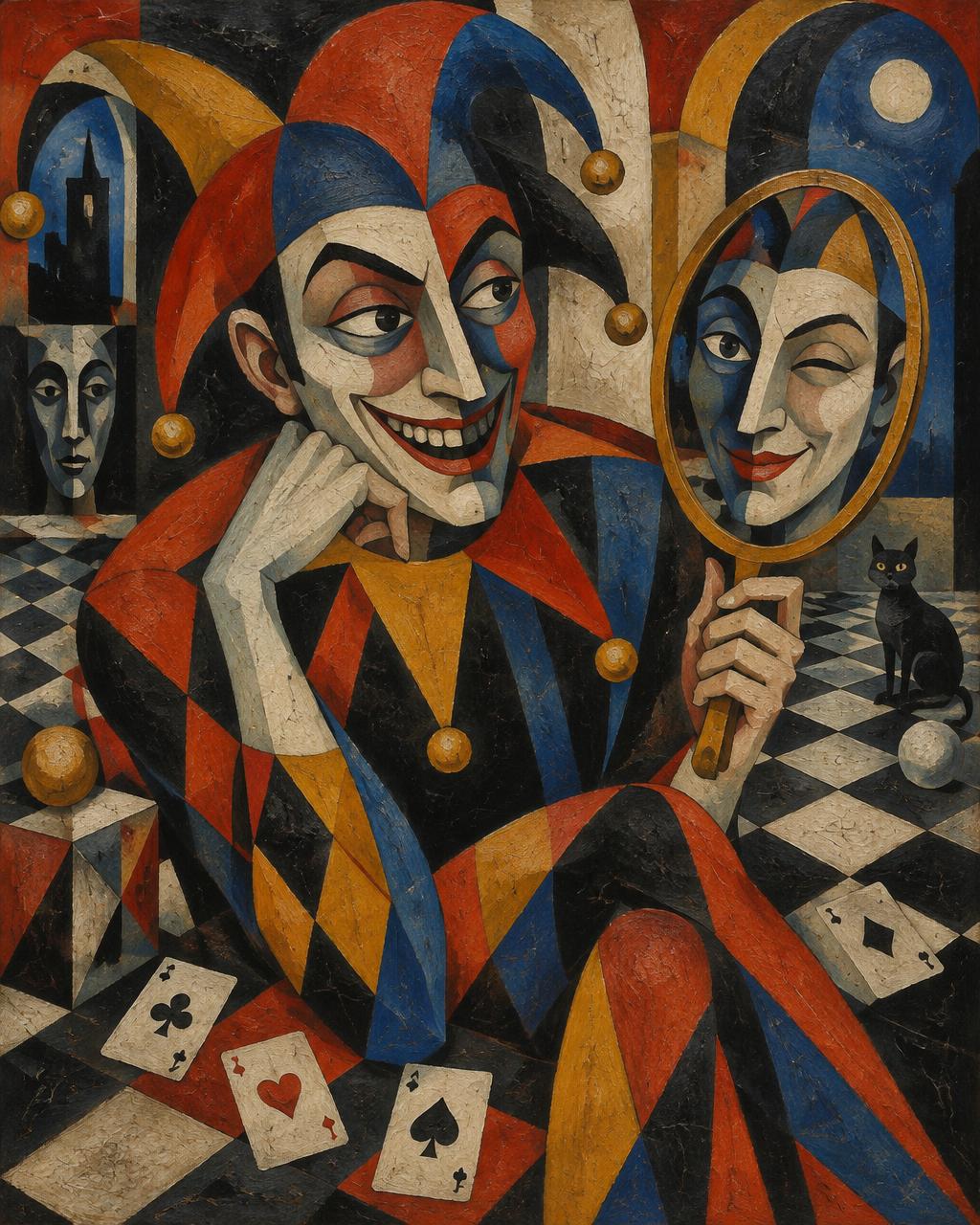
The Trickster archetype delivers a needed truth wrapped in disruption, disguise, or a joke that lands too well.
Not sure which of these sounds like you? Take the Archetype Finder.
the next question
One entry is a symbol. Several, read together, are a pattern - and a pattern is the beginning of a personal mythology.