Archetypes
The Orphan Archetype: Belonging After the Break
The Orphan is the part of you that learned, early, that no one was coming. It is also the part that taught you to be your own home.
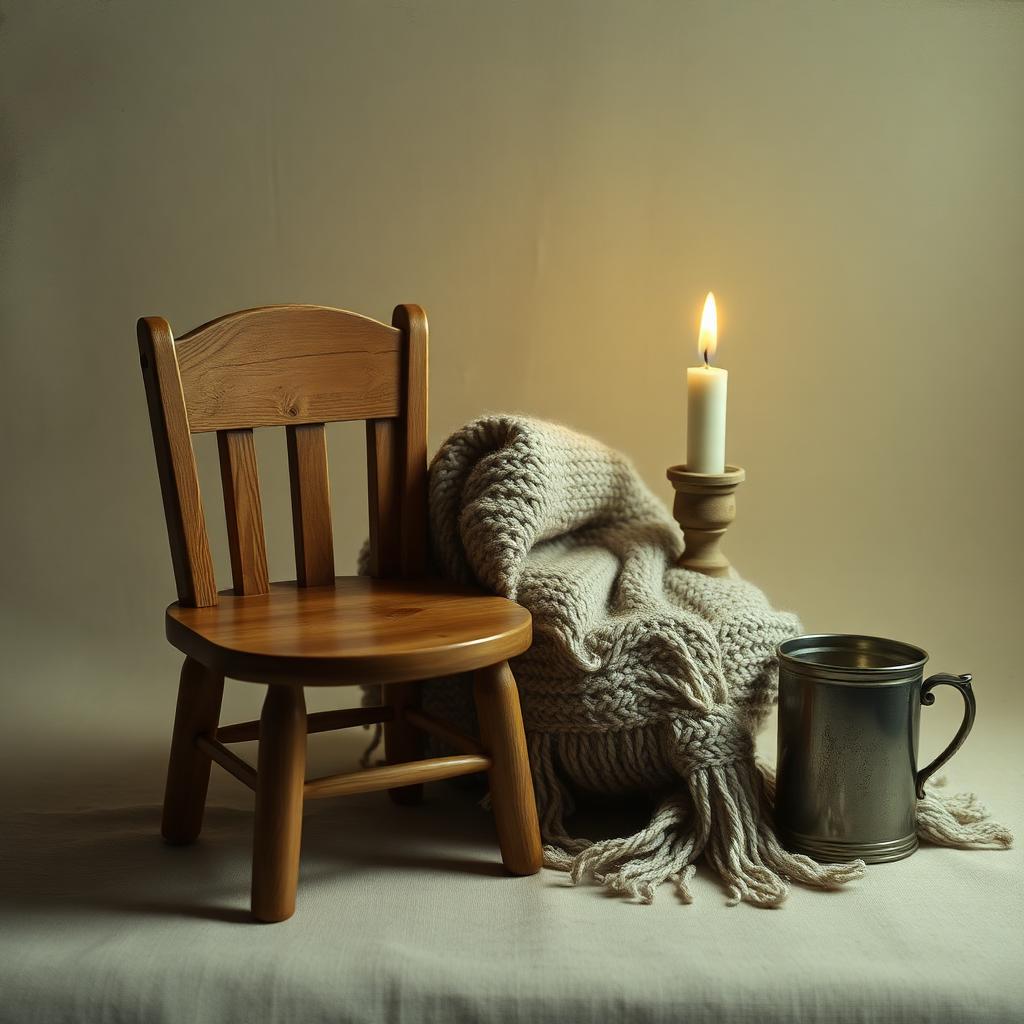
What the Orphan archetype is
The Orphan is the part of the psyche that learned early - sometimes in literal childhood, sometimes later - that the people who were meant to hold you could not, or would not, or were not there. The lesson it took away is simple and lifelong: I cannot fully count on anyone else. That sentence shapes everything underneath.
The Orphan is not always created by dramatic loss. Often it is created by a quiet, accumulated absence: a parent who was physically present but emotionally elsewhere; a family that could not name feelings; a culture that punished softness. The Orphan grows wherever a child had to take care of themselves before they had the equipment.
Carl Jung's reading of this figure was not pessimistic. The Orphan is also the beginning of agency. The child who realised no one was coming is the same person who, twenty years later, became extraordinarily capable. The cost was real. The gift is also real.
Where it comes from
The Orphan crystallises around early disappointment - a moment, or a long string of moments, in which the protection a child expected did not arrive. The psyche files this away and quietly builds a strategy: I will do it myself. By the time the child is an adult, the strategy feels like personality.
This is why so many high-functioning, self-reliant adults carry a quiet Orphan beneath the competence. From the outside they look fine. From the inside they have been on their own for a long time.
How the Orphan shows up in everyday life
Orphan-led people are unusually capable and unusually lonely. They handle emergencies well. They are reliable in a crisis because they have been a crisis. They struggle to ask for help - not out of pride, but because asking has historically not worked.
They often carry a quiet suspicion of belonging itself. When a group, a relationship, or a community starts to feel like home, the Orphan watches for the door. It has been disappointed before; it would rather be ready than blindsided again.
Internally the Orphan shows up as a feeling of being slightly outside, even in good company. A small voice that says: they don't really know me. If they did, they might leave too. Recognising this voice is the beginning of being able to disagree with it.
The gift
The Orphan's gift is realism without bitterness. People with a strong, integrated Orphan see life clearly. They don't expect rescue, so they don't waste energy waiting for it. They build, they prepare, they hold their own. This is the foundation of adult sovereignty.
The Orphan also tends to recognise other people's hidden pain. Having been unseen, they often see. Many of the most quietly compassionate people in any room are Orphans whose loneliness has matured into empathy.
The shadow
The shadow of the Orphan is a refusal to let anyone close enough to disappoint them again. It looks like independence but functions like a moat. Inside the moat the Orphan is exhausted, holding up a life single-handedly that was never meant to be carried alone.
Shadow-Orphan also collects evidence. It remembers every small slight, every time someone forgot to call, every promise not kept. Each of these confirms the original story: people leave. Confirmation feels safer than risk, but it also slowly empties the world.
Healing the Orphan is not about pretending you weren't hurt. It is about letting in the new evidence - that some people stay, some help arrives, some belonging is real - without insisting the old evidence be erased first.
When the Orphan appears in dreams
Dreams of returning to a childhood house, especially one you cannot fully enter or one that is changed, often carry the Orphan. See childhood home dreams for the symbolic territory.
Dreams of relatives who have died - visiting, talking, sometimes only standing in a doorway - frequently arrive when the Orphan is asking to be reparented. Dead relative dreams often mark moments when the psyche is finally ready to feel what was unfeelable at the time.
Living with the Orphan more consciously
The Orphan does not need to be erased. It needs to be heard. Three practices help. First, give the Orphan a voice in writing. Let the inner sentence - no one is coming - be said in full, on the page. Most of its power comes from being unsaid.
Second, allow small, repeatable acts of being received. Not grand rescue. Tiny, regular evidence that someone shows up when they say they will. The Orphan rebuilds trust at the speed of small kept promises, not big declarations.
Third, become a steady presence to yourself. The Orphan does not stop being the Orphan; it becomes the Orphan who finally has someone - you - who does not leave. This is quiet, slow work, and it is the actual definition of growing up.
The Orphan in relationships
In relationships the Orphan is unusually capable and unusually difficult to actually let in. He is reliable. He shows up. He is rarely needy in the obvious sense. What partners often notice is a particular emotional withholding - not coldness, but a small distance that does not close even when the relationship is going well. The Orphan is monitoring the exit. He has been disappointed before.
The healing in relationships is unspectacular and slow. It is the accumulation of small, kept agreements. The Orphan does not respond to grand declarations because grand declarations were often what preceded the original abandonment. He responds to the partner who is reliably there on Tuesday and again on Friday, for years, without flinching when he tests them.
Friendships often run on a particular asymmetry - the Orphan is the friend others come to, rarely the friend who comes to others. Reversing this, even occasionally, is part of the inner work. Calling someone when you need them, even though you have spent decades not needing anyone, is a quietly enormous act for an Orphan.
The Orphan across the life stages
The young Orphan is mostly survival - building competence, building independence, getting through. The middle years are when the cost begins to come due. The strategies that saved the child start to limit the adult. The capable, self-reliant grown-up notices that he is also lonely in a way he can no longer ignore. The later Orphan who does the work becomes someone with a particular gift: the gift of belonging on chosen terms, with people he has actually let in.
Watch for threshold moments. Many Orphans experience a mid-life crack - a relationship ends, a parent dies, the body breaks down - that finally makes the old strategy unworkable. This is not failure; it is the door. The Orphan who walks through it begins the second half of life with something he never had in the first: a deliberate, chosen belonging.
A writing practice for meeting the Orphan
If you want to work with this archetype directly, the simplest entry is writing. Set aside twenty minutes, alone, with no audience. Begin with the sentence: The Orphan in me wants… and keep writing without stopping. Do not edit. Do not explain. The Orphan has been waiting for permission to speak in your own voice, and this is the door.
After ten minutes, switch the prompt. Write: The Orphan in me is afraid of… and follow that thread for another ten. The first list is usually the gift of the archetype trying to be lived. The second is usually the wound it has been protecting. Both deserve to be on the page.
At the end, do not analyse what you have written. Close the notebook. Walk. Let the Orphan integrate at the pace it can. Return to the practice in a week. Over a few weeks, patterns will appear that no amount of thinking would have produced - and you will start to live this archetype more consciously almost without trying.
Common misreadings of the Orphan
It is worth naming the ways this archetype is most often misread, because the misreading shapes whether a person can recognise it in themselves at all. The Orphan is read as bitterness or coldness, when it is actually a long-lived strategy for survival. Each reading has a partial truth, which is what gives the misreading its grip. The fuller truth is harder to hold and more useful.
The first misreading flattens the archetype into a stereotype, which makes it easy to either claim or reject without actually meeting it. Real Orphan energy is rarely as tidy as either claim. The second misreading treats the visible signs of the archetype as if they were the archetype itself, when in fact the visible signs are often only what other archetypes around it are willing to let show.
What you can hold instead is the underlying signature. You know the Orphan is active not by any single behaviour but by the pattern: the same kind of pull, the same kind of cost, the same kind of question, returning across years. Once you can recognise the pattern, the misreadings stop being so dangerous. You can hear them, decline them, and continue meeting the archetype on its own terms.
This matters because the archetype's gift is unlocked by being met accurately, and the gift here is realism without bitterness. A misread archetype keeps trying to deliver its gift through whatever channel is least obstructed, which is often the shadow. The accurate reading is what allows the gift to come through cleanly.
This archetype has become especially relevant in the loneliness of late-modern life, where many people are quietly raising themselves. The Orphan matures the moment it has matured the moment competence is no longer the only way you let people near you. Holding that as the working definition - rather than the cultural version - is what allows the archetype to take its proper place inside a real life.
If this archetype feels familiar
If you recognise yourself here, you are not damaged. You are someone who learned to survive, and now has the harder task of learning to belong.
Your Mythology Profile can show where the Orphan sits in your current pattern, and what MythRadar is explains how the symbolic layer can be read. You may also see yourself in The Child Archetype or The Wanderer Archetype, both of which braid closely with the Orphan.
A final word
The archetype does not need to be performed to be lived. Quiet attention, over months, does more than any dramatic gesture. Begin where you are.
Archetypes are not labels you are stamped with for life. They are the active forces shaping how you meet your days, and they shift with chapters. The one you most strongly recognise today may be quieter in a year. Another may move forward. The point is not to identify yourself with one figure and end the inquiry, but to learn to read which figures are in the room and how they are speaking, so the life you build is one you have actually chosen.
If this piece has named something you have been carrying, let that recognition be enough for now. The work of integrating an archetype is slow and largely invisible from the outside. Most of it happens in the long ordinary days between any single insight and the next. Patience with the process is part of the maturity each of these figures, in their own way, is trying to grow in you.
I post the short version of these on Instagram most days. Follow @mythradar on Instagram