Places
House Dreams: What a House Means in a Dream
A house in a dream is almost always the self. The rooms are areas of your life, the locked doors are what you have not opened yet, and an unfamiliar floor is usually a part of you that has been growing without supervision.
- self
- identity
- interiority
- family
- private and public rooms
- change of life stage
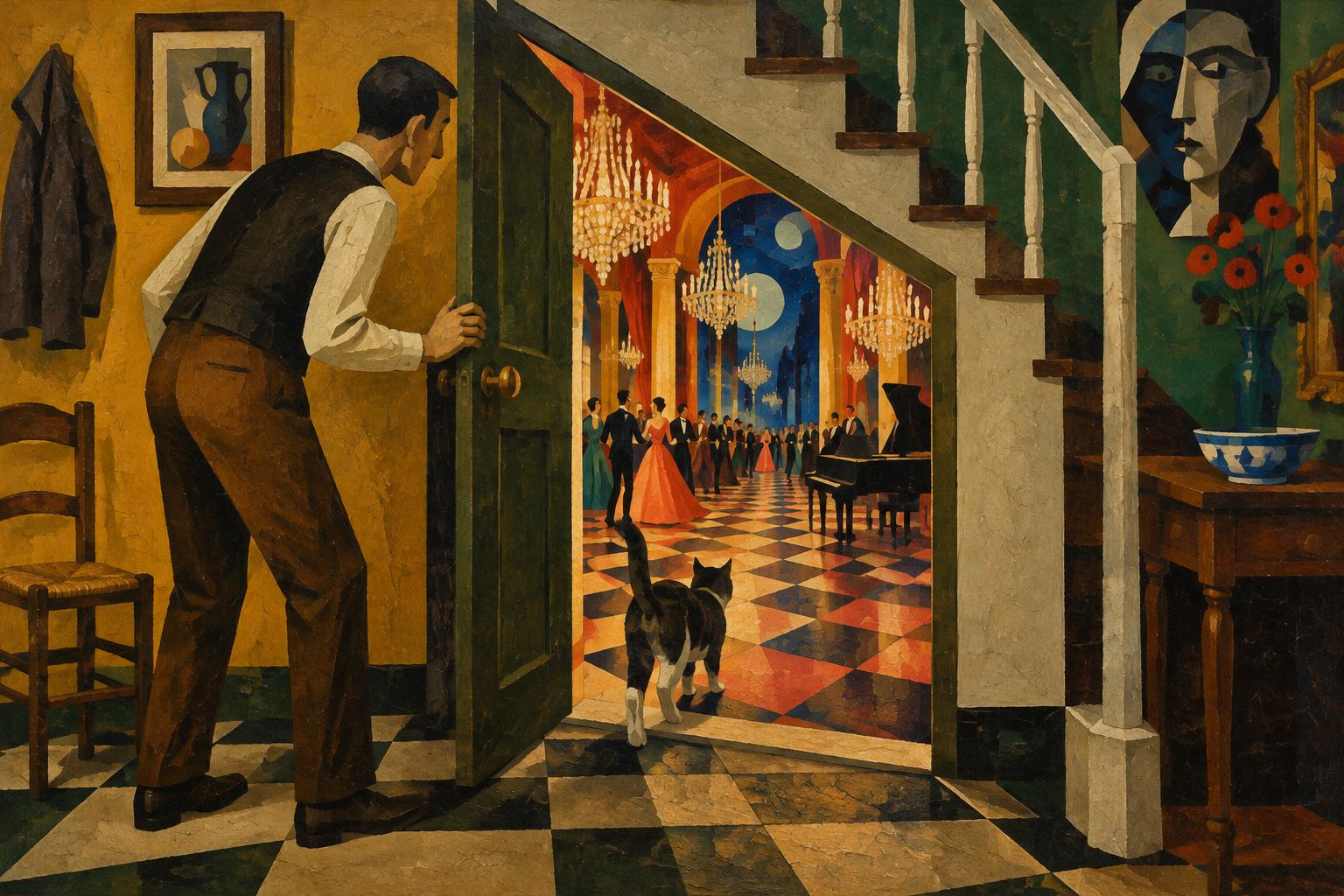
A house in a dream almost always represents you. Not your property, not your family home in any literal sense - the structure you live inside psychologically. The rooms are areas of your life. The doors are decisions. The floors are levels of awareness, from the public ground floor to the basement you avoid and the attic where old things are stored without being thrown away.
This is why house dreams feel so intimate even when nothing dramatic happens in them. Wandering an unfamiliar corridor is not a wandering dream. It is the experience of discovering that your own life has rooms in it you have not visited.
Common interpretations
Most house dreams answer one of three questions: what state am I in, what part of me am I not entering, and who else still lives here. Read the building the way you would read a face.
An unfamiliar room in a familiar house
The most common house dream there is. A room appears that was always there and you never knew about it. This usually arrives when a capability or a feeling has been developing quietly - a new competence, an ambition, a grief that has been building its own space. The dream is not warning you. It is showing you square footage you own and do not use.
A locked door, or a door you cannot open
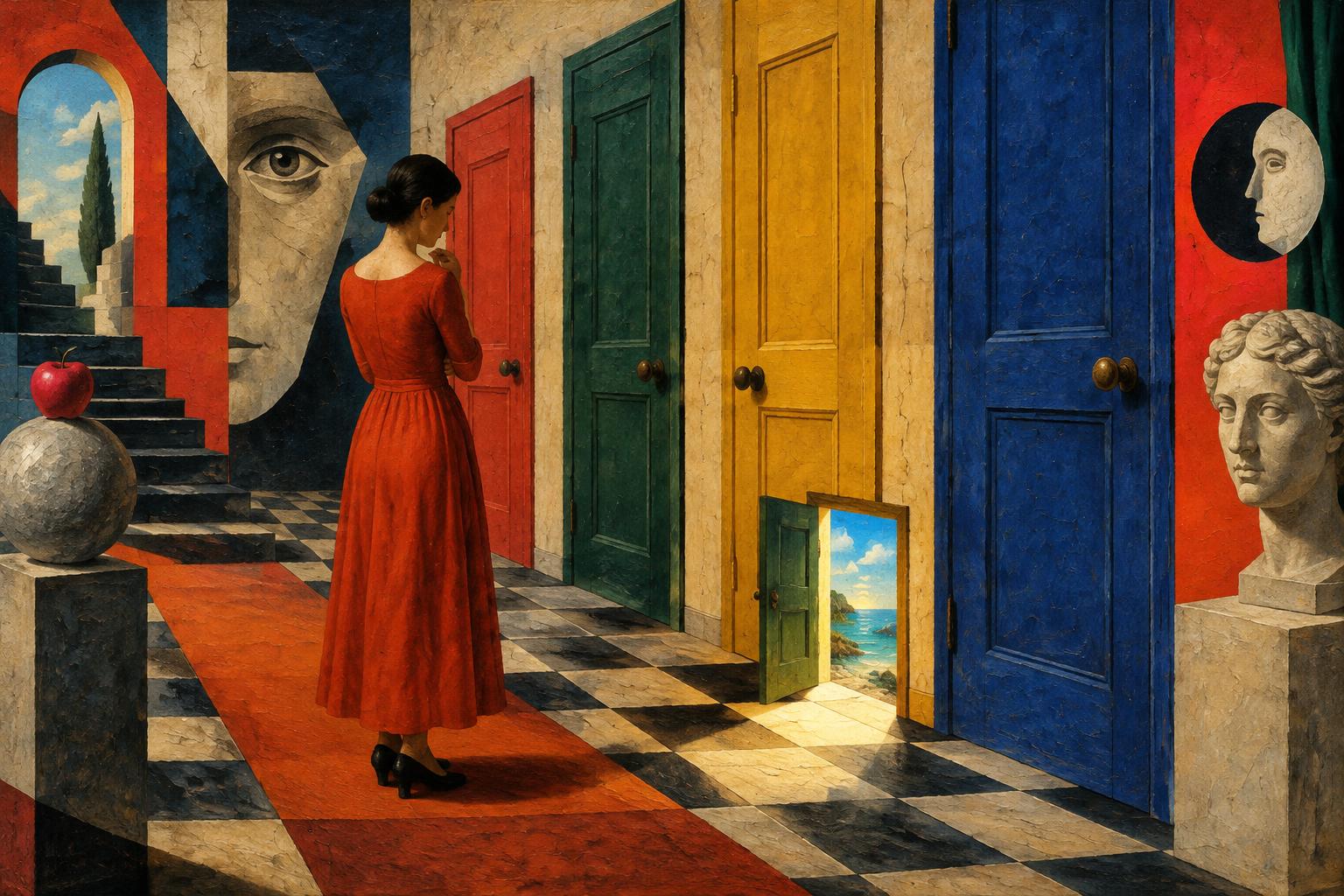
A locked door is a boundary you have set against yourself. Notice who locked it. If you cannot find the key, the material behind it is usually something you have decided is not the right time for. If someone else holds the key, the dream is often about permission - whose approval you are still waiting for before entering your own life.
An empty house
Empty houses arrive after departures: a relationship ending, children leaving, a role you held for years being handed on. The emptiness is not a verdict. It is the accurate feeling of a structure built for a life that has changed shape.
A house falling apart, flooding, or on fire
Structural failure in a dream house is the psyche's way of describing overload. Water is usually emotion arriving faster than it can be processed. Fire is usually urgency, anger, or a transformation already underway. Collapse is usually exhaustion in a support system - often the one you provide to other people.
Your childhood home
When the dream returns you to the house you grew up in, it is rarely nostalgia. Something in the present is being handled with a set of rules learned in that house. The dream sends you back to the place the rule was written. Read this alongside childhood home dreams.
Moving house, or buying a new one
Movement dreams cluster around thresholds. Packing suggests you already know something is ending. Viewing an unaffordable house often points at a version of your life you want and have decided is out of range.
Someone else in your house
An intruder is a part of you arriving without invitation - an impulse, a truth, a need you have not made room for. A guest who will not leave is usually an obligation. A stranger who lives there quite naturally is often the part of you that has changed while your self-image stayed the same.
Basements and attics
Basements hold what you have put out of sight: shame, early memory, instinct. Attics hold what you have kept but stopped using: former identities, old loyalties, the unlived life. Jung read both as levels of the psyche rather than storage.
Someone breaking into your house
A break-in dream usually reports a boundary being crossed rather than a danger to your actual home. People tend to describe it during stretches when something has entered their life without agreement: a relative involving themselves in a decision, work reaching into private hours, or information about them travelling further than they allowed.
The detail that carries the reading is your position in the dream, not the intruder. Hiding while someone moves through the rooms usually tracks a fear of being seen rather than harmed. Shouting and not being heard more often belongs to a situation where you have already objected and nothing changed. If the house is unfamiliar, the pressure may sit in a role you have recently taken on rather than in your private life. None of these readings is fixed, and the same image can mean something different once the waking situation moves. Where concealment is the strongest feeling, read it beside hiding dreams.
Being lost inside a house you cannot find your way out of
Losing your way inside a house is different from losing your way outdoors. The building is usually still recognisably yours, which is what makes it disorienting: the structure you live inside has stopped being legible. It often appears in the middle of a change you agreed to, when the shape of your own life has become unfamiliar before the new arrangement has settled.
Corridors that repeat, doors that open onto rooms you did not expect, or stairs that take you somewhere other than where you were heading all point at the same thing from different angles: effort spent inside a structure that is not answering. Whether that structure is a job, a household or a relationship depends entirely on what you were trying to reach in the dream. For the outdoor version of the same difficulty, see getting lost dreams.
Personal mythology
One house dream is a snapshot. The same house returning over years is a floor plan of your inner life, and it changes as you do.
The useful question is never "what does a house mean in dreams." It is: which room did I enter, which one did I avoid, and what in my waking life matches that? A person who dreams for a decade of a corridor they never reach the end of is usually living a decade of nearly deciding something.
When the same rooms recur, start recording them. Rooms you visit often are areas you are actively working. Rooms you never open are the shape of what you are postponing. Over a year, that pattern becomes readable - and a readable pattern is the beginning of a personal mythology.
Questions worth asking
- Which room were you in, and which room did you avoid?
- Was the house being maintained, neglected, or rebuilt?
- Whose house was it, and who else had a key?
- What was behind the door you could not open?
- Does the house match a life stage you have already left?
- What in your waking life has more rooms than you are currently using?
- If the house is you, what condition are you actually in?
What MythRadar would notice
MythRadar would not tell you a house means the self and stop there. It would ask which rooms keep appearing, whether the building is being maintained or neglected, and whether the doors are opening or closing over time.
It would look at what else arrives in the same week - doors, staircases, recurring images - because a house dream in isolation is a room, and a house dream in sequence is a renovation.
Common questions
- What does it mean to dream about a house?
- In dream interpretation a house usually stands for the self. Rooms are areas of your life, floors are levels of awareness, and doors are choices. The condition of the building tends to mirror how you are coping rather than anything about property.
- What does it mean to dream of a house you have never seen before?
- An unknown house often represents a part of your identity that is forming. It frequently appears during a change of role, work or relationship, when the life you are living no longer fits the self-image you carry.
- Why do I keep dreaming about my childhood home?
- Recurring childhood home dreams usually mean something in the present is being handled with rules learned early. The dream returns you to where the rule was written, not because you want to go back.
- What does an empty house in a dream mean?
- Emptiness usually follows a departure or the end of a role. It describes a structure built for a life that has changed shape, and it often arrives before you have consciously admitted the change.
- Are house dreams bad dreams?
- No. Even collapsing or flooding houses are rarely warnings. They are the psyche describing pressure, emotion or transformation in the only vocabulary it has - architecture.
Read the house as part of a pattern
One house dream is a symbol. Several, read together, become a story about how you have been living.
Begin your Personal MythologyContinue the exploration
A house dream is about the place your life has been built.
The dreams that follow usually explain why that place has begun changing.
If you found yourself wandering through unfamiliar rooms, continue with Getting Lost Dreams. Both dreams appear when the life that once made sense no longer feels as certain as it did.
If the house felt unstable or you found yourself falling, Falling Dreams explores what happens when certainty disappears before a new foundation has been built.
If the house contained water, flooded rooms or rising tides, Water Dreams reveals why change usually arrives beneath the surface before it becomes visible in everyday life.
If the house felt empty because somebody had gone, Being Chased Dreams explores what continues following us long after we believe we have left it behind.
If you discovered a nursery, children or the feeling that something new belonged inside the house, Pregnancy Dreamsexplores why the future frequently enters our lives long before anyone else can see it.
If the house looked familiar but you no longer recognised yourself inside it, Teeth Falling Out Dreams explains why dreams frequently appear when certainty begins giving way to a different version of who you are.
One dream introduces the house.
The next explains why you no longer experience it in the same way.
Read together, they reveal the architecture of your Personal Mythology.
Related symbols
From the Insights library
Related archetypal patterns
This pattern can surround this kind of dream, depending on what is happening in your life at the time. A symbol doesn't belong to a single archetype - read it as context, not as a verdict.
Not sure which of these sounds like you? Take the Archetype Finder.
the next question
One entry is a symbol. Several, read together, are a pattern - and a pattern is the beginning of a personal mythology.