Personal Mythology
Self-Mythologizing: How the Stories You Tell Become Who You Are
There is what happened, and there is the version you have learned to tell. Self-mythologizing is how that version becomes who you are.
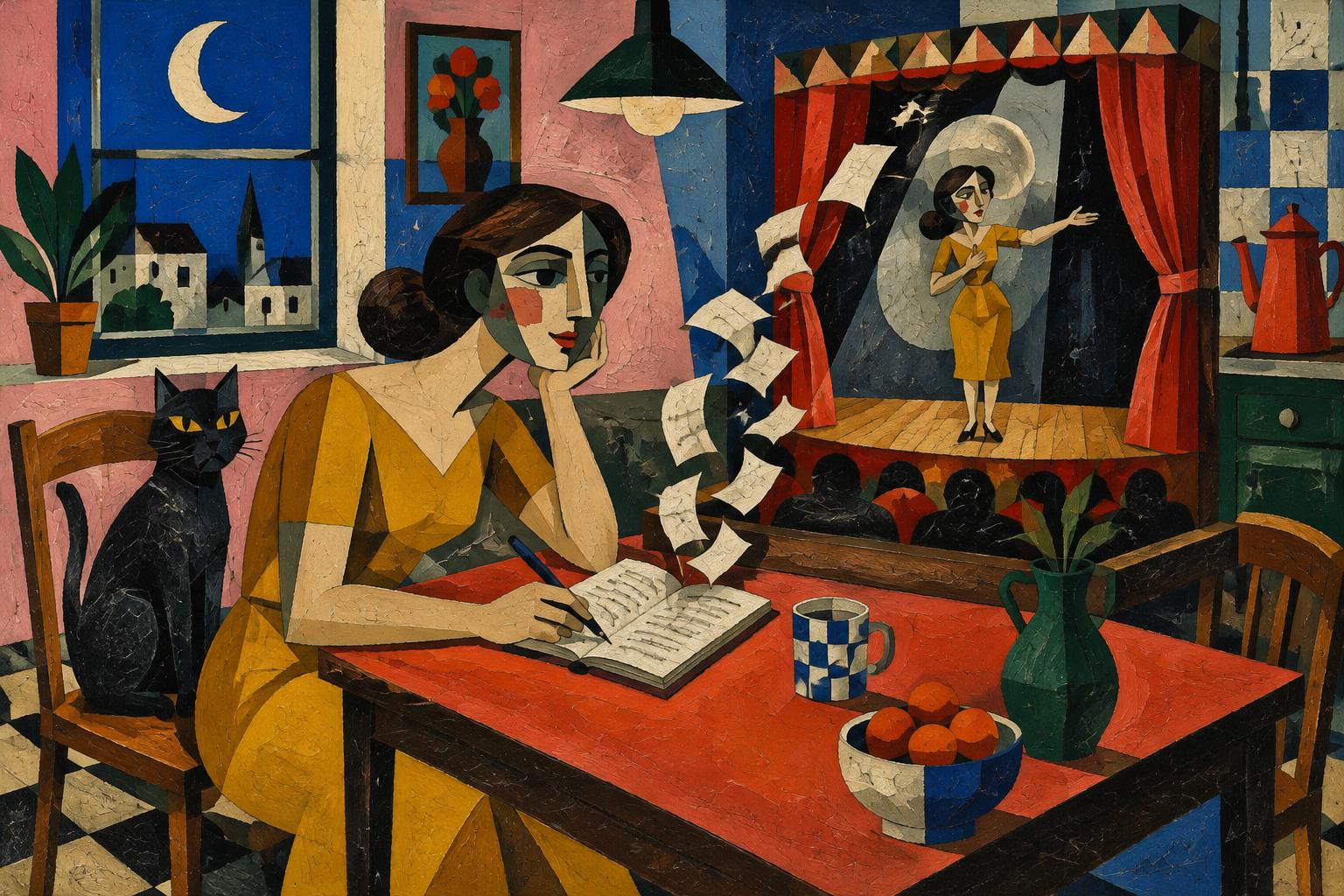
There is what happened, and there is the version of it you have learned to tell. Self-mythologizing begins in the gap between the two, and most of us live inside the second without noticing that it was ever a choice.
The version is rarely a lie. It is an edit. A difficult year becomes "the year I finally stood up for myself", or "the year everything fell apart", and both sentences can be built from the same events. What separates them is not the facts but which facts were kept, which were cut and which were given the final line.
What self-mythologizing actually is
Self-mythologizing is the process of turning experience into a story about who you are, then living as though the story were the evidence. It happens through repetition. Each time you retell an episode, to a friend, a partner or yourself at three in the morning, the told version becomes easier to reach than the original. After enough retellings, it can be harder to distinguish what happened from the version you have learned to tell.
That is the first consequence: the story replaces the memory. The second follows from it. Once a story has settled into an identity, it starts deciding what you notice. Someone who has learned to tell their life as a series of betrayals will register the friend who forgot a birthday and overlook the one who drove two hours to help them move. The noticing is not deliberate. It is the story protecting its own coherence.
The third consequence is the quietest. Evidence that contradicts the story does not get argued with; it gets edited out. It is filed as an exception, a fluke, a time you were "not yourself". The identity survives because it controls the archive, and the archive keeps confirming the identity.
Self-mythologizing and personal mythology
Personal mythology describes the pattern itself: the recurring roles, themes and turning points that shape a life whether or not anyone names them. Self-mythologizing describes the narrating that keeps that pattern in place, or begins to change it. The two are not separate processes so much as two directions of travel along the same road. The pattern produces the stories you find natural to tell, and the stories you tell reinforce the pattern.
The distinction matters because only one of them is directly within reach. You cannot simply decide to have a different personal mythology. You can, however, notice the sentence you reach for when you describe your life, and ask what it has had to leave out in order to stay true.
The roles we cast ourselves in
The edits tend to follow familiar shapes. A person who leans towards the Seeker often tells every departure as progress, so that leaving a job, a city or a relationship always reads as the next step of a search; what drops out of that telling is the possibility that some of those exits were avoidance. Someone shaped by the Creator may convert each hard season into material, which is a real strength until it means no loss is ever allowed to be simply a loss. The Trickster tells the story as comedy, and the jokes are often good, but a life narrated entirely for laughs has no scene in which the narrator can be hurt.
None of these roles is false. Each becomes a problem only when it is the sole role available, because then every new experience must be bent to fit it. The Archetype Library is useful less for telling you which character you are than for showing you which characters your story never allows on stage.
Revising the story without flattering it
Revision does not mean replacing a painful story with a pleasant one. That simply moves the edit somewhere else. It means returning to a scene you tell often and asking what the told version needs you not to see. If you always describe a particular ending as the moment you were abandoned, it is worth asking what you knew before it happened, and when you first knew it. If you tell a period of your life as a triumph, it is worth asking who paid for it.
These questions are uncomfortable for a reason. The scenes we refuse to retell honestly are usually the ones carrying disowned parts of ourselves, which is exactly the material shadow work is concerned with. The Shadow Work Journal offers a structured way to stay with those scenes long enough for the edit to become visible.
Recurring dreams can sometimes sit alongside this work, though they need to be read with care. A dream that returns over months does not prove anything about your waking life, but if its setting or mood keeps echoing a story you tell about yourself, the overlap may be worth recording. The Dream Dictionary can help you think about what an image has meant to others, while the meaning for you still depends on your own context.
Common questions
Is self-mythologizing unhealthy?
Not in itself. Everyone narrates their life; it is how memory becomes usable. It becomes limiting when the story can no longer admit evidence against it.
Can you change your self-mythology?
Slowly, and mostly by retelling specific scenes more honestly rather than by announcing a new identity. A revised story holds only if it can survive the facts the old one cut.
The story is also the editor
We usually imagine that our life happened first and the story came afterwards, as a summary. The more accurate picture runs the other way. The story you have been telling has been choosing, for years, which parts of your life would be remembered, which would be noticed and which would quietly disappear. To understand your life story, then, is not to read it more carefully. It is to find the scenes it has been cutting, and to ask what kind of person you would have to be to let them back in.
I post the short version of these on Instagram most days. Follow @mythradar on Instagram