Personal Mythology
The Inherited Stories We Live Inside
The smell of old paper and woodsmoke follows us into the rooms of our childhood, even decades after the furniture has been sold and the keys handed to strangers.
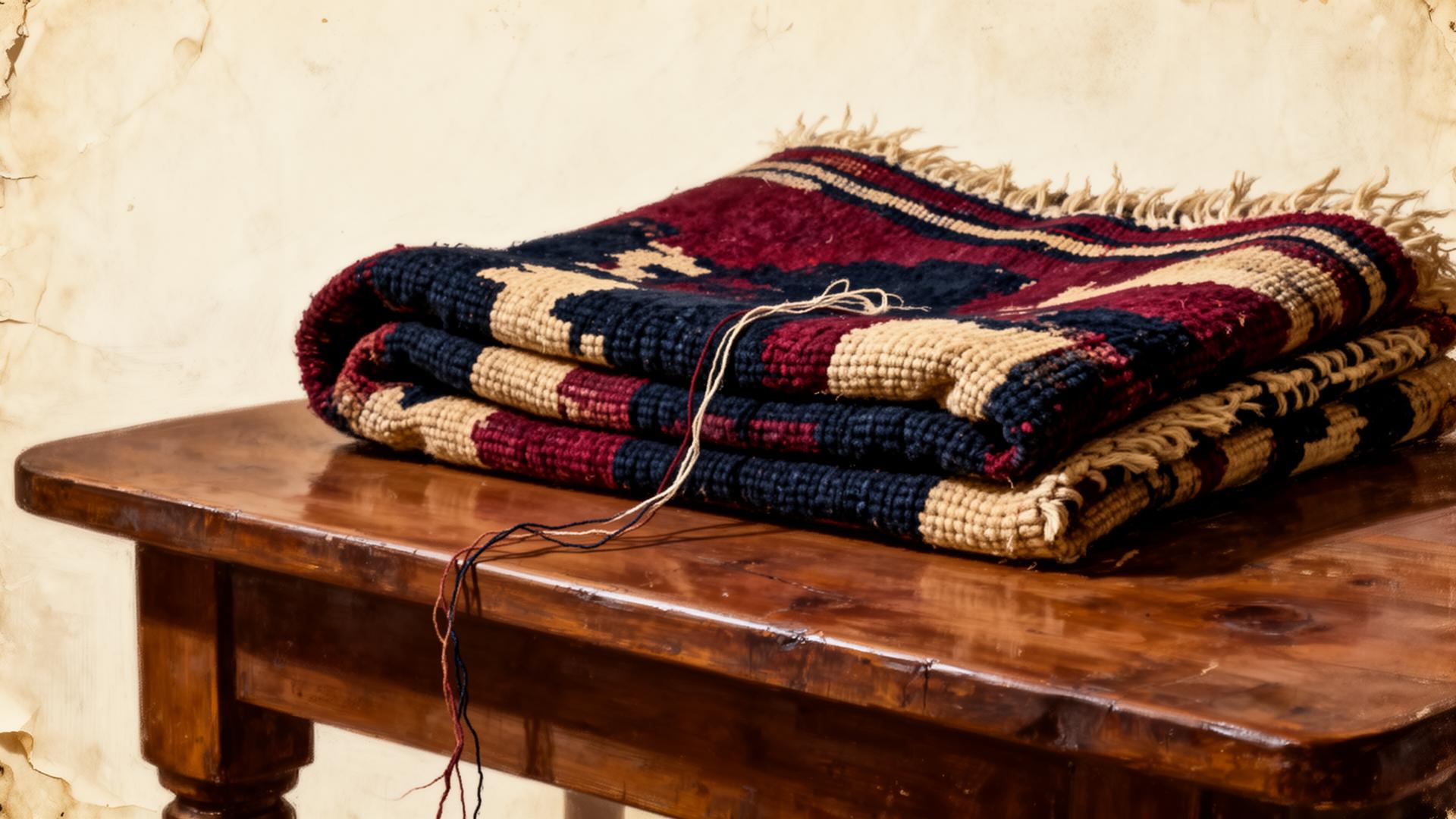
The smell of old paper and woodsmoke follows us into the rooms of our childhood, even decades after the furniture has been sold and the keys handed to strangers. We carry these houses within us, not as blueprints of architecture, but as the scaffolding of our very identities. Long before you were capable of selecting a single word for your own biography, the ink was already drying on the page. There is a specific kind of gravity found in the family home, a pull that dictates where we sit at the table and how much of our breath we are allowed to take. It is a quiet realization, often arriving in the middle of our lives, that we have been moving through a narrative we did not write, reciting lines that were handed to us by ancestors whose faces we may only know from curled, sepia-toned photographs.
The Sentence Written in the Bone
Every family operates under the weight of a sentence that is never spoken but always obeyed. It is the fundamental law of the bloodline, a rhythmic pulse that governs what is permissible and what is forbidden. In some houses, the sentence is we do not ask for more than we are given. In others, it is we are the ones who survive when everything else fails. You see it in the way a father avoids the gaze of his own reflection, or in the way a mother hums a tune that carries the residue of a grief she never officially named. These sentences are the subterranean pipes of the psyche; they carry the emotional waste and the vital nourishment of the lineage, hidden beneath the floorboards of the conscious mind. To challenge the sentence is to risk the structural integrity of the entire house, and so we learn to walk softly, ensuring our footsteps never fall too heavily on the secret truths of the people who made us.
The transmission of these stories occurs in the periphery of our vision. It is not the bedtime story that shapes us so much as the sudden, sharp silence that falls when a particular uncle’s name is mentioned, or the specific way the air thickens when money is discussed. Silence is the most sophisticated narrator we ever encounter. It tells us where the boundaries of the world are located. It maps out the territory of the "unthinkable." We inherit the gaps in the story as much as the plot itself, and it is in those empty spaces - the missing years, the unacknowledged failures, the buried desires - that the ghost of the family myth finds its most enduring power. You find yourself feeling a peculiar shame for a mistake you have not yet made, or carrying an anxiety that seems to have no root in your own biography. You are simply vibrating at the frequency of an inherited mood, a climate of the soul that was established long before you were born.
We are born into a play that has been running for three generations, and our first task is to learn our lines without asking who wrote the script.
The Climate of Ancestral Grief
There is a peculiar weight to a sadness that is not your own. Perhaps you have felt it while standing in a grocery store or watching the rain through a train window - a sudden, hollowing ache that does not correspond to the weather of your current life. This is the phenomenon of the inherited mood, the atmospheric pressure of the past. If your grandfather lived through a famine, his hunger may manifest in you as a restlessness that no amount of success can soothe. If your mother lived in the shadow of a grandmother who could never be pleased, you may find yourself apologizing to the very air you breathe. We are the vessels for the unfinished business of our elders. Their ghosts do not haunt houses; they haunt the nervous systems of their descendants.
This inheritance is often mistaken for personality. We say, I have always been a worrier, or I am just a cynical person, failing to see that our worry is a loyalty to a mother who used fear as a compass, or our cynicism is a shield forged by a father who felt the world had betrayed him. We mistake the script for the self. To begin the work of editing these stories, one must first develop the eyes to see them as stories. It requires a certain degree of psychological distance, a willingness to look at the family table not as a participant, but as a reader of a difficult text. Why do we always laugh at the moment things become serious? Whose anger am I orating when I raise my voice in this specific way? These questions are the first cracks in the foundation of the inherited myth.
The Resistance of the First Draft
The family story is the first draft of your personal mythology, and like all first drafts, it is cluttered with the biases and limitations of its author. To rewrite it is an act of both betrayal and love. There is a profound guilt that accompanies the desire to live a different story than the one your parents survived. To be happy where they were miserable, to be soft where they were hard, feels like a rejection of their struggle. Yet, the story that remains static is a story that eventually dies. A living myth must breathe; it must be allowed to incorporate new information and move into new landscapes. If we only ever recite the lines we were given, we are not living; we are merely being lived by the past.
The process of editing begins with the recognition of the script. It is the moment you catch yourself mid-sentence and realize you are using your father’s inflection to diminish your own worth. It is the moment you feel the familiar pull of a self-destructive habit and recognize it as the same escape hatch your aunt used thirty years ago. This is not about assigning blame - the authors of our scripts were themselves handed flawed and ragged pages - but about taking responsibility for the pen from this point forward. You are the one who must decide which themes are worth carrying into the next volume and which must be allowed to end with the current chapter. This is the slow, deliberate work of the soul: the translation of an unconscious inheritance into a conscious choice.
The Alchemist in the Archive
To engage with the inherited story is to become an archivist of your own shadow. You must go into the basement of the family history with a small light and a steady hand. You look at the addiction, the abandonment, the quiet heroisms, and the loud failures, and you ask what they are trying to teach the lineage. Every family shadow contains a hidden light - a strength that was forged in the fire of the very trauma that haunts you. The rigidity that made a parent difficult to love may have been the very quality that allowed them to protect the family in a time of crisis. When we see the function of the old story, we can begin to extract the wisdom without being consumed by the pain.
We do not delete the past; we integrate it. We take the raw material of the first draft - the survival instincts, the cultural echoes, the ancestral longings - and we begin to shape them into something more spacious. This editing process is not a single event but a daily practice of awareness. It is a quiet "no" to the reflexive shame and a tentative "yes" to the parts of yourself that the family sentence tried to exclude. You are not starting from nothing; you are building upon a foundation that has been centuries in the making. The goal is to reach a point where you can look at the inherited script and say, I see what you were trying to do, and I thank you for getting me this far, but I will take it from here.
The Threshold of the New Narrative
There is a terrifying freedom that arrives when you realize the script has ended and the page before you is blank. For a time, you may feel directionless, missing the familiar weight of the old burdens. Without the ancestral grief to carry, your hands may feel unnervingly light. But it is in this space - this gap between the story you were told and the story you are living - that the true personal myth begins to take root. You are no longer a character in someone else’s drama; you are the author of a new movement. The voices of the past will always be there, whispering from the wings, but they no longer hold the prompt-book. They have become the audience, watching to see what you will do with the life they made possible.
This transition from the collective to the individual is the central labor of a human life. It is the movement from being a consequence of history to being a participant in a living mystery. As you move deeper into the terrain of your own choosing, you begin to see that your struggles and your breakthroughs are not merely private concerns. They are the latest entries in a long, unfolding record of what it means to be human in this specific time and place. You are refining the myth for those who will come after you, offering them a draft that is perhaps a little kinder, a little more honest, and a little more whole than the one you received. Each choice made in the light of awareness is a gift back to the ancestors and a bridge forward to the future, marking your place in the enduring pattern of the world.
Related Reading
Why We Attract the Same Relationships Again and Again · How Life Teaches Us the Same Lesson Many Times · What Is Personal Mythology?
Every recurring dream, repeated relationship, and returning question is a sentence from the same deeper story. Read what Personal Mythology means at MythRadar - or explore your own with MythRadar.
Continue the thread
If this article resonated, three places to go next:
Look up the symbols this touches in the Childhood Dreams and Childhood Home Dreams entries.
New here? What MythRadar is - why we treat dreams and recurring patterns as personal mythology rather than fortune-telling.
Ready to map your own pattern? Begin your personal mythology profile.
Related reading
I post the short version of these on Instagram most days. Follow @mythradar on Instagram