Jungian Psychology
The Life You Were Never Allowed To Live
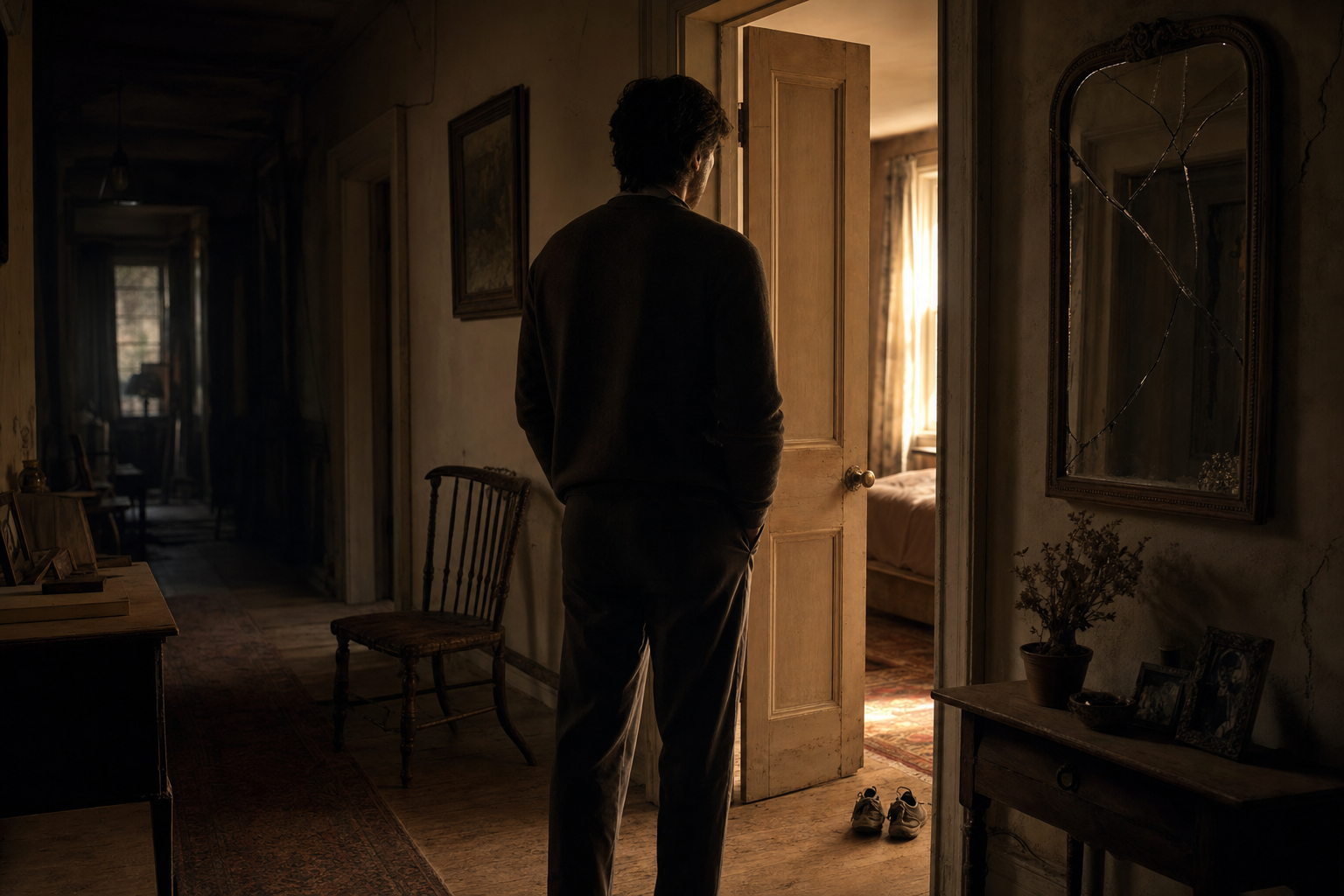
The parts of ourselves that disappear never truly leave. They return through recurring patterns, relationships, dreams and emotional reactions, quietly asking to be recognised.
The life you were never allowed to live never stopped looking for a way home.
Principle 002
The Life You Were Never Allowed To Live
There is a question that follows most people through life without ever being asked.
If you are the same person everywhere you go, why does your personality change depending on who walks into the room?
You recognise it immediately, although you may never have stopped to think about it. Around some people conversation arrives effortlessly. You laugh more easily. Ideas appear without effort. Time seems to disappear. Then someone else enters your life and something changes. You begin weighing your words. You become careful. You apologise more than you need to. You leave wondering why you couldn't simply be yourself.
The strange part is that both versions feel genuine.
Neither feels like an act.
Each feels as though it has every right to call itself you.
For years we explain this away with comfortable words. Chemistry. Personality. Confidence. Stress. We tell ourselves that different situations naturally bring out different sides of us, and then we move on without asking the question waiting quietly underneath.
Who decides which side appears?
It is an unsettling question because it suggests something we would rather not consider. Perhaps the personality we know best is not the whole of who we are. Perhaps it is simply the part of ourselves that learned how to survive the world we happened to grow up in.
The personality feels permanent because we have lived inside it for so long. It speaks with our voice. It remembers our history. It carries our name. Familiarity has a remarkable ability to disguise itself as truth. The longer we inhabit a version of ourselves, the less likely we are to wonder how it came into existence in the first place.
Every child enters life with astonishing range. Curiosity exists alongside caution. Gentleness alongside anger. Confidence beside uncertainty. The child does not divide these qualities into good and bad. They are simply ways of meeting the world.
Life begins making distinctions long before the child does.
Every family carries its own unwritten rules. Some celebrate achievement. Others value humility above all else. Some welcome emotion. Others become uncomfortable the moment difficult feelings enter the room. In some homes questions are encouraged. In others they quietly disappear.
Very few of these rules are ever spoken aloud.
They don't need to be.
Children are extraordinary observers. Long before they understand language, they understand atmosphere. They notice what earns a smile. They notice what changes the room. They notice which version of themselves draws people closer and which version leaves them feeling alone.
The lessons arrive through repetition rather than instruction.
Perhaps excitement is welcomed but sadness is not.
Perhaps being helpful receives warmth while needing help creates tension.
Perhaps success is celebrated until it becomes too visible.
Perhaps anger is punished while silence is mistaken for maturity.
No single moment changes a life.
Patterns do.
Little by little the child begins making adjustments. None of them feel dramatic. Each seems sensible at the time. If becoming quieter creates peace, quietness becomes familiar. If hiding disappointment prevents conflict, disappointment slowly disappears from view. If pleasing other people creates belonging, pleasing becomes second nature.
It is an intelligent adaptation.
It allows children to remain close to the people they depend upon.
The cost is rarely understood until much later.
Because adaptation has an unusual habit.
It eventually introduces itself as identity.
Years pass.
The careful child becomes the dependable adult.
The entertaining child becomes the person who never admits pain.
The peacemaker forgets what disagreement even feels like.
The achiever loses the ability to rest without guilt.
None of these identities are false.
They are simply incomplete.
And what remains outside them has been waiting far longer than we imagine.
The forgotten parts of ourselves are surprisingly patient.
They do not demand attention.
They do not force their way back into our lives.
They wait for an opportunity to be recognised.
Life, with extraordinary persistence, keeps arranging those opportunities.
A colleague receives the promotion you secretly wanted, and your reaction feels larger than the situation deserves.
Someone you've only just met irritates you immediately, although you cannot explain why. Another person walks into the room and you feel an unexpected admiration that borders on envy. None of these moments appear connected. We experience them as isolated events, each with its own explanation.
Life rarely experiences them that way.
It keeps returning to the same unfinished conversation.
The people change.
The circumstances change.
The language changes.
The feeling remains remarkably familiar.
That familiarity matters.
We often assume that the strongest emotions are caused by whatever is happening in front of us. Sometimes they are. More often than we realise, they are pointing somewhere much older. A present moment brushes against something that has been quietly waiting beneath the surface, and suddenly the reaction belongs to two different times at once.
This is why patterns matter more than individual events.
One difficult relationship proves very little.
Three relationships that leave you feeling exactly the same begin to tell a story.
One recurring dream may simply be a dream.
The same dream returning across years deserves your attention.
One disappointment can be unfortunate.
The same disappointment wearing different faces begins to reveal an underlying structure.
We naturally focus on the people involved. The difficult partner. The demanding boss. The critical parent. The unreliable friend. They occupy the foreground, so we assume they are the whole picture.
Patterns ask us to look somewhere else.
Not away from other people.
Deeper into ourselves.
Carl Jung noticed that the qualities we react to most intensely in other people often have an unexpected relationship with our own inner life. We condemn arrogance while quietly burying our own confidence. We admire someone's freedom while continuing to deny ourselves the same permission. We feel an immediate dislike for qualities we have spent years trying to hide from our own awareness.
This is projection.
Not because the other person possesses nothing real.
But because our reaction belongs partly to them...
and partly to us.
The Shadow rarely announces itself by saying,
"Here I am."
It prefers disguise.
It appears as certainty.
As judgement.
As fascination.
As unreasonable irritation.
As the strange feeling that someone you've only just met somehow reminds you of a story you cannot quite remember.
Every projection contains a question.
Why this person?
Why this reaction?
Why this intensity?
The answer is rarely found by looking harder at them.
It begins when we become curious about ourselves.
The Shadow is not trying to embarrass us.
It is trying to complete us.
What we exile from ourselves does not disappear.
It simply waits for life to introduce it again.
And life is remarkably good at making introductions.
There is a temptation, once we recognise the Shadow, to treat it as another problem waiting to be solved.
We live in a culture that rewards improvement. Find the weakness. Fix it. Move on.
The deeper parts of life rarely work that way.
The qualities we pushed aside were often doing something important. They protected belonging. They preserved relationships. They helped us survive environments we were too young to change. Judging those adaptations only creates another layer of distance between who we are and who we might become.
Recognition asks for something quieter.
It asks us to become curious.
Suppose the confidence you envy in someone else has been waiting for permission inside your own life.
Suppose the anger you have spent years trying to suppress is really pointing towards a boundary that should have existed long ago.
Suppose the sadness that keeps returning is not asking to be silenced, but finally heard.
The Shadow is rarely trying to become your identity.
It is trying to become part of it.
That distinction changes everything.
Integration is not becoming whoever you feel like being. It is allowing parts of yourself back into the conversation after years of exclusion. Sometimes they arrive gently. Sometimes they arrive with extraordinary force. Either way, they deserve recognition before judgement.
Dreams often become the first place this happens.
During the day we spend enormous energy maintaining the personality that has carried us through life. At night, that effort relaxes. The parts of ourselves that rarely receive attention begin speaking in symbols instead of words.
A stranger appears.
An old house.
A forgotten room.
Someone you fear.
Someone you desperately want to find.
The dream is rarely interested in prediction.
It is interested in recognition.
It is asking the same question life has been asking through relationships, disappointments and recurring patterns.
What have you left behind?
The answer is never found in a single dream.
Or a single relationship.
Or a single insight.
It emerges slowly, as the same themes begin appearing in different forms. The pattern becomes visible first. Meaning follows afterwards.
This is why MythRadar begins with patterns rather than conclusions.
One event tells us very little.
One hundred moments moving in the same direction tell a very different story.
That is where Personal Mythology begins.
Not with an interpretation.
With recognition.
If you want to begin meeting your own Shadow, start with one simple question.
Not,
"What is wrong with me?"
Not,
"Why do I keep attracting this?"
Ask instead,
"What keeps returning?"
Write it down.
The same argument.
The same dream.
The same fear.
The same longing.
The same kind of person.
The same feeling that arrives without invitation.
Don't analyse it.
Don't rush to explain it.
Simply allow the pattern to exist long enough for it to become visible.
Life has an extraordinary patience.
It will keep repeating the lesson until recognition arrives.
That is not punishment.
It is invitation.
The parts of yourself that disappeared were never asking to take over your life.
They were asking to come home.

Continue Reading
If this Principle resonated, continue your exploration through:
Principle 001 — The Pattern Comes First
Closing Reflection
You do not become whole by becoming someone new.
You become whole by recognising the life that has been quietly waiting beneath the one you learned to live.
Journal prompts
- Which parts of myself seem to appear only around certain people?
- What quality in other people creates the strongest emotional reaction in me, and why might that be?
- What part of myself have I been living without for so long that it now feels unfamiliar?
Continue Reading
The Shadow becomes visible through recurring patterns, dreams and relationships. Begin tracing your own patterns and see what your life has been trying to show you.
Begin Your Personal Mythology