Meaning
Why Some Places Stay With Us Forever
There is a specific quality of silence found in the rooms of our childhood, a thickness to the air that seems to hold the dust of every word ever spoken there.
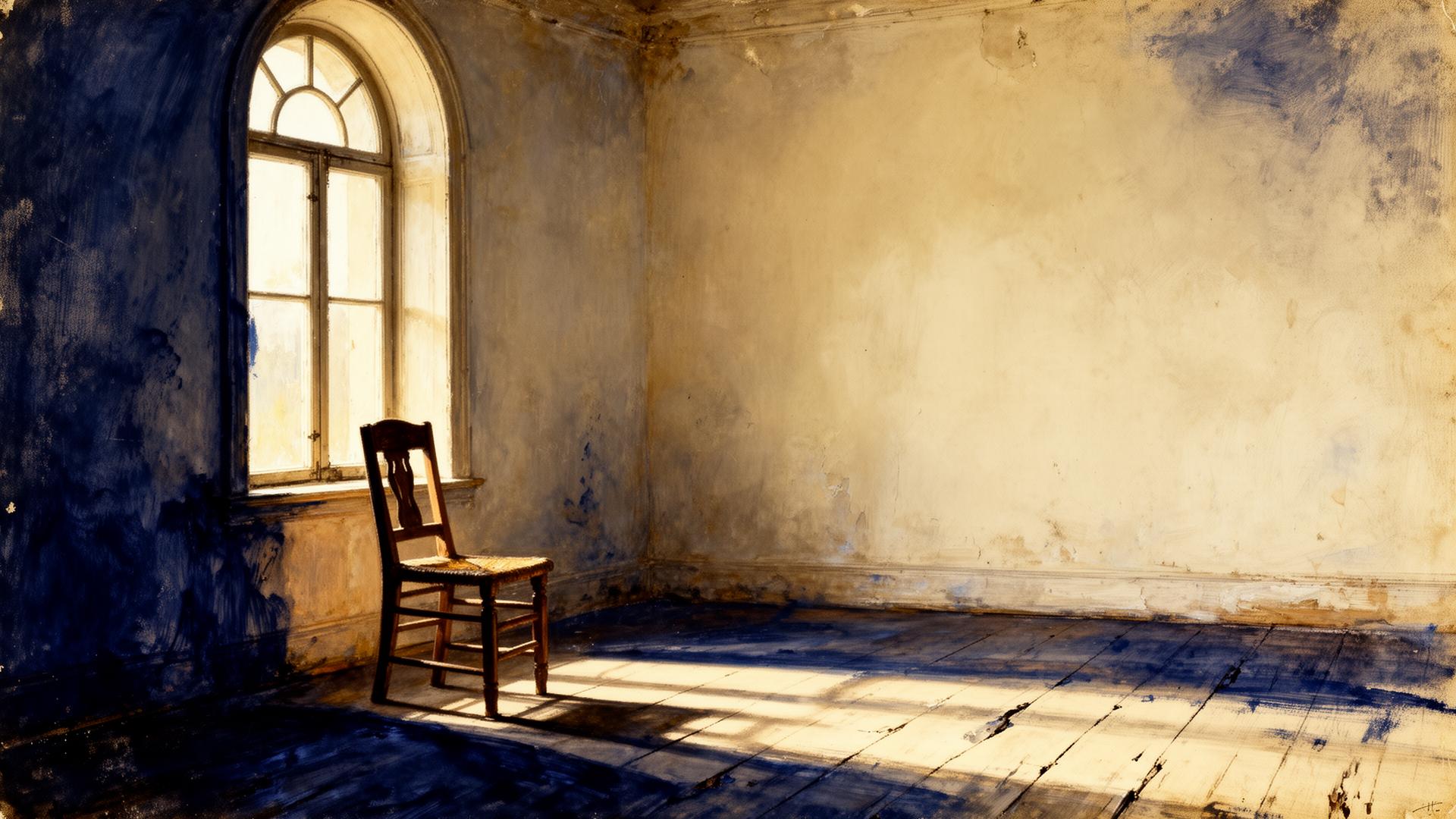
There is a specific quality of silence found in the rooms of our childhood, a thickness to the air that seems to hold the dust of every word ever spoken there. You may find yourself, decades later and a thousand miles removed, standing in a kitchen in the middle of a restless night, and for a fleeting second, the handle of the refrigerator feels like the one from thirty years ago. Your fingers expected the resistance of a heavy, chrome latch, the particular magnetic sigh of a seal that no longer exists. We carry these architectures within us, not as memories to be retrieved from a shelf, but as a secondary skeleton, a ghost-grid of hallways and floorboards that informs the way we move through the world today.
We are told that time is a linear progression, a series of points on a map moving toward a distant horizon, yet the soul knows nothing of such geometry. To the psyche, a place is never merely a coordinate. It is a vessel, a sturdy earthenware jar into which we pour the overflow of our interior lives when they become too heavy to carry alone. We leave ourselves behind in the peeling wallpaper of a first apartment or the particular slant of light across a railway platform in a city we only visited once. These places do not stay in the past; they sink beneath the surface of the conscious mind and wait there, functioning as the bedrock of our personal geography.
The Internal Navigation of Shadows
Consider the house where you first learned the shape of your own loneliness. You can likely walk through its rooms with your eyes closed, even now, navigating the exact number of steps between the doorway and the window where the glass was slightly warped. You know where the floorboard groans under a certain weight and where the air turns cold near the stairwell. This is not a feat of memory so much as it is a map of the self. We do not learn the layout of these spaces; we inhabit them until they become synonymous with the feeling of our own skin.
When we find ourselves returning to these mental corridors during sleep or in the quiet drift of a long drive, we are rarely looking for the physical architecture. What was it that I left in the corner of that attic? We are looking for the version of ourselves that lived there, the one who saw the world through that specific, unrepeatable frame. The room becomes a stable landmark in a life that is otherwise a blur of transition. In the shifting tides of career, relationship, and aging, the image of a single, sun-drenched porch remains anchored. It provides a fixed point from which we can measure how far we have drifted.
The Permission of the Portal
There are landscapes that claim us without our consent. You may have turned a corner in a foreign city or walked into a clearing in a woods you have never previously tread, only to feel a sudden, jarring sense of recognition. It is a cellular homecoming. In Jungian thought, we might say the outer landscape has finally aligned with a dormant inner archetype. The world outside has mirrored a world inside that you did not even know you were carrying. This is how a place becomes a symbol without your permission; it stops being a collection of stone and wood and becomes a manifestation of a psychological state.
Once a place has been baptised with this kind of meaning, it is no longer subject to the laws of urban planning or the erosion of the elements. It becomes a sacred site in your private mythology. You might find that a certain bridge in a rainy town becomes the permanent image of "transition," or a specific, cramped cellar becomes the symbol for everything you have hidden from yourself. We do not choose these metaphors. They choose us, rising up from the earth to give a shape to the formless movements of our hearts. To lose access to such a place, even if only in thought, would be like losing a word from our primary vocabulary.
We do not inhabit a world of matter, but a world of significance, where a rusted gate or a bend in a river can carry the weight of an entire era of the soul.
The Container of the Discarded Self
We often wonder why it is so difficult to rid ourselves of the melancholy that attaches to certain streets. The reason may be that we use places as containers for the parts of ourselves we are not yet ready to integrated. We leave our grief in the park where a relationship ended; we leave our reckless confidence in the neon-lit alleys of our twenties. When we think of these places, we are feeling the pull of those abandoned fragments. The location holds that version of us in trust, preserving it in a way that our moving, changing bodies cannot.
This is why the prospect of a place being demolished can feel like a personal bereavement. When the old library is torn down or the family home is sold and renovated beyond recognition, it feels as though the container has been shattered and the contents spilled. We fear that without the physical walls to hold that specific memory, the part of ourselves we stored there will finally vanish into the ether. It is a reminder of our fundamental fragility, the way we rely on the external world to prove that we were once here, that we once felt something so strongly it marked the very air.
The Longing for Return
The impulse to return to a formative place is a powerful one, yet it is almost always fraught with a quiet, North-star disappointment. You stand on the sidewalk of your youth and realize that the trees have grown taller, the colors are more muted than you recalled, and the distance between the curb and the front door has shrunk. The physical place has continued to age according to the laws of biology and physics, while the place in your mind has remained suspended in the amber of a particular psychological moment. Returning is rarely the same as remembering because the eyes that look upon the scene are no longer the eyes that first etched it into the soul.
We realize, with a pang of clarity, that the street we are walking on is merely the shadow of the street we carry. The true location is elsewhere. It exists in a realm that is not subject to the sun or the rain, a territory of the imagination where the light is always coming from the West and the clock on the mantle is always striking the same hour. To return is to realize that we are haunted not by the place itself, but by the person we were when we were there. The geography is simply the hook upon which we hung our coat before walking deeper into the woods of our own lives.
The Anchor in the Myth
In the grand architecture of a life, these persistent places serve as the pillars. They are the landmarks that allow us to say, "I began here" or "I changed there." Without them, the narrative of a human life would be a chaotic swirl of disconnected events. By pinning our experiences to specific rooms and landscapes, we create a structure that can be navigated. We build a home out of the world, even if that home is composed of a hundred different fragments scattered across the globe.
You may find that as you grow older, the list of these places becomes shorter but the intensity of those that remain grows stronger. They become the shorthand for your own history. One look at a photograph of a certain coastline is enough to evoke an entire philosophy you once held, or a specific scent of woodsmoke can return you to a porch where you once made a vow to yourself. These are not mere nostalgias; they are the coordinates of your being. They are the sites where the mundane world touched the eternal, and you were forever altered by the contact.
In the end, we do not just live in a house or a city; we live in the meaning we have assigned to them. Every street you have ever walked is a line in a larger story that you are still writing, a chapter in a personal mythology that requires the firm ground of the earth to sustain the flight of the spirit. These places stay with us because they are the stages upon which we have performed the difficult, beautiful work of becoming who we are. They are the silent witnesses to our becoming, and though the physical walls may crumble, the space they enclosed remains forever yours, a quiet room in the heart where the light never fails.
Related Reading
The Questions That Follow Us Our Whole Lives · The Inherited Stories We Live Inside · What Is Personal Mythology?
Every recurring dream, repeated relationship, and returning question is a sentence from the same deeper story. Read what Personal Mythology means at MythRadar - or explore your own with MythRadar.
Continue the thread
If this article resonated, three places to go next:
Look up the symbols this touches in the Childhood Home Dreams and House Dreams entries.
New here? What MythRadar is - why we treat dreams and recurring patterns as personal mythology rather than fortune-telling.
Ready to map your own pattern? Begin your personal mythology profile.
I post the short version of these on Instagram most days. Follow @mythradar on Instagram