Meaning
The Questions That Follow Us Our Whole Lives
There is a specific quality of silence that attends a child standing at the edge of a garden or looking through the condensation of a winter window, a silence that is not the absence of sound but the presence of a weight.

There is a specific quality of silence that attends a child standing at the edge of a garden or looking through the condensation of a winter window, a silence that is not the absence of sound but the presence of a weight. It is here, usually before the age of seven, that the first true question arrives. It does not appear as a formal inquiry to be brought to a parent or a teacher, but as a sudden, sharp realization of an aperture. You might remember the floorboards beneath your feet, the smell of rain on hot asphalt, or the way the light caught a dust mote in the hallway when you first felt the internal shift of a question that felt less like a puzzle and more like a haunting.
For some, the question is a matter of origin: How did I get here, tucked inside this specific skin? For others, it is a matter of continuity: Where does the rest of the world go when I close my eyes? These are not the whimsical curiosities adults often attribute to children. They are the initial tremors of an earthquake that will continue to shake the foundations of the personality for decades to come. We spend our youth believing we will eventually collect enough information to silence these inquiries, yet the most profound questions of a life are not those that can be answered, but those that must be lived.
The Persistence of the Echo
We are accustomed to the linear progression of time, the way we discard old clothes and outgrown toys, assuming our psychic life follows a similar trajectory of abandonment. We imagine we move away from the mysteries of childhood toward the certainties of adulthood. But the architecture of the soul is more circular than we care to admit. You may find yourself at forty, standing in a boardroom or watching the steam rise from a morning coffee, suddenly struck by the exact same hollow ache that visited you in the schoolyard. The context has shifted, the vocabulary has expanded, but the fundamental vibration is identical.
This return is often mistaken for a failure of growth. We tend to view the recurring question as a stubborn knot we have failed to untie, a sign of some arrested development or a lack of philosophical rigor. We tell ourselves that if we were truly wise, or truly healed, we would no longer be asking why we feel like a guest in our own lives, or why the beauty of the world feels so inseparable from its sorrow. Yet the recurrence of the question is not a symptom of a problem; it is the heartbeat of a destiny. It returns at every threshold - marriage, grief, career shifts, the quietude of middle age - because it is the primary way the psyche recognizes itself.
When you stand at a crossroads, the question is the only thing you carry that still fits. It is the steady hum beneath the noise of the world, reminding you that despite the various masks you have worn, the core of your engagement with reality remains unchanged. The question is a landmark in a territory that is constantly shifting; it tells you where you are by reminding you of what you have always been seeking.
The Keyhole of the Myth
To have a recurring question is to possess a keyhole through which you view the entire cosmos. If your question is one of belonging, every interaction becomes a study in the boundaries between the self and the other. If your question is one of justice, every event is weighed on a scale only you can see. This is the beginning of what we might call a personal mythology. We do not choose our myths any more than we choose our dreams; they choose us, announcing their presence through the themes that refuse to be ignored.
The question is not a barrier to the story, but the very mechanism by which the story is told.
In the Jungian sense, these persistent inquiries are the breadcrumbs left by the daemon, the internal guide that seeks to pull us toward a more complete version of ourselves. If the question never leaves, it is because it is the primary tool you have been given to excavate your own depths. Without the question, the soil of your life would remain packed tight and impenetrable. The question breaks the surface, allowing the air and light of consciousness to reach the roots of your character. It is an invitation to look longer and deeper at the things most people walk past without a second glance.
On Outgrowing the Answer
There is a seduction in the idea of the answer. We live in a culture that prizes the solution, the five-step plan, the definitive conclusion that allows us to close the book and move on. We want to solve our lives as if they were equations. But an answer is often a dead thing - a wall that stops the flow of inquiry. When we find an answer that satisfies us completely, we often stop growing in that particular direction. We become stagnant in our certainties.
There is a profound difference between answering a question and outgrowing it. To answer a question is to dismiss it; to outgrow it is to expand your container until the question no longer feels like a crisis. The man who asked at twenty how he might become famous may still be asking about his impact on the world at sixty, but the question has been weathered by time. It has lost its sharp, ego-driven edges and become something more like a prayer for usefulness. He hasn't found the answer, but he has become large enough to hold the question without it breaking him. He has moved from the frantic need for a result to a quiet appreciation for the quest itself.
We outgrow our questions by becoming more complex, by layers of experience that allow us to see that the binary of yes and no, of here and there, is insufficient for the reality we inhabit. We eventually realize that the question was never meant to be resolved. It was meant to turn us into someone who can survive the mystery.
The Guest in the Evening Room
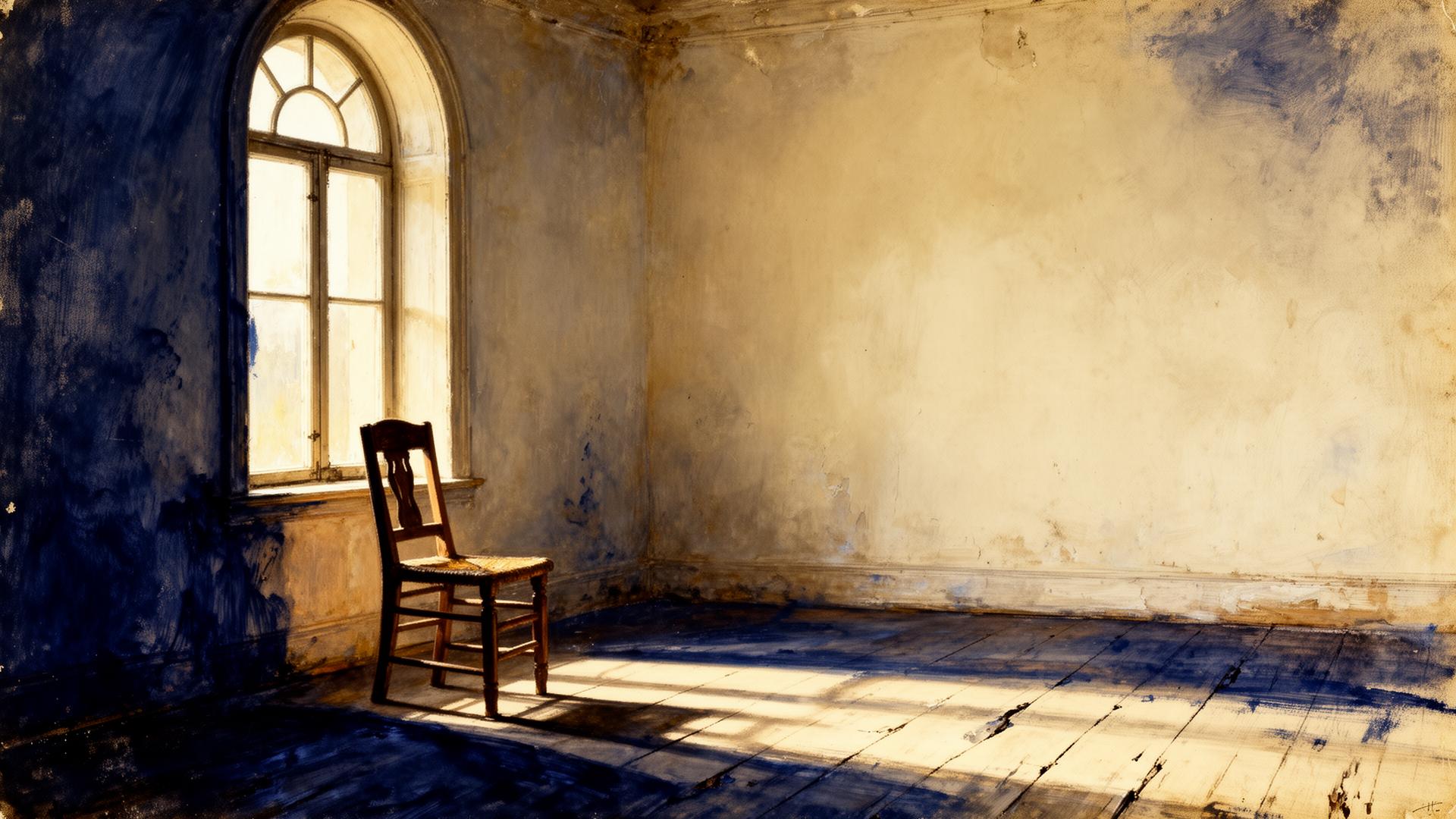
Late at night, when the day’s obligations have fallen away and the house is settled into its bones, the question often returns for a final visit. It sits in the chair opposite you, familiar as an old friend or a long-standing rival. In these moments, you might realize that your life has been built around the shape of this inquiry. Your choices, your loves, your creative outbursts, and your deepest regrets are all responses to that single, persistent voice that first spoke to you when you were small.
What if the question is the point? You might ask yourself. What if the search for the meaning of this life is the meaning itself? To accept the question is to accept the unfolding nature of your own soul. It is to move from the role of the frustrated student to the role of the witness. You no longer need to be the one who knows; you only need to be the one who listens.
The questions that follow us are the structural beams of our inner world. They hold up the roof while we learn how to live. They are the threads that stitch together the child who looked out the window and the elder who looks into the fire. When you stop fighting the recurrence of the question, you begin to see it as a gift - a clear, cold spring that never runs dry, ensuring that you will never truly be finished with the work of becoming.
This persistent rhythm, this cycling back to the same essential mystery, is the process of your own transformation. It is the signature of your personal history, a series of chapters that do not lead to a final period, but to a deeper understanding of the theme. You are not a problem to be solved, nor are you a question to be answered. You are a story in the act of being told, guided by the very inquiries that keep you awake, leading you toward a shore that is always just beyond the horizon, yet intimately familiar.
Related Reading
The Meaning of Coincidence · Why Some Places Stay With Us Forever · What Is Personal Mythology?
Every recurring dream, repeated relationship, and returning question is a sentence from the same deeper story. Read what Personal Mythology means at MythRadar - or explore your own with MythRadar.
Continue the thread
If this article resonated, three places to go next:
Look up the symbols this touches in the Recurring Dreams and Archetypal Dreams entries.
New here? What MythRadar is - why we treat dreams and recurring patterns as personal mythology rather than fortune-telling.
Ready to map your own pattern? Begin your personal mythology profile.
Related reading
I post the short version of these on Instagram most days. Follow @mythradar on Instagram