Thought Patterns
Why The Mind Returns To The Same Questions
A certain set of questions follows us for decades, returning every few years in slightly different forms. Their persistence is not malfunction. It is a sign that they are doing work the answers could not do.
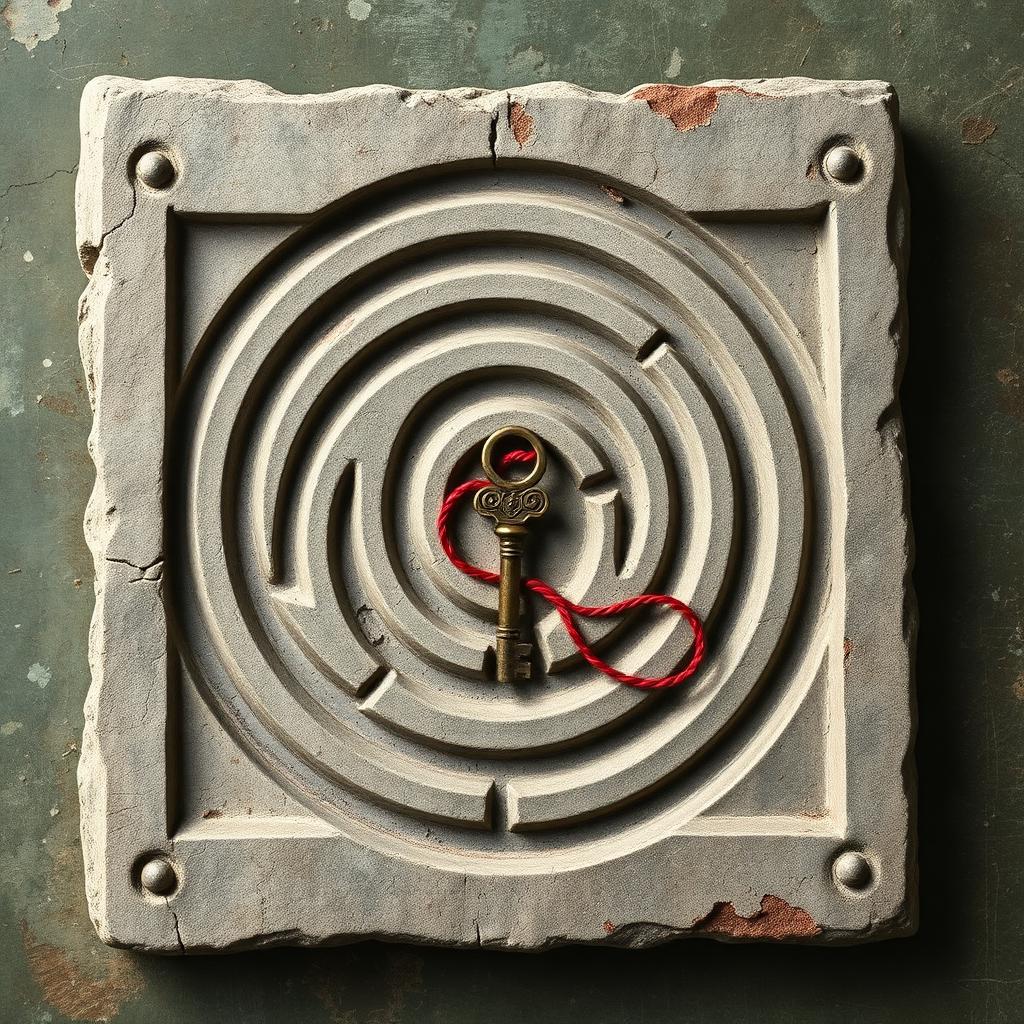
There is a strange experience that happens to most people, usually in their thirties or forties, sometimes earlier. They notice that a question they thought they had finished with at twenty has returned, almost unchanged, at thirty-five. Then again at forty-two. Then again, perhaps in slightly different language, at fifty.
The question is usually a large one. What am I for? Who am I when I am not performing? Am I living the right life or the one I was handed? They had assumed, the first time, that the question would yield to thought. Several attempts at thought were made. An answer was settled on. Years went by. And then, without invitation, the question came back, and the old answer no longer covered it.
This is not malfunction. This is how certain questions work. They are not problems to be solved. They are companions for a lifetime, and they return every few years because they are doing something that no single answer could do.
The illusion of solving
Our culture, particularly its informational layer, treats almost every question as if it were a search query. You type the question, you receive the answer, you move on. The model assumes that questions and answers come in matched pairs, and that once the pair is completed, the question retires.
This model works for many questions. What time is it? Where is my coat? What is the capital of Peru? Each of these has an answer, and the answer dissolves the question.
But there is another category of question for which the model is not only wrong but actively misleading. What is my life for? What do I owe my parents? What does love require of me here? These questions do not have answers in the sense the informational model means. They have responses. The responses are partial, provisional, true for a season. And then the season ends, and the question, which never actually went away, becomes visible again.
Treating a recurring question as a failed search makes the questioner feel as if something has gone wrong. Treating it as a returning companion makes it possible, finally, to sit with it.
Why the same question keeps returning
A returning question is almost always a question that is changing form even though its words look the same.
The question what am I for? asked at twenty-two is not the same question asked at forty-two. The words are identical. The interior of the question is completely different. At twenty-two it is being asked by a self that has not yet had most of its experiences. At forty-two it is being asked by a self that has had many of them, that has tried things, that knows things about its own capacities and limits that the twenty-two-year-old could not have known.
The question is the same lantern. The room it is illuminating has changed.
This is why each return of the question feels both familiar and new. Familiar, because the lantern is the one you have always carried. New, because what it shows you now is not what it showed you then.
Answers as resting places
It is still worth answering, when answers come. The mistake is not in answering. The mistake is in assuming the answer is the destination.
Answers, in this category of question, are better understood as resting places. They are accurate enough for the season. They allow the person to put down the question and live, for a while, on the assumption the answer provides. The person who has answered my life is for raising these children can spend a decade inside that answer, and the answer will be true, and they will live that decade well.
But the children grow up. The season changes. The original question, which was never actually retired, becomes audible again. The new audibility is not a sign that the previous answer was false. It is a sign that the answer's season has ended and a new resting place has to be found.
People who have been told that recurring questions are evidence of failure often resist this. They cling to the previous answer past its lifespan, and the cling produces a particular kind of staleness in the life. The answer no longer fits, but it is the answer they earned, and they are not willing to let it go.
The mature response is not to abandon the previous answer. It is to thank it, and to set it down, and to let the question take its next form.
What the recurrence is doing
The strange thing about a question returning for the fourth or fifth time is that you, the asker, are different each time. The question is, in part, the means by which you are coming to know that.
Each return of a deep question is a kind of measurement. It measures how much you have grown, what you have learned, where you have gone soft, where you have become rigid. The same question, asked of the same person across four decades, yields four different inner readings. The question is not stuck. The question is helping you locate yourself.
This is why, when a long-time recurring question returns yet again, it is worth pausing before trying to dispatch it. The question is doing work. The work is mostly invisible. It is reorganising your sense of who you have become.
Living with the long companion
There is a way of holding a recurring question that turns out to be much more workable than trying to solve it. You let it be a companion.
This sounds slight, but it changes a great deal. A companion is not an emergency. A companion is not a sign of malfunction. A companion is simply someone you walk with for a long time. You do not have to resolve a companion. You only have to keep noticing they are there, and to occasionally sit down and talk with them.
People who live this way with their deep questions tend to develop a particular quality. A kind of unhurried interiority. They are not pretending the question is answered, and they are not anxious that it is not. They are simply in conversation with it, and the conversation is part of the texture of their life.
They also tend to write more honestly, speak more honestly, parent more honestly. The unanswered companion has kept them limber. They have not had to defend a position that they no longer quite believe. The question kept them moving.
The questions you were given
Some of the questions that follow us are ones we chose. Most are not. They were given to us by the particular shape of our early life, by the family we landed in, by the work we ended up loving, by losses we did not anticipate.
These given questions are often the truest companions a life has. They are not random. They are the precise questions that this particular life was set up to keep asking. To recognise them, to honour them, to stop apologising for them, is one of the quieter forms of dignity available to an adult.
If a question has been with you for decades, returning in different costumes, you can stop treating it as a problem to be finally beaten. You can begin treating it as one of the things that, in the end, your life will turn out to have been about.
Writing the question down
One useful practice, for a question that has returned across many years, is to write it down once and then, every few years, to write your current answer underneath. Not your best answer. Not your final answer. Just the answer that is true for you at this moment. Do not delete the previous answers. Let them stand, dated.
After a decade of doing this, you will have something unusual: a small written record of how the same question has been answered by different versions of you. The record itself becomes one of the most honest documents of your inner life. You see, in your own handwriting, how the question evolved, how your relationship to it deepened, where you went rigid and where you softened.
The document is also useful to younger people in your life, if you ever choose to share it. They tend to be quietly relieved that the question they are wrestling with now has been wrestled with before, in a real life, by a real person, without easy resolution. Permission to hold the question across decades is one of the more valuable inheritances any older person can pass on.
The questions that are not yours
Not every recurring question is genuinely your own. Some of the questions that follow us for a long time were inherited from a family or a culture that handed them to us and forgot to take them back. Am I successful enough? Am I producing what I should be producing? Am I the kind of person my parents wanted? These can feel as deep as the genuine questions, but they have a different texture on close inspection. They are someone else's evaluative voice, internalised as a question.
Sorting the inherited questions from the genuine ones is part of the long work of becoming an adult. The inherited questions, once identified, can be respectfully returned. This belongs to my father, not to me. I will set it down. The genuine questions, once cleared of the inherited ones, become easier to hear. Their voice is steadier. They are no longer competing with a chorus of evaluations that were never about them. They simply continue, patiently, the way deep questions do.
I post the short version of these on Instagram most days. Follow @mythradar on Instagram