CornerstoneCornerstone
Dreams About Death
To dream of death is rarely a prediction, but often a quiet invitation. It might ask us to look at what's ending, and what longs to be born.
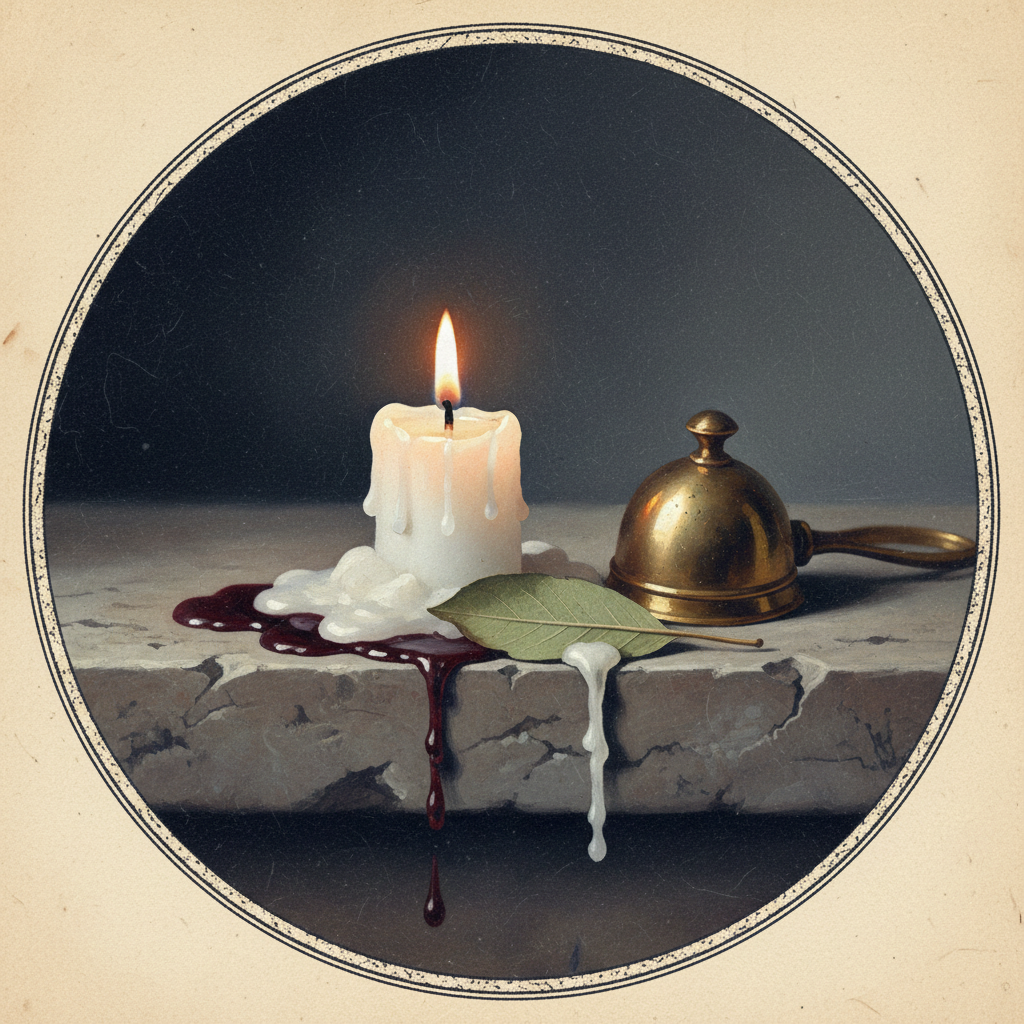
What if a dream of death is less about an end, and more about a threshold? What if the image our waking minds fear most arrives in sleep not as a threat, but as a guide?
These are not comfortable dreams. They can leave us shaken, our hearts pounding in the quiet dark, the residue of fear clinging to us long after we wake. Our instinct is to push the image away, to seek a quick and reassuring answer that tells us it is not real, that it does not mean what we fear it means.
But perhaps the most useful question is not, 'Am I going to die?' but 'Why has my dreaming mind chosen this most powerful of all symbols to communicate with me, right now?' The timing of such a dream is often the most important clue we have.

Common Interpretations
When we look across cultures and through the history of dream interpretation, we find that death dreams are rarely seen as literal prophecies. Instead, they are almost universally regarded as symbolic. The most common understanding is that they point toward an ending, but not the end of a life. More often, it is the end of a chapter, a relationship, a job, an identity, or a deeply held belief. The dream may be a reflection of a change that is already happening, or it may be the psyche's way of announcing that such a change is needed.
From a psychological perspective, these dreams can be seen as a form of mental and emotional processing. Life is a series of transitions, and every transition involves a kind of death. Graduating from school is the death of your student self. Leaving a longtime home is the death of a particular way of living. In these moments of profound change, the dreaming mind can use the stark, unambiguous symbol of death to help us grapple with the loss and finality inherent in moving forward.
The psychologist Carl Jung might have viewed dreams of death as potent markers on the path of individuation—the lifelong process of becoming a whole, integrated self. For Jung, such a dream could symbolize the 'death' of the ego, or the shedding of a persona, that familiar mask we show to the world. He might have suggested that for a new, more authentic aspect of the Self to emerge, the old, outworn structure must first fall away. In this light, the dream is not an ending but a necessary clearing of the ground for new growth.
Some older traditions held more varied views. Depending on the context, dreaming of a funeral could be seen as an omen for a wedding, the symbolic death of a single life making way for a partnered one. Dreaming of one's own death was sometimes even interpreted as a sign of a long life ahead. What these varied interpretations suggest is not that any one of them is correct, but that the symbol of death is so immense and multifaceted that it can hold countless, often contradictory, human experiences within it.
Personal Mythology
No dream symbol arrives with a universal tag of meaning. Its significance is woven from the fabric of your own life, your memories, your fears, and your hopes. The image of death that visits you will speak in a language that is uniquely your own. The central question always remains: what does this image mean to me?
Consider the difference. For a person deep in the throes of grief after losing a loved one, a dream of death may be a raw and direct continuation of their waking sorrow. It is the psyche's labor, working through the reality of loss in the symbolic space of sleep. There is no hidden metaphor here; there is only the profound work of mourning. For someone else, an entrepreneur about to close a business they poured their soul into, a dream of a funeral might be a perfect, heartbreaking metaphor for the end of that venture—a ritual of letting go.
For a person feeling stuck and stagnant, perhaps in a career or a relationship that no longer serves them, a dream of their own death could feel like a desperate cry from the unconscious. It may be the part of them that longs for change, for life, trying to communicate the urgent need to let the 'old you' die so a new one can live. In this context, the dream might even feel like a relief upon waking, a quiet permission to finally move on.
The feeling-tone of the dream is your most reliable compass. Was the death peaceful, a gentle fading away? This could point toward a natural, graceful transition you are ready for. Was it violent, frightening, and sudden? This may suggest a change that feels forced upon you, one that you are resisting with every fiber of your being. Paying attention to this emotional weather is the first step in understanding the dream's personal message for you and your path.
Questions Worth Asking
- —Who or what passed away in the dream, and does it represent a part of your life or yourself?
- —What was the emotional atmosphere of the dream? Was there fear, peace, sadness, or something else?
- —If this dream is a metaphor, what change or ending in your waking life might it be reflecting?
- —Is there something you are being asked to let go of at this moment in your life?
- —What new beginning might be possible if something old were to pass away?
- —How have endings and transitions felt for you in the past, and how does this dream feel in comparison?
- —What was your first feeling upon waking from this dream, before you began to analyze it?
What MythRadar Would Notice
In our waking lives, we tend to think of death as a singular event, the final punctuation at the end of a long sentence. But in our inner world, in the landscape of myth and dream, death is a rhythm. It is a recurring pattern, a constant companion to life. It is the snake shedding its skin, the moon waning into darkness, the seed cracking open in the earth. The mythology of a life is not just about what is born and what grows; it is equally about what must be released, what must end, what must be allowed to die.
When a dream of death arrives, it might be that your own personal story has come to a place where this rhythm is being ignored. Perhaps you are clinging to a branch when the season has turned, and the winds are asking you to let go and trust the fall. Your psyche, in its wisdom, sends you an image so powerful it cannot be ignored. It is an invitation to participate consciously in a process that is already underway. It is a call to look at the story you have been living and ask, 'What part of this narrative has run its course?'
Sometimes these dreams are not about letting go of something bad, but about letting go of something good that has reached its natural conclusion. This can be the hardest death of all. The dream does not necessarily arrive to solve the problem, but to present the reality of it. It asks us to sit with the complexity, with the bittersweet nature of change. It invites us into the quiet, fertile emptiness that an ending creates, reminding us that it is only in this empty space that something new and unseen can eventually take root.
Continue The Exploration
A dream as significant as this one invites not a quick interpretation, but a quiet attentiveness. Before rushing to decide what it means, you could simply sit with the image. Write it down in as much detail as you can remember. Note the colors, the sounds, the feelings. Hold it gently, as you might hold a mysterious object that has washed ashore.
Notice if the dream, or feelings from it, return in the coming days and weeks. This patient observation is the beginning of a deeper conversation with your own inner world. It is the way we learn the patterns and grammar of our Personal Mythology, finding the story that is being told, night after night, just for us.