CornerstoneCornerstone
Dreams During Major Life Transitions
When life's ground shifts beneath us, our dreams often become a stage for the passage itself. They may offer a quiet map of the liminal space we find ourselves inhabiting.
- liminality
- passage
- initiation
- reorganization
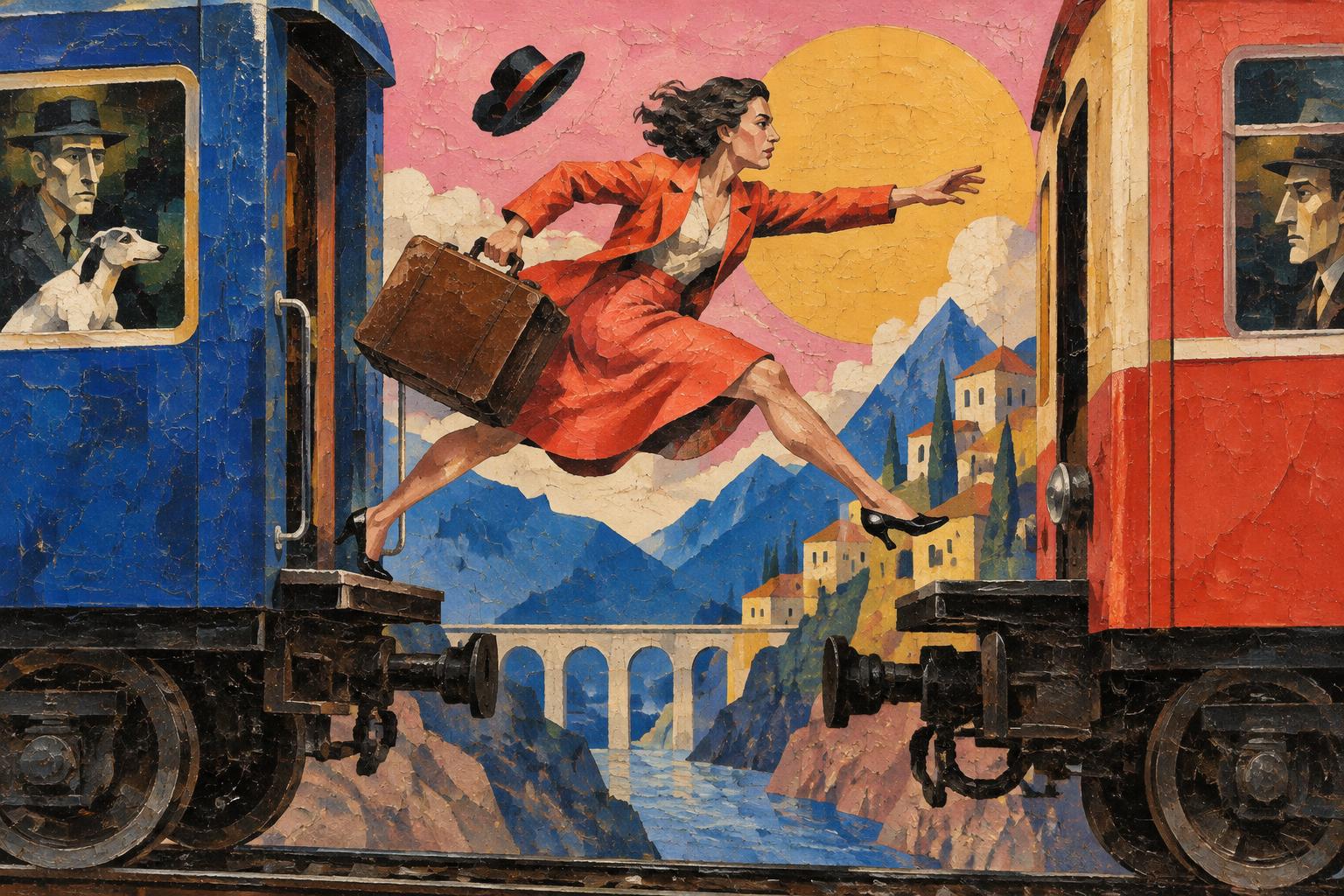
Unusually vivid or strange dreams during a major life transition reflect the psyche reorganising itself, not a sign that something is wrong. When you stand between jobs, homes, relationships or versions of yourself, dream life often becomes more chaotic and intense than usual, because the solid ground of routine has temporarily given way.
The images that arise - hallways, journeys, unfamiliar rooms, old landscapes - speak a language specific to this in-between state. Rather than asking what any single image means, it is more useful to ask why this intensity has arrived now, and what the mind is trying to process while the usual daily structure is absent.
These dreams are not messages from outside you. They are closer to field notes from your own deepest processing, describing the turbulence of change rather than forecasting its outcome.
Common interpretations
Certain motifs recur so reliably during transitions that they are worth learning to recognise on sight. None carries a universal meaning, but each points toward a common experience of being between one shore and the next.
A journey to an unknown destination
Trains, roads and unfinished bridges toward a destination you cannot see reflect the felt sense of being in transit, having left a familiar situation without yet arriving anywhere new. See road dreams and train dreams.
Packing in a hurry
Urgent, chaotic packing usually means part of you already knows an ending is close, even if your conscious plans have not caught up.
A house with new or unfinished rooms
Discovering extra rooms, or a house under construction with exposed beams, mirrors a self that is being reorganised alongside your circumstances. See house dreams for the full symbolism of the building.
Returning to your childhood home
Transitions often send the dreaming mind back to the place where your earliest rules about safety and belonging were formed, especially when the current change touches similar territory. See childhood home dreams.
A funeral, your own or someone else's
In the context of transition, a funeral dream is rarely about literal death. It is more often a space to grieve the ending of an old role or identity before the new one can be fully taken up. See dreams about death and funeral dreams.
Getting lost or unable to find your way
This is one of the most common transition dreams, and it describes exactly what it feels like: navigating a stage of life without a map. See getting lost dreams.
Exams, tests or being unprepared
Transition periods often revive exam-style anxiety dreams, since both involve being evaluated on ground you have not fully mastered yet. See exam dreams.
Personal mythology
The archetypal nature of transition dreams is compelling, but their true resonance is found in the deeply personal context of your own life. The same symbol can whisper entirely different stories to different dreamers, because each of us brings a unique history to the image. A dream of being on a vast, open ocean might feel like terrifying abandonment to a person whose life has been upended by an unexpected breakup. For someone finally leaving a confining job, that very same ocean could feel like freedom, a boundless field of possibility.
Consider the image of packing. For one dreamer, who is perhaps preparing to move to a new country, the dream might focus on meticulously wrapping cherished objects. This could reflect a conscious effort to preserve their identity, to decide what core parts of themselves they wish to carry into this new chapter. For another dreamer, facing the transition of an emptying nest, the dream of packing could be fraught with sorrow, a tangible symbol of a role that is ending. The suitcase is the same, but the story it tells is entirely different.
The emotional tone of the dream is your most reliable compass. How did you feel within the dream? Were you a capable protagonist navigating the challenges of the journey, or a helpless observer being swept along by forces beyond your control? This feeling often mirrors your internal stance toward the change in your waking life. A dream of being lost in a labyrinthine airport before a flight might not just be about the stress of moving; it could be speaking to a deeper feeling of confusion about your direction and purpose in this new phase of life.
These dreams hold up a mirror to your personal mythology of change. Do your dreams of transition typically cast you as a hero on a quest, a refugee seeking shelter, or an explorer charting new territory? The patterns in these recurring dream themes over your lifetime tell a story about your fundamental relationship with the unknown. They reveal the narrative you have built around beginnings and endings, and they may gently invite you to consider authoring a new chapter.
Questions worth asking
- What feeling tone lingered after you woke from this dream?
- Where in your waking life are you standing on a threshold?
- What is being left behind, and what is being carried forward in your life right now?
- If the dream were a landscape, what would its weather be?
- Did your dream-self feel lost, or were they on a deliberate journey?
- What part of your old self feels like it no longer fits?
- What new possibility is asking for your quiet attention?
What MythRadar would notice
A major life transition is often a time when the veil between our conscious world and the deeper currents of the psyche becomes thin. The well-worn routines that keep our attention fixed on the surface of life fall away, and we become more receptive to the images and stories stirring in the depths. The dreams that arrive in these liminal states are not just random neurological noise; they can be seen as communications from the part of you that is orchestrating the change.
Think of the psyche as a vast, intelligent ecosystem. When a significant change occurs - a shift in habitat - the entire system must recalibrate. These dreams are a glimpse into that recalibration. They reveal the inner work that is happening beneath the surface of your awareness: the grieving of what is lost, the testing of new strengths, the tentative mapping of an unknown future. They are the field notes of your own becoming.
Paying attention to these dreams is a way of participating more consciously in your own transformation. They connect you to the larger story of your life, your personal myth. You may begin to notice that you have a characteristic way of dreaming through change, a recurring set of symbols that belong only to you. This is the language of your soul speaking to you about your own epic journey. The dream is not giving you a command or a prediction. It is simply reminding you of the profound, often hidden, inner process that you are already living.
Common questions
- Why do I have such intense dreams during a big life change?
- Major transitions temporarily remove the stable routine the mind usually relies on, so the psyche does more of its reorganising work overnight, which produces more vivid, chaotic or emotionally charged dreams than usual.
- What does it mean to dream of unfinished or unfamiliar rooms during a transition?
- New or unfinished spaces in a dream house usually mirror a self that is also under construction, reflecting parts of your identity that are developing alongside your changing circumstances.
- Why do I keep dreaming about journeys with no clear destination?
- Journey dreams without a visible endpoint reflect the felt experience of being in transit between one life stage and the next, having left something familiar without yet arriving somewhere new.
- Is it normal to have nightmares during a life transition?
- Yes. Periods of major change often increase the frequency and intensity of unsettling dreams, since the mind is processing more uncertainty and loss than usual. See nightmares for more on why this happens.
- Do these dreams stop once the transition is over?
- Generally yes. As the new situation becomes familiar and internally integrated, dream life tends to settle back into its ordinary, less charged pattern.
Continue the exploration
If a dream from this period of your life has stayed with you, perhaps its purpose is not to be solved, but to be held. Consider writing it down, not to analyze it, but to honor it as a significant inner event. Notice the details, the colours, the feelings, without needing to rush toward an interpretation.
Sometimes, simply giving the dream your quiet attention is enough. You might find that as your life's circumstances continue to shift, the dream's texture and resonance shift as well. This is the beginning of a deeper conversation with yourself, an exploration of your own Personal Mythology that unfolds over a lifetime.
Related symbols
From the Insights library
the next question
One entry is a symbol. Several, read together, are a pattern - and a pattern is the beginning of a personal mythology.