The Everyman Archetype
The Everyman finds strength in belonging rather than standing apart from it.

what is the everyman archetype?
The Everyman archetype is the part of a personality that finds its footing through connection to others rather than through distinction from them. Where some archetypes need to stand apart to feel real, the Everyman needs to stand among, and treats belonging as a form of evidence that a life is going well. This shows up as a genuine talent for solidarity, for reading a room and finding the shared thread that runs through it, and for making people feel less alone in whatever they're carrying. The risk sits right beside the gift, because a self built on fitting in can forget what it wanted before it learned to want what worked.
The pattern at the centre
The Everyman's pattern begins with a simple discovery made early: being liked is safer than being singular. Somewhere in childhood or adolescence, standing out cost something, attention, approval, ease, and blending in paid it back. From there the Everyman builds a self that reads the room before it speaks, adjusts before it commits, and treats consensus as a kind of shelter.
This produces a person who is genuinely, not performatively, good at solidarity. They notice who's been left out of a conversation. They remember what ordinary people actually deal with, because they've never stopped being one of them. But the same instinct that makes them trustworthy also makes their own preferences hard to locate, since a preference that hasn't been vetted against the group's mood rarely gets voiced at all.
What drives the Everyman
The Everyman is driven by a need to be inside something rather than outside it, whether that something is a friend group, a family, a workplace culture, or a shared identity. Isolation registers to them not as freedom but as exile, which means decisions get run through a filter no one else can see: will this keep me among my people, or will it set me apart from them.
Underneath the drive to belong is a deeper wish to be useful in ways that are visible and appreciated. The Everyman rarely wants to be exceptional. They want to be relied on, which is a different ambition entirely, built less around admiration and more around being the kind of presence a group would notice missing.
Where the Everyman becomes valuable
Groups need someone who represents the median experience honestly, without dressing it up or talking it down, and the Everyman does this instinctively. They keep a team, a family or a friendship grounded in what's actually happening for most of its members, which stops ambitious plans from drifting too far from the people they're supposed to serve.
Their real gift is dignifying the ordinary. In a culture that treats unremarkable effort as failure, the Everyman insists that showing up, doing the work and being decent to the people around you counts for something real, and they're usually right, which is why people trust them with problems they'd never bring to someone more obviously impressive.
The tension inside the archetype
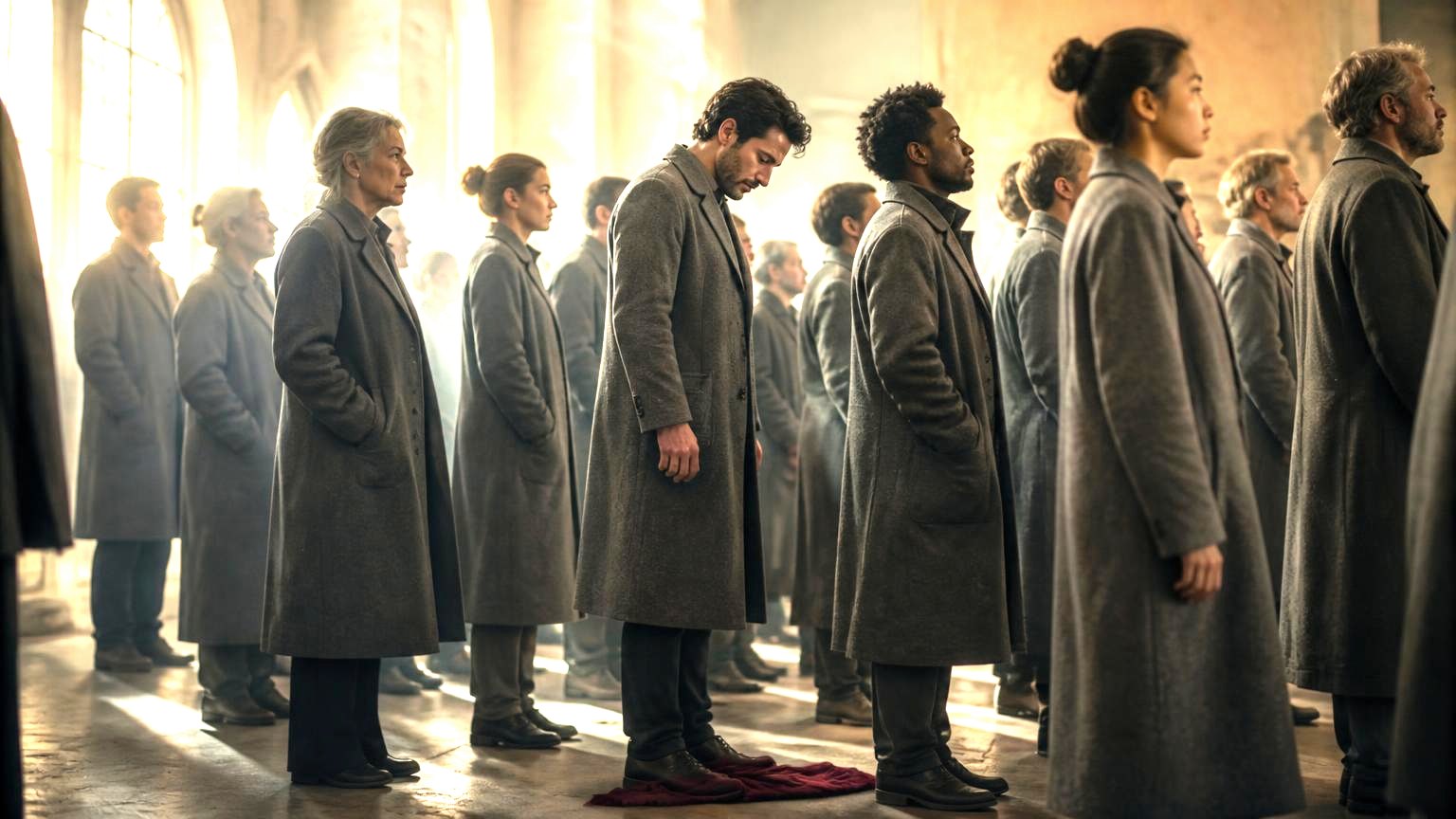
The tension at the heart of the Everyman is that belonging, taken far enough, starts to require self-erasure, and the two goals eventually compete for the same territory. Fitting in means minimising whatever makes a person distinct, but a self with nothing distinct left in it has less and less to actually offer the group it's trying so hard to join.
This produces a quiet, recurring question the Everyman rarely says aloud: would these people still want me here if I stopped agreeing with them? The tension only eases when they test the question directly, by disagreeing once and staying to find out what happens, because the answer avoided is worse than almost any answer received.
Shadow expression
The Everyman's shadow is invisibility mistaken for peace. Years of prioritising consensus over preference can leave a person who genuinely doesn't know what they want anymore, having handed that decision to the group so consistently that the muscle for making it alone has atrophied. What looks like easygoing agreeableness from outside can be, from inside, a low hum of resentment nobody was told about.
The other shadow expression is conformity that curdles into judgment of anyone who won't conform the same way. An Everyman who has sacrificed a great deal to belong can grow harsh toward people who refused the same trade, reading their independence as arrogance rather than as a different, equally valid, way of building a self.
The Everyman in relationships
In relationships, the Everyman is, for many people, the steadiest presence in the room, remembering birthdays, showing up early, absorbing more emotional labour than gets acknowledged, because being needed is one of the few forms of certainty they trust completely. Partners and friends benefit enormously from this, right up until they realise the Everyman has never told them what they actually need in return.
The healthiest relationships for an Everyman are the ones that ask directly, repeatedly, what they want, rather than waiting for them to volunteer it. Given that invitation enough times, they eventually risk answering honestly, and the relationship becomes reciprocal instead of merely comfortable.
The Everyman in work, ambition and decisions
At work, the Everyman is the colleague who keeps a team's morale intact, who translates leadership's plans into something the rest of the group can actually feel motivated by, and who rarely takes credit even when the credit is earned. This makes them essential to culture and easy to overlook for advancement, since visibility was never the currency they were trading in.
Ambition for the Everyman tends to hide inside competence rather than announce itself, which means their career progress depends heavily on someone else noticing what they won't point to themselves. Left unadvocated for long enough, they can mistake being overlooked for being unqualified, when the truth is closer to being under-promoted for the crime of never asking.
What MythRadar would notice
What keeps returning, across an Everyman's dreams, relationships and decisions, is the crowd. Dreams set in schools, houses full of half-familiar people, or streets crowded with strangers point to the same live question: where exactly do I fit in this, and what happens to me if the answer changes without warning.
MythRadar would also notice how consistently the Everyman's biggest decisions get explained afterward in terms of what the group needed, rarely in terms of what they personally wanted. That recurring omission is itself the signal worth tracking, because a life narrated entirely through other people's needs eventually loses track of whose life it actually was.
next step
Is the Everyman the one running your life right now?
The Archetype Finder takes a few minutes and reads for the pattern rather than the mood - the dominant archetype, the one emerging, and the one you keep in shadow.
Personal Mythology
Where does this archetype show up in your own life?
Save it, add a dream or a recurring thought, and MythRadar can help you read how they connect.
That reading is your Personal Mythology. It begins with what you choose to add.
Archetypes that sit close to this one
Neighbours worth reading next - they share an instinct and spend it differently.

The Caregiver
The Caregiver earns love by being needed, which makes their own needs the first thing to disappear.

The Innocent
The Innocent archetype keeps faith that things can be good, even after evidence has argued otherwise.

The Lover
The Lover archetype finds meaning through connection, and struggles when love feels absent.
Dreams this archetype tends to send
Entries from the Dream Dictionary that keep company with this pattern.




Related reading
- The Orphan Archetype: Belonging After the BreakThe Orphan is the part of you that learned, early, that no one was coming. It is also the part that taught you to be your own home.9 min
- The Inherited Stories We Live InsideThe smell of old paper and woodsmoke follows us into the rooms of our childhood, even decades after the furniture has been sold and the keys handed to strangers.8 min
- Which Archetype Is Running Your Life Right Now?At any given season of a life, one inner figure tends to be doing most of the steering. Recognising which one, without judgement, changes what is possible next.8 min